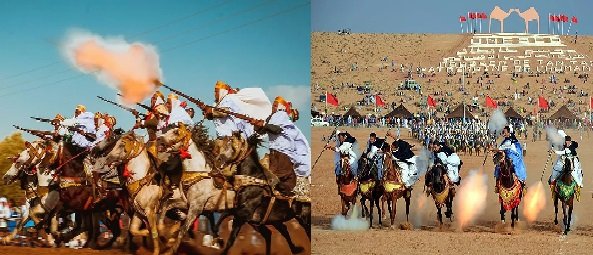
Fantasia
Imagine a dusty plain in North Africa, the sun low in the sky, casting long shadows. A sudden silence falls over a cheering crowd as horsemen line up in traditional dress, gripping long rifles and seated proudly on majestic steeds. Then, with a thunderous gallop, the riders charge forward in unison, their movements perfectly synchronized, culminating in a deafening blast of gunfire. That’s Fantasia—a breathtaking blend of equestrian mastery, cultural pride, and historical continuity deeply woven into the fabric of Maghrebi life.
Fantasia, also known by different regional names like Tbourida in Morocco, is more than just a performance. It’s a living expression of identity, history, and the unbreakable bond between horse and rider. Let’s take a closer look at how this striking tradition continues to flourish across Algeria, Morocco, Tunisia, and beyond.
A Tradition as Old as the Sand It Rides On
The roots of Fantasia run deep—very deep. Its earliest forms can be traced all the way back to the Numidian cavalry, the fierce horsemen of ancient North Africa who were renowned for their battlefield tactics. According to historian Carlos Henriques Pereira, today’s Fantasia is a modern echo of those military maneuvers—refined and stylized, but still bearing the DNA of a combat-ready cavalry charge.
In fact, the performance we see today is essentially a peaceful reinterpretation of a once-lethal practice. Back then, this kind of synchronized cavalry movement was used to break enemy lines or deliver a powerful psychological shock. Over centuries, especially by the 17th century, Arab and Amazigh tribes transformed it into something celebratory—an homage to martial prowess rather than a preparation for war.
What’s in a Name?
Let’s talk terminology. “Fantasia” sounds a bit European, and that’s because it is. The term itself has Latin and Romance roots, meaning “fantasy” or “spectacle.” French Orientalists adopted it as a catch-all term for these North African equestrian shows. But within the region, people often use different names. In Morocco, it’s known as Tbourida, a word derived from baroud, meaning gunpowder. You’ll also hear names like laâb el-baroud (the gunpowder game) or laâb el-khayl (the horse game) depending on the local dialect and context.
No matter what you call it, the heart of the practice remains the same—an electrifying display of horsemanship and heritage.
More Than a Show: Cultural and Spiritual Meaning
To an outsider, Fantasia might look like just a show. But for the performers and the communities that host these events, it carries deep symbolic meaning. It’s a cultural performance, yes, but it’s also a form of martial art, a form of storytelling, and a bridge between past and present.
The relationship between the rider and the horse is at the center of it all. It’s not just about controlling the animal—it’s about harmony. These horses, typically of Arabian, Barb, or Andalusian descent, are specially trained, and they often live with the families who ride them. For many, the horse is not just an animal, but a companion and a source of pride.
Fantasia also reaffirms ties to tradition and ancestral honor. By donning traditional garments and wielding old-style rifles, riders are not just putting on a costume—they’re stepping into a role that links them to generations of warriors and storytellers.
Fantasia in Algeria: Power, Precision, and Pageantry
In Algeria, Fantasia isn’t just alive—it’s thriving. This is one of the countries where the practice is most prevalent, and you can find performances at regional festivals, agricultural fairs, and spiritual gatherings. The Sidi Yahia Bensafia event in Tlemcen and the Horse Festival in Tiaret are just two examples of major annual gatherings celebrating the tradition.
Algerian Fantasia generally unfolds on a long track, over 100 meters, where groups of nine to eleven riders—or sometimes individuals—showcase their skills. There are two primary styles in group performances: Temerad and Guelba.
In Temerad, the group rides slowly to the far end of the field, then turns and charges back at full gallop. At a series of shouted commands from the group leader, they rise, align their rifles, and fire all at once. If done correctly, the sound is a single thunderclap. Guelba, on the other hand, involves a faster start and a much riskier high-speed turn, making it more prone to mishaps but also more thrilling to watch.
The individual version is more common in Algeria’s eastern regions. Riders simulate attacks, sometimes firing multiple rifles and even mimicking sword fights. There’s also a dazzling two-person act where riders gallop side-by-side, so close they seem like one figure, only to dramatically split apart after firing.
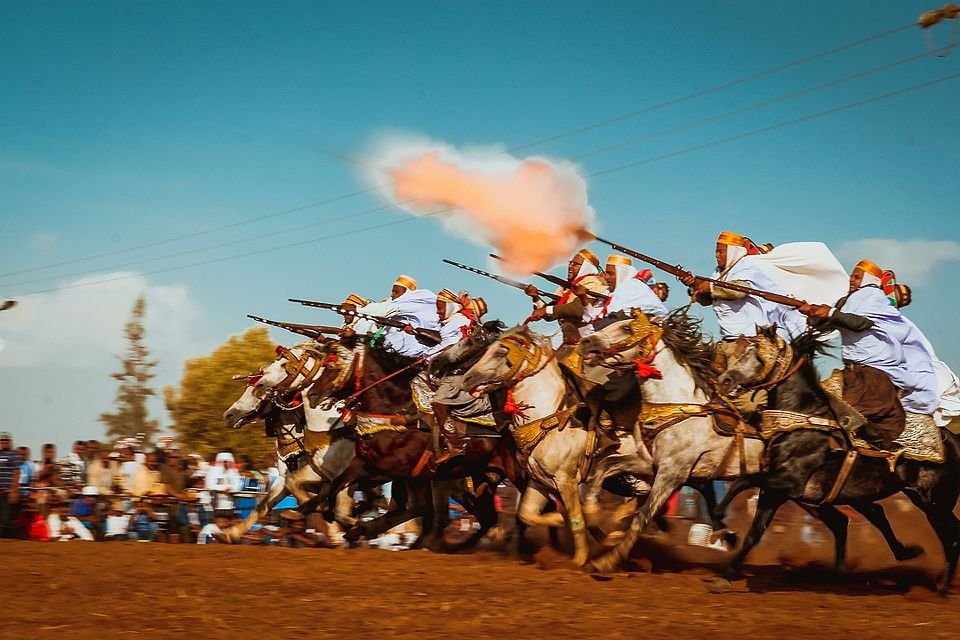
Fantasia at Aïn El Arbaa, located in northwestern Algeria.
Morocco’s Tbourida: A National Emblem
Over in Morocco, Fantasia is elevated to a whole new level of national recognition. Called Tbourida, this version of the performance is just as steeped in tradition, but it has also gained international visibility.
Every year, hundreds of sorbas—that’s what the performance troupes are called—gather for major events like the Hassan II Trophy in El Jadida. These aren’t just festive affairs; they’re serious competitions. Riders are judged on everything from synchronization to the beauty of their horses and costumes, to the timing of the final gunshot.
In Tbourida, riders gallop along a 200-meter track and fire old muskets into the air. But it’s not just about making noise—it’s about making one perfectly synchronized noise. When all riders fire at once, and it sounds like a single gunshot, that’s the ideal.
Riders are led by a mokaddem, a sort of captain who sets the rhythm and ensures the team is in sync. A Tbourida show is typically split into two parts: the Hadda, a preparatory sequence, and the Talqa, the charge and rifle blast.
Thanks to efforts by organizations like SOREC (Royal Horse Promotion Society) and the Moroccan Equestrian Federation, Tbourida has been meticulously preserved and promoted. In 2021, Morocco successfully secured its place on UNESCO’s Intangible Cultural Heritage list, recognizing Tbourida as a precious cultural expression worth protecting and celebrating.
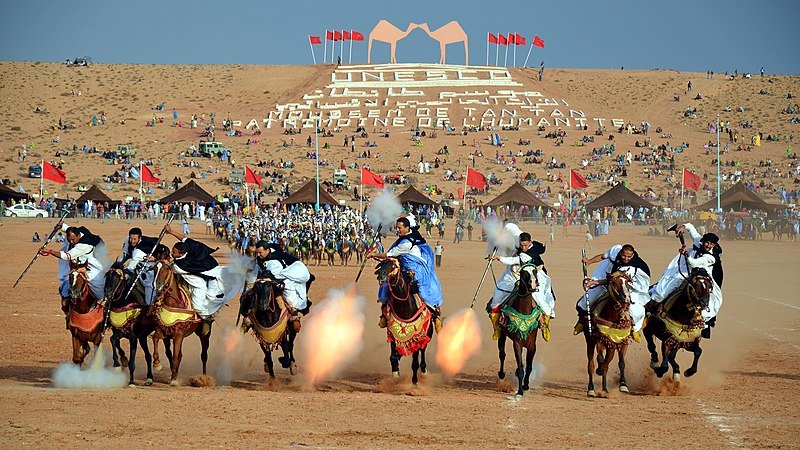
Fantasia (in Morocco)
Beyond Borders: Fantasia Across the Maghreb
Fantasia isn’t confined to just Morocco and Algeria. It also thrives in Tunisia, where it’s a staple at festivals like the International Festival of the Sahara in Douz. In Mauritania, Libya, Mali, and Niger, similar traditions echo the themes of equestrian prowess, heritage, and collective identity.
Though the details differ—the number of riders, types of horses, local names, and even the rifles used—the core remains consistent: a tribute to history, a celebration of community, and a performance that stirs something ancient in the heart.
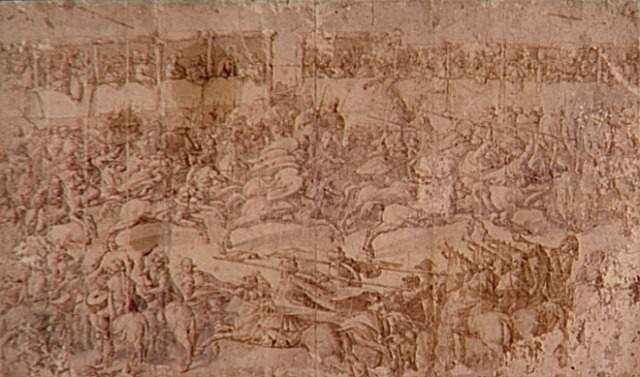
Fantasia in Tunis, painted by the Dutch artist Jan Cornelisz Vermeyen.
Fantasia in Art: A Muse on Horseback
The sheer drama and beauty of Fantasia have not gone unnoticed by artists. In the 19th and early 20th centuries, Western painters like Eugène Delacroix, Nasreddine Dinet, and Ulpiano Checa were captivated by the spectacle. Their oil paintings often depicted the charging riders, swirling dust, and bursts of gunpowder.
From the ancient Numidian cavalry to modern UNESCO recognition, Fantasia continues to fire the imagination—and the spirit—of North Africa.
Modern artists have continued the tradition. Algerian painter Rachid Talbi and photographer Nadjib Rahmani, for instance, have both drawn inspiration from Fantasia’s rich imagery. In Morocco, Hassan El Glaoui created countless paintings of Tbourida, blending tradition with impressionistic flair.
These artworks serve as cultural records, capturing not just the visuals but the emotion and spirit of the performance.
Why Fantasia Endures
At its core, Fantasia is more than just a performance. It’s a statement—a declaration of identity, resilience, and pride. In a world that often rushes toward the modern and the new, Fantasia reins in the past and gallops with it into the present. It’s not stuck in time; it carries time with it.
And that’s why people still gather, generation after generation, to watch, participate in, and preserve this incredible tradition. Whether it’s a child seeing their first charge, a rider perfecting their aim, or a family grooming their prized stallion for the festival, Fantasia lives in the everyday acts of dedication and love that surround it.
Frequently Asked Questions
Where is Fantasia practiced?
It is performed in Algeria, Morocco, Tunisia, Libya, Mauritania, Mali, and Niger, particularly during religious festivals (moussems), weddings, and national events.
What are the origins of Fantasia?
Fantasia traces back to ancient Numidian cavalry tactics, later adopted by Arab-Amazigh tribes in the 17th century as a ceremonial display of martial prowess.
What does the term “Fantasia” mean?
The term comes from Latin and Romance languages meaning “fantasy” or “spectacle.” Regionally, it is also called Tbourida (Morocco), derived from baroud, meaning gunpowder.
What is the cultural significance of Fantasia?
It symbolizes heritage, bravery, and the deep bond between rider and horse. It’s both a martial art and a form of cultural storytelling.
How is Fantasia performed?
Riders, often in traditional attire, gallop in unison and fire old muskets simultaneously, demonstrating precision, coordination, and control.
How is Fantasia different in Algeria and Morocco?
In Algeria, styles like Temerad and Guelba are practiced in both group and individual formats. In Morocco, Tbourida is highly formalized and recognized by UNESCO as intangible cultural heritage.
Who supports and preserves Fantasia today?
Organizations like Morocco’s SOREC and the Royal Equestrian Federation help train, organize, and preserve the tradition, with national competitions and international recognition.





