Most Notable Equestrian Statues in World History
Equestrian statues have long been used to commemorate significant leaders, military commanders, and cultural icons. These statues not only represent their subjects but also serve as landmarks of historical, artistic, and technological achievement. Here, we explore some of the most notable equestrian statues in world history, highlighting their unique features, historical significance, and the legacy they left behind.
Equestrian Statue of Marcus Aurelius (Rome, Italy)
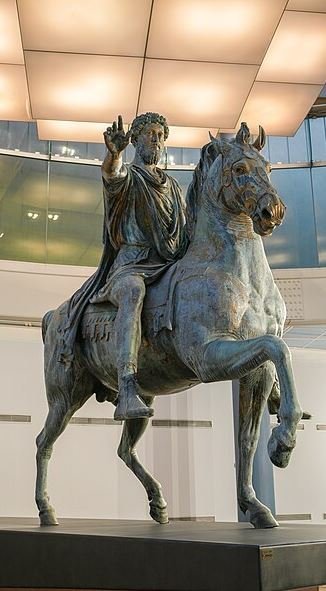
Equestrian Statue of Marcus Aurelius.
The equestrian statue of Marcus Aurelius, located on Capitoline Hill in Rome, is one of the most iconic and well-preserved examples of Roman equestrian statuary. Cast in bronze in approximately 176 CE, it was spared from destruction during the Middle Ages due to a mistaken belief that it represented Emperor Constantine, the first Christian Roman emperor. The statue portrays Marcus Aurelius as a philosopher-emperor, wearing no armor, emphasizing his intellectual and civic leadership over military prowess.
- Significance: It is the only surviving Roman bronze equestrian statue of its kind, symbolizing the blending of imperial power with philosophical wisdom.
- Artistic Note: The figure’s outstretched arm conveys both authority and clemency, reflecting Marcus Aurelius’ Stoic values.
Genghis Khan Equestrian Statue (Ulaanbaatar, Mongolia)
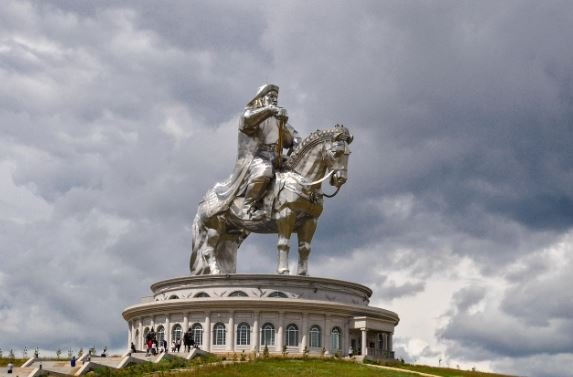
Equestrian statue of Genghis Khan
Standing at 40 meters tall, the Genghis Khan Equestrian Statue, completed in 2008, is the largest equestrian statue in the world. Situated near the Tuul River, where Genghis Khan is said to have discovered a golden whip, this stainless-steel monument celebrates the Mongolian ruler’s legacy as one of history’s greatest conquerors.
- Significance: The statue is a monumental representation of Mongolian pride and a tribute to the empire that Genghis Khan established, which became the largest contiguous empire in history.
- Unique Features: Visitors can ascend the horse’s head for panoramic views, symbolizing the ruler’s far-reaching vision.
Why didn’t the Great Mongol Emperor Genghis Khan invade India?
Donatello’s Gattamelata (Padua, Italy)
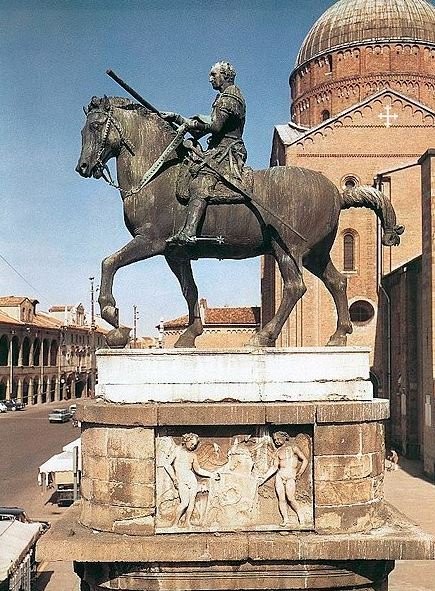
Equestrian statue of Gattamelata
Created between 1444 and 1453, Donatello’s statue of Gattamelata is a Renaissance masterpiece and the first large-scale bronze equestrian statue since antiquity. Erected in Padua, it commemorates Erasmo da Narni, a mercenary commander (condottiere) known for his military skill and service to the Venetian Republic.
- Significance: It marked a revival of classical techniques, including bronze casting, and set a precedent for Renaissance equestrian statues.
- Artistic Note: The horse and rider are rendered in naturalistic proportions, emphasizing realism and the individual character of the subject.
The Bronze Horseman (Saint Petersburg, Russia)
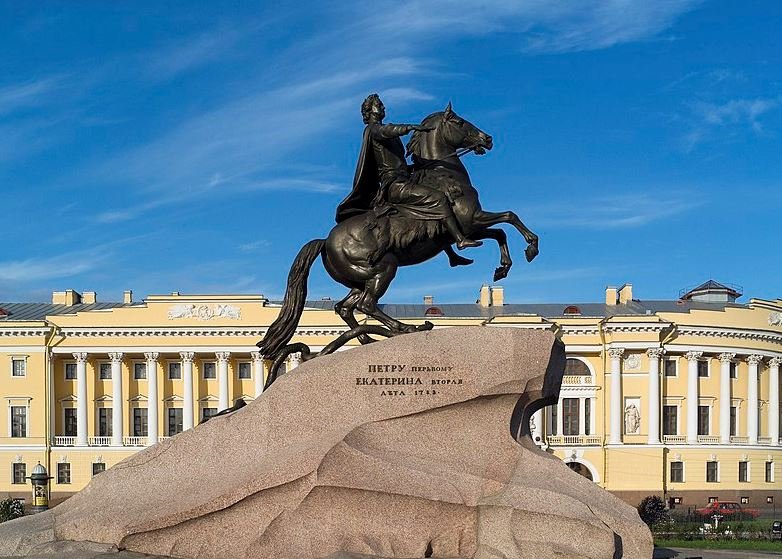
Bronze Horseman statue
Commissioned by Catherine the Great in 1768 and completed in 1782, The Bronze Horseman depicts Peter the Great, the founder of Saint Petersburg. Sculpted by Étienne Maurice Falconet, it portrays Peter on a rearing horse atop a massive granite base shaped like a wave, symbolizing his role in modernizing Russia and establishing its maritime dominance.
- Significance: It is an enduring symbol of Russian power and progress, celebrated in Alexander Pushkin’s famous poem, “The Bronze Horseman.”
- Unique Features: The dynamic posture of the horse and the detailed craftsmanship reflect the neoclassical style, while the massive base, known as the “Thunder Stone,” is one of the largest stones ever moved by humans.
Equestrian Statue of Bartolomeo Colleoni (Venice, Italy)
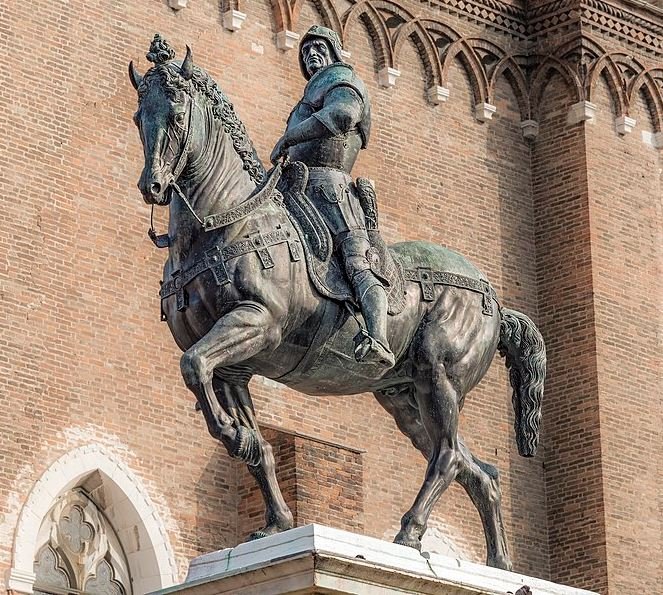
Equestrian statue of Bartolomeo Colleoni
Sculpted by Andrea del Verrocchio and completed in 1488, this bronze statue honors Bartolomeo Colleoni, another famed Italian condottiere. Located in Venice, it represents Colleoni as a powerful and commanding figure, exemplifying the Renaissance ideal of the heroic individual.
- Significance: It is one of the most celebrated equestrian statues of the Renaissance, showcasing Verrocchio’s mastery in anatomy and movement.
- Artistic Note: The rearing horse, with one raised leg, symbolizes controlled energy and the balance between power and restraint.
The Statue of George Washington (Richmond, Virginia, USA)
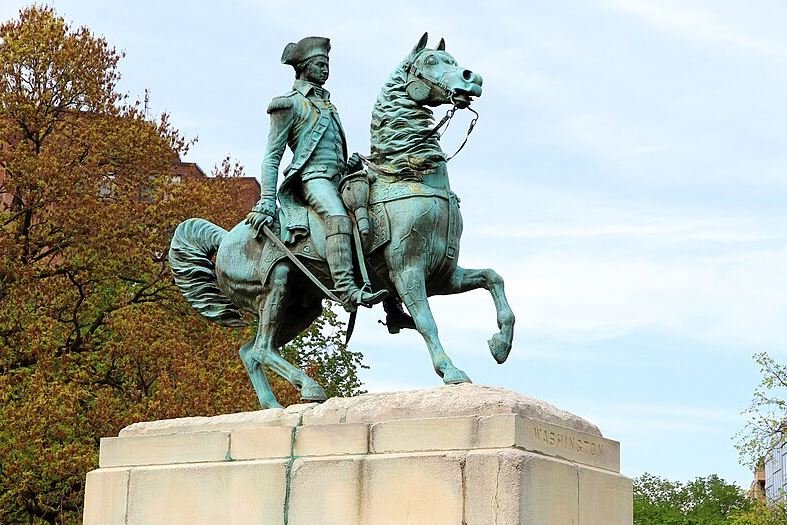
A 2013 image of the Equestrian statue of George Washington
Completed in 1858 by Thomas Crawford, the equestrian statue of George Washington in Richmond is a symbol of the United States’ independence and its first president’s leadership. Washington is depicted in his Revolutionary War uniform, holding a sword, with his horse standing poised.
- Significance: This was one of the earliest major equestrian statues in the United States, representing the nation’s newfound identity and reverence for its founding fathers.
- Unique Features: The statue is part of a larger monument that includes additional allegorical figures representing virtues such as liberty and independence.
Equestrian Statue of Louis XIV (Versailles, France)
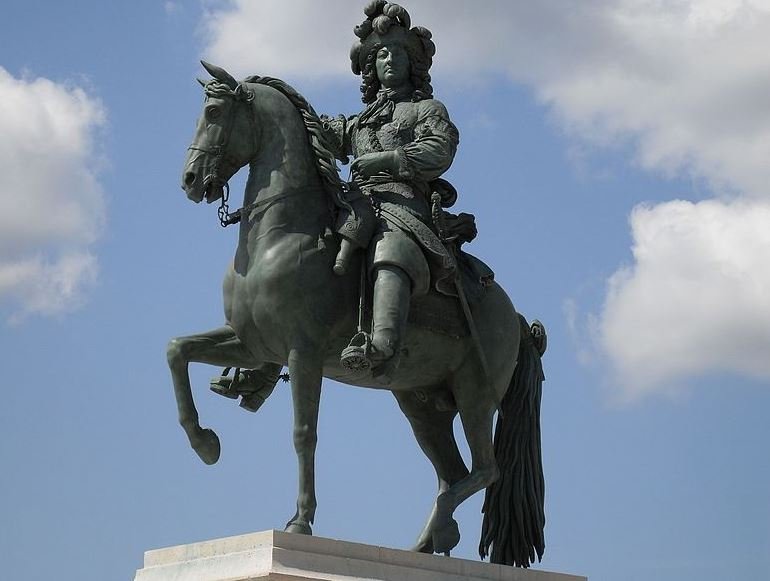
Equestrian statue of Louis XIV (Versailles)
The equestrian statue of Louis XIV, crafted by François Girardon in 1699, originally stood in the Place des Victoires in Paris but was later relocated to Versailles. This statue represents the Sun King in a posture of absolute authority, reinforcing his image as an all-powerful monarch.
- Significance: It exemplifies the use of equestrian statues for royal propaganda during the age of Absolutism, projecting an image of divine right and invincibility.
- Artistic Note: The detailed depiction of Louis XIV’s elaborate armor and the horse’s intricate mane highlights Baroque artistic grandeur.
Equestrian Statue of José Artigas (Minas, Uruguay)
This colossal statue of José Gervasio Artigas, the national hero of Uruguay, was completed in 1944 and remains one of the largest equestrian statues in the world. Standing at 18 meters tall and weighing 150,000 kilograms, it commemorates Artigas’ role in securing Uruguay’s independence.
- Significance: The statue is a potent symbol of national pride and independence in South America.
- Unique Features: The monument’s sheer scale and Artigas’ poised stance make it an imposing and memorable landmark.
Crazy Horse Memorial (South Dakota, USA)
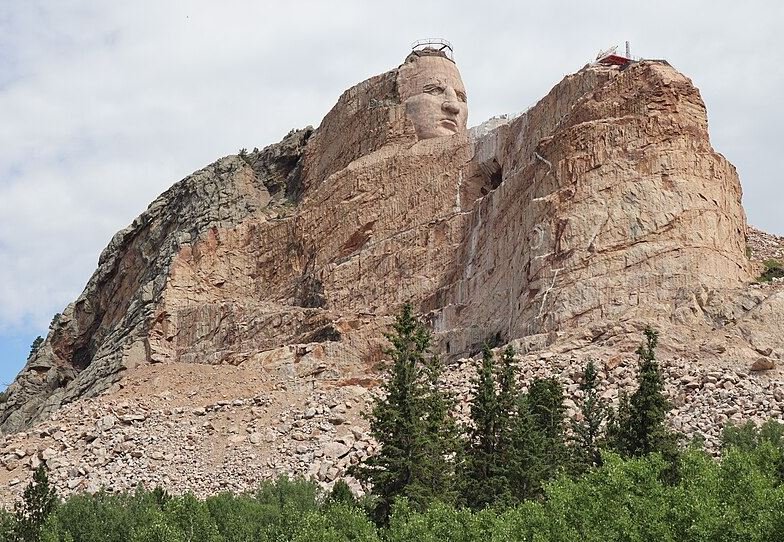
A close view of the Crazy Horse Memorial
Though still under construction, the Crazy Horse Memorial in South Dakota is an ambitious project commemorating the Native American leader Crazy Horse. When completed, it will be the largest equestrian sculpture in the world, measuring 641 feet wide and 563 feet high. It depicts Crazy Horse pointing toward his lands while riding a horse.
- Significance: The memorial honors Native American history and resilience, serving as a counterpoint to Mount Rushmore.
- Artistic Note: The monumental scale and intricate detail reflect the cultural and spiritual significance of Crazy Horse’s legacy.
Equestrian Statue of Queen Elizabeth II (Canada)
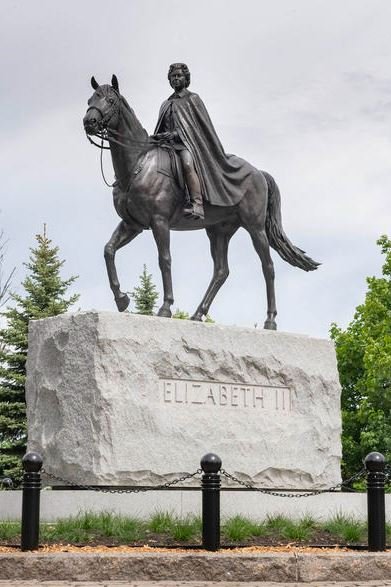
Equestrian Statue of Queen Elizabeth II. Image source.
Unveiled in 1992 in Canada, this statue depicts Queen Elizabeth II riding her favorite horse, Burmese, gifted to her by the Royal Canadian Mounted Police. It is one of the few equestrian statues of a female monarch in the modern era.
- Significance: It celebrates the unique bond between Canada and its head of state while showcasing the Queen’s personal love of horseback riding.
- Unique Features: The statue’s modern design and attention to the Queen’s regal yet approachable demeanor distinguish it from traditional equestrian monuments.
Frequently Asked Questions
What challenges are involved in creating equestrian statues?
Producing a full-sized equestrian statue is technically and financially demanding, making them historically reserved for rulers, military commanders, or symbolic figures.
What is the origin of equestrian statuary in Western art?
It dates back to Archaic Greece, with examples like the sixth-century BC Rampin Rider. Romans popularized the form for imperial propaganda, commemorating military leaders and emperors.
What distinguishes Roman equestrian statues?
Roman examples, typically bronze, often symbolized military and political power. Most were melted down; the equestrian statue of Marcus Aurelius is one of the few surviving examples, preserved due to misidentification as Constantine the Great.
How did the Renaissance revive equestrian statues?
The Italian Renaissance, starting with Donatello‘s Gattamelata (1444–1453), reintroduced monumental bronze equestrian statues, often memorializing successful military leaders like condottieri.
10 Most Renowned Italian Renaissance Painters and their Masterpieces
How did equestrian statues evolve during Absolutism?
They became symbols of monarchic power, exemplified by Louis XIV’s statue at Versailles and the Bronze Horseman (1782) of Peter the Great in Russia.
What is the significance of equestrian statues in the United States?
The first equestrian statue in the U.S. depicted George III but was destroyed after the Declaration of Independence. Early American examples include Andrew Jackson (1852) and George Washington (1856).
What caused the decline of equestrian statues in the 20th century?
With the decline of monarchies and the military role of horses, equestrian monuments became less common, though some modern works memorialize historical figures or cultural themes like Native Americans and cowboys.
What is the tallest equestrian statue?
The Marjing Polo Statue in Manipur, India (37 meters), depicting the deity Marjing, is currently the tallest. The Crazy Horse Memorial in South Dakota, when completed, will surpass all others.
What is the “hoof-position symbolism”?
An urban legend suggests the position of a horse’s hooves indicates the rider’s fate (e.g., rearing = died in battle). However, studies show this rule is unreliable and inconsistent.