
Title page of “A Counterblaste to Tobacco” by King James VI & I.
A Counterblaste to Tobacco is a treatise written by King James VI of Scotland and I of England in 1604. The publication represents one of the earliest recorded criticisms of tobacco consumption. King James, a staunch opponent of smoking, condemned tobacco as a harmful and unnecessary indulgence that posed serious health and social risks.
His essay articulates concerns about the physiological effects of smoking, its social implications, and the economic consequences of the tobacco trade. His opposition to tobacco led to significant policy changes, including heavy taxation and attempts at market regulation.
Today, A Counterblaste to Tobacco is recognized as an early instance of anti-smoking literature and continues to be referenced in discussions on public health and state intervention in substance use.
Historical Context
The late 16th and early 17th centuries saw the introduction and widespread adoption of tobacco in Europe. First brought back by Spanish and Portuguese explorers from the Americas, tobacco quickly gained popularity across England, particularly after Sir Walter Raleigh popularized its use at the Elizabethan court.
Many physicians and scholars of the period debated its medicinal value, with some claiming it had therapeutic properties, while others viewed it as a vice. King James I took a firm stance against tobacco, not only disapproving of its use but also actively working to curb its spread within his kingdom.
James’s opposition to tobacco use was both personal and political. He associated it with Native American customs, which he viewed as uncivilized, and he feared that its growing popularity in England encouraged unhealthy habits.
Moreover, tobacco’s increasing economic influence—particularly in England’s American colonies—presented challenges to state control. His treatise, A Counterblaste to Tobacco, was written as both a moral and a practical warning against its consumption.
A Counterblaste to Tobacco is a 1604 treatise by King James VI and I, condemning tobacco use and warning of its dangers.
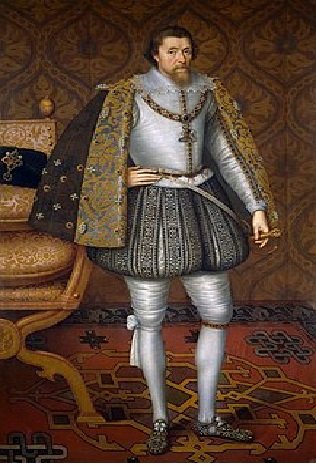
King James VI and I
Style and Content
The treatise is written in Early Modern English, featuring elaborate sentence structures and references to contemporary medical theories. At the time, medical knowledge was heavily influenced by the theory of the four humours, which suggested that the body was governed by four fluids—blood, phlegm, yellow bile, and black bile—each corresponding to different temperaments and health conditions. James argued that tobacco disrupted this balance, particularly affecting the brain and lungs.
In A Counterblaste to Tobacco, James places blame on Native Americans for introducing tobacco to European society, presenting it as a “filthy novelty” that corrupted the civility of English culture. He also expresses an early concern about passive smoking, describing the act of inhaling others’ smoke as an involuntary and harmful experience. Furthermore, he criticizes the unpleasant odor of tobacco, referring to it as “hatefull to the nose.”
One of the most striking aspects of James’s writing is his use of vivid imagery and strong moral condemnation. He likens the smoke from tobacco to the fumes of hell, calling it “a custome lothsome to the eye, hatefull to the Nose, harmefull to the braine, dangerous to the Lungs, and in the blacke stinking fume thereof, neerest resembling the horrible Stigian smoke of the pit that is bottomelesse.” Such rhetoric highlights the deep revulsion James felt toward smoking and his belief that it was a morally and physically degrading practice.
Economic and Policy Effects
James’s disdain for tobacco was not limited to rhetoric. He took concrete steps to curb its usage through economic policies. In 1604, the same year he published A Counterblaste to Tobacco, he authorized his Lord High Treasurer, Thomas Sackville, 1st Earl of Dorset, to impose a heavy excise tax on tobacco imports. The tariff was set at six shillings and eight pence per pound of tobacco—an enormous sum at the time. This would be equivalent to approximately £90 per pound in today’s currency, or about £198 per kilogram (ONS Inflation Calculator, 2024).
Despite this financial deterrent, the demand for tobacco remained high, fueled by England’s expanding colonial interests. Tobacco cultivation became a cornerstone of the economy in the American colonies, particularly in Virginia and Maryland.
By the 1620s, James reluctantly acknowledged the economic realities of the tobacco trade and shifted his approach. Instead of attempting to eliminate its use entirely, he created a royal monopoly on tobacco in 1624, allowing the Crown to regulate and profit from its sale while maintaining some level of control over its consumption.
James I’s efforts to curb tobacco use through taxation and regulation, though ultimately ineffective in eliminating its consumption, reflect an early attempt at government-led public health intervention.
Reception and Legacy
James’s strong opposition to tobacco did not deter its widespread use. The financial incentives associated with tobacco trade outweighed moral and health concerns for many English merchants and colonial investors. Although his treatise was widely read, it did little to curb smoking habits. However, it remains historically significant as one of the earliest government-led criticisms of a substance that would later be recognized as a major public health hazard.
Over a century later, the British philosopher Jeremy Bentham referenced A Counterblaste to Tobacco as an example of irrational governmental antipathy. Bentham, a proponent of utilitarianism, criticized James’s harsh rhetoric, arguing that laws and policies should be based on objective harm rather than moral condemnation. Despite Bentham’s critique, modern historians and public health officials have revisited A Counterblaste to Tobacco with renewed interest, recognizing its prescient warnings about the dangers of smoking.
Though James’s views were largely dismissed in his own era, his warnings about tobacco’s dangers now seem remarkably forward-thinking.
Impact on Public Health Perspectives
In hindsight, many of James’s concerns about tobacco have proven valid. The harmful effects of smoking on the lungs and brain, which he suspected without the benefit of modern science, have since been confirmed through medical research. The dangers of secondhand smoke, which he decried centuries before it became a widely recognized issue, are now central to tobacco control policies worldwide.
James’s treatise represents an early example of state intervention in public health matters. Though not scientifically rigorous by modern standards, his reasoning aligns with contemporary efforts to regulate substances that pose widespread health risks. The parallels between his concerns and modern anti-smoking campaigns demonstrate how historical perspectives on public health can offer valuable insights into present-day policies.
Jamestown Colony: England’s first, thriving settlement in the Americas
Frequently Asked Questions
Why did King James I of England oppose tobacco?
He considered it harmful to health, offensive in smell, and a sinful indulgence, associating it with vanity and moral corruption.
What medical theories influenced James’s arguments?
He referenced the four humours, a prevailing medical theory, to argue that tobacco disrupted bodily balance.
How did James act against tobacco?
In 1604, he imposed a heavy tax on imported tobacco to discourage its use, making it a costly habit.
Did the tax succeed in curbing tobacco use?
No, demand remained high, leading James in 1624 to establish a royal monopoly on the crop instead.
How was A Counterblaste to Tobacco received?
It was largely ignored, as tobacco use continued to rise despite the king’s disapproval.
What later thinker referenced James’s work?
Jeremy Bentham cited it as an example of extreme antipathy towards a social practice.
What was James’s most famous quote on tobacco?
He called it “loathsome to the eye, hateful to the nose, harmful to the brain, and dangerous to the lungs.”





