Alexandre Dumas: Life, Major Works, & Accomplishments
Alexandre Dumas’ life and career reflect the triumphs and challenges of a literary giant. His ability to capture human drama and historical grandeur made him one of France’s most beloved authors.
In the article below, World History Edu delves into the life and major accomplishments of this famed French novelist.
Early Life and Family Background
Alexandre Dumas père was born Alexandre Dumas Davy de la Pailleterie on July 24, 1802, in Villers-Cotterêts, France. He was the son of General Thomas-Alexandre Dumas, a celebrated military figure during Revolutionary France. General Thomas-Alexandre was the son of a French nobleman, Alexandre Antoine Davy de la Pailleterie, and Marie-Cessette Dumas, an enslaved African woman from Saint-Domingue (modern-day Haiti). This mixed heritage added complexity to Dumas’ identity and subjected him to prejudice throughout his life.
Thomas-Alexandre’s military career was cut short due to political tensions and imprisonment during Napoleon‘s reign, leaving the family in financial hardship. He died in 1806 when Alexandre was only four years old. Despite these challenges, Dumas inherited his father’s resilience and charisma. Raised by his mother, he developed a love for storytelling, inspired by his family’s rich history and the legacy of his father’s heroics.
Who were the greatest generals of the Revolutionary and Napoleonic Wars?
Early Career and Rise to Fame
In 1823, Dumas moved to Paris in search of opportunities. He initially found employment as a clerk for Louis-Philippe, Duke of Orléans, who later became King of France. During this time, Dumas began to hone his writing skills, inspired by the Romantic literary movement and authors like Victor Hugo. His early works focused on plays, which quickly brought him success in the Parisian theater scene.
His first major theatrical success came in 1829 with Henri III et sa cour, a play that captivated audiences with its dramatic portrayal of French history. This was followed by Christine in 1830, cementing Dumas’ reputation as a leading figure in Romantic theater.
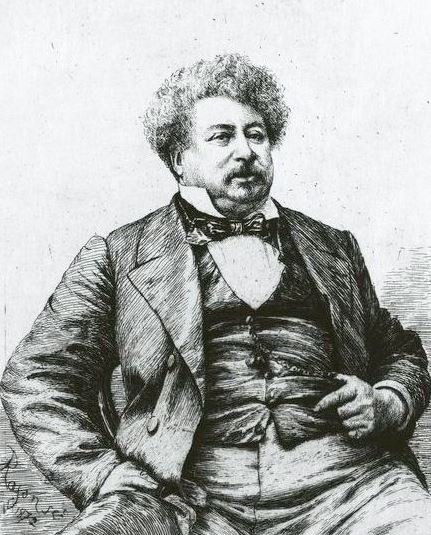
Image: Alexandre Dumas
Transition to Novels
While Dumas thrived in theater, he recognized the growing demand for serialized fiction in newspapers and magazines. In the 1830s, he transitioned to writing novels, which allowed him to reach a broader audience. His ability to craft compelling narratives filled with adventure, romance, and intrigue resonated with readers.
Dumas collaborated with Auguste Maquet, a historian and dramatist, on many of his novels. Maquet provided historical research and plot outlines, while Dumas added his creative flair and vibrant prose. Together, they created some of the most iconic works in literary history.
Major Works
- The Three Musketeers (1844) This swashbuckling adventure follows the young d’Artagnan and his three musketeer friends—Athos, Porthos, and Aramis—as they navigate loyalty, betrayal, and political intrigue in 17th-century France. Themes of friendship, honor, and bravery underpin the novel, which remains one of Dumas’ most enduring works.
- The Count of Monte Cristo (1844–1846) Often considered Dumas’ masterpiece, this novel tells the story of Edmond Dantès, a wrongfully imprisoned sailor who escapes and exacts revenge on those who betrayed him. Set against the backdrop of post-Napoleonic France, the book explores themes of justice, vengeance, forgiveness, and the transformative power of wealth.
- Twenty Years After (1845) A sequel to The Three Musketeers, this novel revisits d’Artagnan and his friends as they navigate the political turmoil of France during the Fronde.
- The Vicomte of Bragelonne: Ten Years Later (1847–1850) The final installment in the d’Artagnan series, this novel introduces the character of Louise de la Vallière and chronicles the rise of King Louis XIV, culminating in the story of The Man in the Iron Mask.
- Other Notable Works
- Queen Margot (1845): A tale of political and religious conflict during the reign of Henry IV.
- The Black Tulip (1850): A historical romance set in the Dutch Golden Age.
- Georges (1843): A novel that reflects on race and colonialism, inspired by Dumas’ own heritage.
Writing Style and Themes
Dumas’ novels are characterized by their fast-paced plots, vivid characterizations, and historical detail. He often blended real historical events with fictional elements, creating stories that were both entertaining and informative. Themes of loyalty, betrayal, revenge, and justice recur throughout his works, as do explorations of morality and the human condition.
Dumas was also a master of serialized storytelling, which allowed him to build suspense and maintain reader interest over extended periods. This approach contributed to his widespread popularity and commercial success.
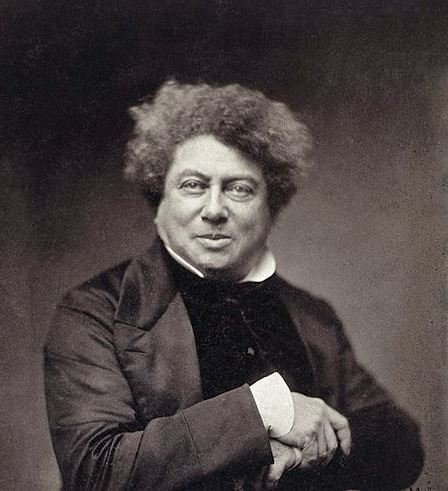
Image: Dumas during the mid-1850s.
Cultural Impact and Adaptations
Dumas’ works have had a profound impact on literature and popular culture. By the early 20th century, his novels had been adapted into nearly 200 films, including iconic versions of The Count of Monte Cristo and The Three Musketeers. His stories have inspired countless adaptations in theater, television, and modern literature.
The adventurous spirit and universal themes of Dumas’ works have transcended cultural and linguistic barriers, ensuring their continued relevance. Writers like Jorge Luis Borges and Salman Rushdie have cited Dumas as an influence, and his narrative techniques have shaped storytelling traditions worldwide.
Challenges and Later Years
Despite his immense success, Dumas faced financial difficulties throughout his life, largely due to his extravagant lifestyle and ambitious projects. In 1846, he founded the Théâtre Historique in Paris, which staged productions of his works but proved financially unsustainable. Political changes in France, including the rise of Louis-Napoléon Bonaparte, further complicated his career.
Dumas spent much of the 1850s abroad, living in Belgium, Russia, and Italy. During his time in Italy, he founded the newspaper L’Indépendent, which supported the cause of Italian unification. He returned to Paris in 1864, continuing to write until his death in 1870.
Personal Life
Dumas was known for his charisma, generosity, and larger-than-life personality. English playwright Watts Phillips described him as “the most generous, large-hearted being in the world… his tongue was like a windmill—once set in motion, you would never know when he would stop.” He was also a prolific womanizer and fathered several children, including Alexandre Dumas fils, who became a celebrated writer in his own right.
Dumas faced criticism for using collaborators and ghostwriters, a common practice at the time. However, his creative vision and storytelling genius were undeniable, and his contributions to literature far outweighed such controversies.
Legacy
Alexandre Dumas’ legacy is one of extraordinary creativity and cultural influence. His works exemplify the power of storytelling to inspire, entertain, and educate. As one of the most widely read authors in history, he bridged the gap between popular and high literature, making timeless tales accessible to readers of all backgrounds.
In recognition of his contributions, Dumas’ remains were interred in the Panthéon in Paris in 2002, alongside other French literary greats like Victor Hugo and Émile Zola. This honor underscores his enduring place in the canon of world literature.
Frequently Asked Questions

Alexandre Dumas père (1802–1870) was a renowned French novelist and playwright best known for his historical adventure novels, including The Three Musketeers and The Count of Monte Cristo. He was one of the most widely read French authors, and his works have been adapted into numerous films and other media. Image: An engraving of Dumas by Antoine Maurin.
What is Alexandre Dumas’ family background?
Dumas was born Alexandre Dumas Davy de la Pailleterie in Villers-Cotterêts, France, on July 24, 1802. His father, General Thomas-Alexandre Dumas, was a prominent military leader of mixed heritage, the son of a French nobleman and Marie-Cessette Dumas, an enslaved African woman from Saint-Domingue (modern-day Haiti).
How did Alexandre Dumas begin his literary career?
Dumas started as a playwright, achieving success with plays like Henri III et sa cour (1829) and Christine (1830). These established him as a leading figure in French Romantic theater. By the 1830s, he transitioned to writing serialized novels, which gained immense popularity.
What are Dumas’ most famous novels?
Dumas is celebrated for several historical adventure novels, including:
- The Three Musketeers (1844): A classic tale of friendship and intrigue set in 17th-century France.
- The Count of Monte Cristo (1844–1846): A gripping story of betrayal, revenge, and redemption.
- Twenty Years After (1845) and The Vicomte of Bragelonne: Ten Years Later (1847–1850): Sequels to The Three Musketeers, continuing the adventures of d’Artagnan and his friends.
What other types of works did Dumas produce?
Dumas was incredibly versatile, producing over 100,000 pages of content, including magazine articles, travelogues, biographies, and non-fiction works. His prolific output established him as a literary titan.
How did Dumas’ works influence global culture?
His stories transcended cultural and linguistic barriers, inspiring nearly 200 film adaptations by the early 20th century. His works influenced theater, television, and literature worldwide, solidifying his reputation as a global literary icon.
What challenges did Dumas face later in life?
Despite his success, Alexandre Dumas faced financial difficulties due to his extravagant lifestyle and ambitious projects, such as founding the Théâtre Historique in Paris. Political changes after Louis-Napoléon Bonaparte’s election in 1851 led him to leave France for Belgium, Russia, and Italy before returning to Paris in 1864.
What was Alexandre Dumas’ personality like?
He was known for his charisma, generosity, and humor. English playwright Watts Phillips described him as “the most generous, large-hearted being in the world” with a lively and talkative personality.
How is Dumas viewed in terms of his creative process?
Dumas faced criticism for collaborating with other writers and using ghostwriters. However, his creative vision and storytelling genius remain unquestioned, and his ability to produce compelling narratives continues to inspire readers and creators.