So let’s talk about Neferkare Neby—also known as Neferkare III—a pharaoh from one of the murkiest times in ancient Egyptian history: the First Intermediate Period. This wasn’t one of Egypt’s golden ages with soaring temples and stable governance. Instead, it was a time of political fragmentation, uncertainty, and rapid turnover of rulers. Yet, somehow, amidst this chaos, Neferkare Neby managed to leave behind a name we still remember. That alone is pretty impressive given how many kings from this era were essentially wiped from history.
A King Among Many… Briefly
Neferkare Neby likely ruled around 2196 BC and is generally placed within the Seventh or Eighth Dynasty. Now, here’s where it gets a little tricky: historians don’t all agree on the specifics of these dynasties. The records from this period are incredibly sparse, and there’s even debate over whether the Seventh Dynasty truly existed in any official capacity or if it was more of a literary invention symbolizing chaos. That said, Egyptologists like Jürgen von Beckerath and Darrell Baker list him as the fourth king of the Seventh Dynasty, and his name pops up exactly in that position on the Abydos King List—a key ancient document that records many of Egypt’s rulers.
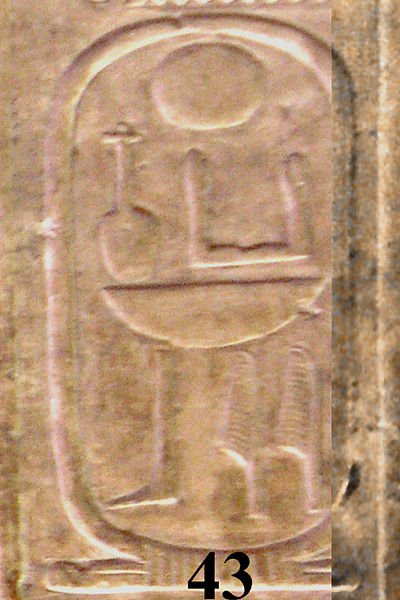
The Abydos King List also known as the Abydos Tablet features the cartouche of Neferkare Neby.
Not Just a Name on a List
Unlike many other rulers from this shadowy time, Neferkare Neby isn’t just a name carved into a single king list. He’s actually attested by two other contemporary sources, and that makes him a bit of a standout. His name appears on a false door—a symbolic element often placed in tombs to serve as a portal between the worlds of the living and the dead—at the tomb of Queen Ankhesenpepi II. Even more compelling, his name is also inscribed on her sarcophagus. This extra documentation gives us a stronger link to his existence and possibly even to his lineage.
A Royal Bloodline?
The connection to Queen Ankhesenpepi II is more than just a curious coincidence. Based on these inscriptions, scholars suggest that Neferkare Neby may have been her son. If that’s the case, it would make his father Merenre Nemtyemsaf I, a known pharaoh from the Sixth Dynasty. That’s quite significant. If he really was their child, then Neferkare Neby may have had royal credentials going back to the Old Kingdom, possibly offering him some extra legitimacy during the unstable First Intermediate Period.
READ ALSO: Most Famous Pharaohs of Ancient Egypt
A Pyramid That Never Rose
Now here’s a tantalizing detail: there’s evidence that Neferkare Neby began the construction of a pyramid—probably at Saqqara, Egypt’s famous necropolis. The stele of Ankhesenpepi II refers to him as Djedankh Neferkare Neby, which translates to “Neferkare Neby is Enduring of Life.” It’s a royal name filled with hope and permanence, which is kind of ironic considering that his pyramid never seems to have been completed. We don’t know where it was supposed to be, and archaeologists haven’t found any clear remains of it. Most likely, the project never got far off the ground—another victim of the instability that plagued his era.
Neferkare III’s possible royal parentage and attempt to build a pyramid hint at a desire to hold onto the traditions of the Old Kingdom even as Egypt was unraveling.
Lost to the Turin Canon
Even though we have a few sources confirming Neferkare Neby’s reign, he doesn’t show up in the Turin Royal Canon, one of the most important king lists from ancient Egypt. But that’s not necessarily surprising. The section where his name would’ve appeared is badly damaged, full of gaps and missing fragments. This means that even if the scribes originally included him, the passage of time erased his place in that particular record. It’s just another example of how fragile historical memory can be.
Frequently Asked Questions
Which dynasty did Neferkare III belong to?
He is generally placed in the Seventh or Eighth Dynasty and is listed as the fourth king of the Seventh Dynasty in the Abydos King List.
How is Neferkare Neby attested historically?
His name appears in the Abydos King List, on a false door, and on the sarcophagus of Queen Ankhesenpepi II.
What is the significance of the inscriptions linked to Queen Ankhesenpepi II?
They suggest Neferkare Neby may have been her son, which would make his father the Sixth Dynasty pharaoh Merenre Nemtyemsaf I.
Did Neferkare Neby build a pyramid?
He reportedly began constructing a pyramid, likely at Saqqara, though it was never completed or has not been found.
What does his full name mean?
His full name, Djedankh Neferkare Neby, translates to “Neferkare Neby is Enduring of Life.”
Is he included in the Turin Royal Canon?
No, his name is missing due to damage (a lacuna) in the section where it likely would have been recorded.
Unlike many kings of his time, Neferkare III is attested by multiple sources, offering rare insight into a chaotic and poorly documented era.





