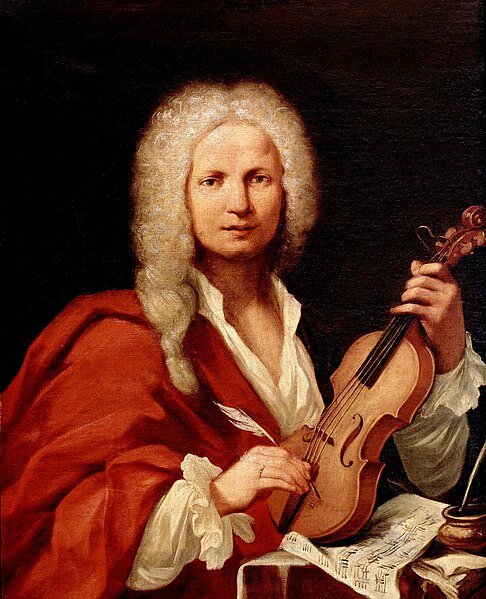
A probable portrait of Vivaldi, circa 1723.
Antonio Lucio Vivaldi (1678–1741), one of the most influential composers of the Baroque era, remains celebrated for his exceptional contributions to music. Alongside Johann Sebastian Bach and George Frideric Handel, Vivaldi shaped the evolution of Baroque music through innovative compositions, instrumental mastery, and operatic ventures. Known as “The Red Priest” due to his fiery red hair, Vivaldi left a profound legacy that continues to resonate globally.

Birth and Background
Vivaldi was born on March 4, 1678, in Venice, then a prominent cultural hub in the Republic of Venice. He was the eldest of six children born to Giovanni Battista Vivaldi, a barber-turned-violinist, and Camilla Calicchio. Baptized at home immediately after birth, possibly due to health concerns, Vivaldi’s early life was marked by poor health, with some speculating he suffered from asthma.
Musical Influences and Training
Vivaldi’s father, an accomplished violinist, introduced him to music, touring Venice with his young son. Giovanni’s association with the Sovvegno dei musicisti di Santa Cecilia, a musicians’ guild, likely brought Antonio into contact with prominent composers like Giovanni Legrenzi, who may have provided him with foundational lessons in composition. By the age of 24, Vivaldi’s musical knowledge and skill were evident, enabling him to secure a teaching position at the Ospedale della Pietà.
The Priesthood
At 15, Vivaldi began studying for the priesthood and was ordained at 25. Known for his striking red hair, he was nicknamed Il Prete Rosso (“The Red Priest”). However, due to chronic health issues, he was granted dispensation from saying public Masses, allowing him to focus more on music.
Ospedale della Pietà: A Musical Legacy
In 1703, Vivaldi became the maestro di violino (violin master) at the Ospedale della Pietà, a Venetian institution for abandoned or orphaned girls. Here, Vivaldi composed many of his most celebrated works, including sacred choral pieces and instrumental concertos. The girls’ orchestra gained international acclaim under his direction. Promoted to maestro de’ concerti (music director) in 1716, Vivaldi was tasked with composing two concertos monthly, fostering his prolific output.
Operatic Ventures
Opera became an essential part of Vivaldi’s career. In 1713, he debuted his first opera, Ottone in villa. Despite setbacks, such as censorship of his opera Arsilda, regina di Ponto, Vivaldi achieved notable success with productions like Juditha triumphans. This sacred oratorio, written for the Ospedale, showcased his ability to blend vocal and instrumental artistry. Throughout his career, Vivaldi composed around 50 operas, many of which were performed across Italy and Europe.
The Four Seasons
Vivaldi’s most famous work, The Four Seasons, composed around 1725, revolutionized programmatic music. This set of four violin concertos vividly depicts the changing seasons, complete with imagery of flowing streams, storms, chirping birds, and frosty winter nights. Accompanied by sonnets, possibly written by Vivaldi himself, these concertos remain a cornerstone of classical music.
One of Vivaldi’s most enduring achievements is The Four Seasons (1725), a set of violin concertos vividly depicting the changing seasons.
Contributions to the Concerto Form
Vivaldi is credited with refining and popularizing the concerto form, particularly for solo violin. His collections, such as L’estro armonico and La stravaganza, set new standards for instrumental music, influencing composers like Bach. His use of contrasting movements, dynamic interplay between soloists and orchestras, and vibrant melodic themes shaped the concerto’s evolution.
Orchestration and Technique
Vivaldi’s innovative approach to orchestration expanded the expressive potential of instruments. He incorporated lesser-used instruments like the viola d’amore and the mandolin into his compositions. Additionally, his virtuosic violin techniques inspired generations of musicians, setting a high standard for technical brilliance.
Later Years
By the early 18th century, Vivaldi had gained fame across Europe. He traveled extensively, securing commissions from royalty and nobility. His opera La cetra was dedicated to Emperor Charles VI, who honored Vivaldi with a knighthood and an invitation to Vienna. Despite his success, Vivaldi faced challenges as his style fell out of favor with changing musical tastes.
In 1740, Vivaldi relocated to Vienna, possibly seeking a stable position at the imperial court. However, Emperor Charles VI’s death shortly after Vivaldi’s arrival left him without patronage. Struggling financially, Vivaldi died in poverty on July 28, 1741. He was buried in an unmarked grave, a humble end for a once-revered composer.
Rediscovery and Legacy
Vivaldi’s music fell into obscurity after his death, overshadowed by composers of the Classical period. However, the early 20th century saw a resurgence of interest in his work. Scholars like Marc Pincherle and musicians such as Fritz Kreisler played pivotal roles in reviving Vivaldi’s compositions. The discovery of manuscripts in the 1920s, including over 280 concertos and several operas, further solidified his place in music history.
From his early days as a prodigious violinist to his enduring contributions to Baroque music, Vivaldi’s impact is immeasurable.
Today, Vivaldi’s music is celebrated worldwide. His works are performed in concert halls, adapted for modern instruments, and featured in films and advertisements. The Four Seasons, in particular, continues to captivate audiences with its vivid imagery and technical brilliance.
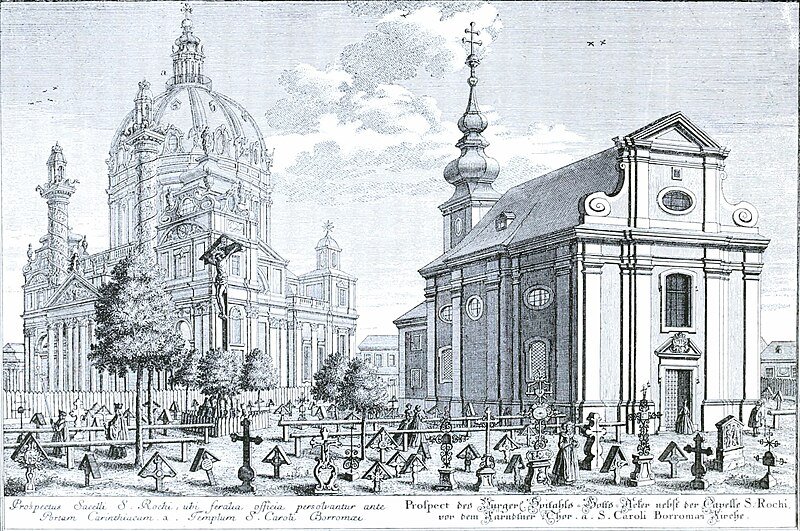
A historic view of the Bürgerspital-Gottesacker cemetery and chapel, where Vivaldi’s tomb once stood, adjacent to St. Charles Church until 1807.
Frequently Asked Questions about Vivaldi
What is Vivaldi’s most famous work?
His best-known composition is The Four Seasons, a series of violin concertos that depict scenes and emotions associated with the seasons.
What was Vivaldi’s role at the Ospedale della Pietà?
Vivaldi worked as a violin teacher and later as music director at this Venetian orphanage, composing many of his sacred and instrumental works for its all-female music ensemble.
Why was Vivaldi called “The Red Priest”?
He earned this nickname due to his red hair and his ordination as a priest, although he was later excused from saying Mass due to health issues.
What impact did Vivaldi have on music?
Vivaldi pioneered the concerto form, influenced composers like J.S. Bach, and elevated violin performance techniques, leaving a legacy that shaped Baroque music.
Why did Vivaldi move to Vienna, and what happened there?
He moved to Vienna hoping for imperial patronage under Emperor Charles VI, but the emperor’s death left him impoverished. Vivaldi died in Vienna in 1741.
What led to Vivaldi’s rediscovery?
His music fell into obscurity after his death but was revived in the 20th century, thanks to scholars, performers, and the discovery of lost manuscripts.
How many works did Vivaldi compose?
Vivaldi composed over 450 concertos, 46 operas, and a vast array of sacred choral music, sonatas, and chamber works, many of which remain widely performed today.





