Athanasius I of Alexandria, also known as Athanasius the Great, was a central figure in early Christianity, revered for his theological contributions and relentless defense of the Nicene Creed. His life, marked by periods of exile and intense opposition, profoundly influenced the theological and political landscape of the fourth century. Below World History Edu presents a detailed account of his life and contributions, structured with clear headings for clarity.
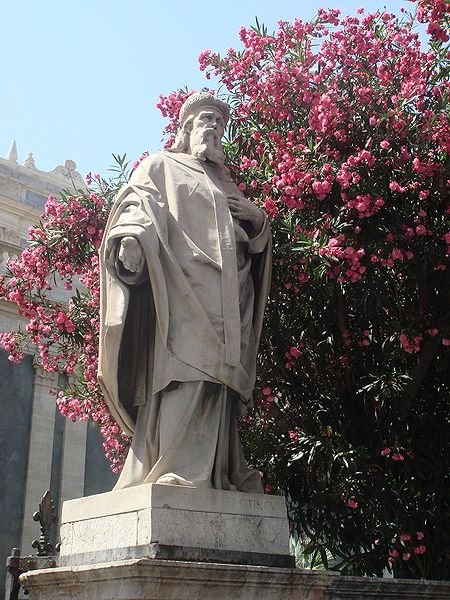
Athanasius’s statue stands prominently in Catania, Sicily, honoring his legacy.
Early Life and Education
Athanasius was born between 296 and 298 in Alexandria, or possibly in the nearby town of Damanhur, into a Christian family. His early writings suggest maturity beyond his years, likely shaped by a fine education supported by his family’s resources. Despite his affluent background, he was not part of the Egyptian aristocracy.
Athanasius excelled in Greek, which he used for most of his works, and was also fluent in Coptic, reflecting the diverse cultural influences of Alexandria. As a youth, he demonstrated an early inclination toward the Church. An anecdote recounts him performing mock baptisms with his peers, an act that impressed Bishop Alexander of Alexandria, who took Athanasius under his mentorship.
Rise to Leadership
In 325, at the age of 27, Athanasius participated in the First Council of Nicaea as a deacon and secretary to Bishop Alexander. The council, convened by Emperor Constantine, addressed the Arian controversy, which denied the consubstantiality of the Son with the Father. Athanasius emerged as a leading opponent of Arianism.
In 328, Athanasius succeeded Alexander as Patriarch of Alexandria. His election, despite opposition from Arian and Meletian factions, was widely supported by the clergy and laity. As patriarch, Athanasius faced persistent challenges from Arian sympathizers and imperial authorities.
Defense Against Arianism
Athanasius championed Trinitarian theology, emphasizing that the Son and the Father are of the same essence (homoousion). This stance became a cornerstone of Christian orthodoxy. His works, such as Orations Against the Arians, articulated a robust defense of the Nicene Creed.
Throughout his episcopate, Athanasius endured five exiles, totaling over 17 years. These were imposed by emperors sympathetic to Arianism, including Constantine, Constantius II, Julian the Apostate, and Valens. Despite these challenges, he maintained communication with his flock through his Festal Letters and writings.
Contributions to Christian Thought
Athanasius is credited with the first recorded list of the 27 books of the New Testament canon in his 39th Festal Letter (367). While some attribute this milestone to earlier figures like Origen, Athanasius’ list significantly influenced the development of the Christian biblical canon.
Athanasius had close ties with the Desert Fathers, particularly Anthony the Great, whose biography, Life of Anthony, he authored. This work popularized the monastic ideal and inspired the ascetic movement in both the Eastern and Western Churches.
His seminal work, On the Incarnation, underscores the theological significance of Christ’s humanity and divinity. Other important writings include Against the Heathen, Letters to Serapion, and his defenses against Arian theology.
The Exiles in Detail
First Exile (335–337)
Athanasius was deposed at the Synod of Tyre on accusations of misconduct and exiled to Trier in Gaul. He returned to Alexandria after Constantine’s death in 337.
Second Exile (339–346)
Renewed Arian influence led to Athanasius fleeing to Rome, where he gained the support of Pope Julius I. The Council of Serdica (343) vindicated him, and he returned to Alexandria in 346.
Third Exile (356–361)
Under Emperor Constantius II, Athanasius fled to the desert, where he found refuge with monastic communities. During this period, he wrote extensively, including Apology for His Flight.
Fourth Exile (362–363)
Emperor Julian ordered Athanasius to leave Alexandria. He withdrew to Upper Egypt but returned after Julian’s death.
Fifth Exile (364)
Emperor Valens’ policies against Nicene Christians led to Athanasius’ brief exile. Public support facilitated his return, and he remained in Alexandria until his death in 373.
Legacy and Veneration
Athanasius is venerated across Christian traditions, including the Eastern Orthodox, Roman Catholic, Coptic Orthodox, Anglican, and Lutheran Churches. His feast day is celebrated on different dates, with May 2 marking the anniversary of his death in many traditions.
Known as the “Pillar of the Church” and “Father of Orthodoxy,” Athanasius’ steadfastness earned him the epithet Athanasius Contra Mundum (“Athanasius Against the World”). His writings continue to influence Christian theology and ecclesial practice.
Historical Significance
Athanasius played a pivotal role in shaping the Nicene Creed, which remains a central statement of Christian faith. His unwavering opposition to Arianism safeguarded the doctrine of Christ’s divinity.
Through his Festal Letter of 367, Athanasius provided a framework for the Christian biblical canon. His advocacy for specific texts helped standardize the scriptural foundation of Christianity.
His Life of Anthony and personal engagement with monastic leaders fostered the growth of Christian asceticism. This movement profoundly influenced spiritual practices in both Eastern and Western Christianity.
Frequently Asked Questions
What role did Athanasius play at the First Council of Nicaea?
Athanasius, as a deacon and assistant to Bishop Alexander, opposed Arianism at the council, which affirmed the doctrine of Christ’s consubstantiality with the Father, forming the Nicene Creed.
Why was Athanasius exiled multiple times?
Athanasius faced five exiles, lasting over 17 years, due to political and theological conflicts with Arian-supporting Roman emperors and church factions.
What was Athanasius’ major theological contribution?
He was the foremost defender of the Nicene doctrine that Christ is fully divine, shaping orthodox Trinitarian theology and opposing subordinationist views.
What is Athanasius’ connection to the New Testament canon?
His Easter Letter of 367 is the first known document to list the 27 books of the New Testament as recognized today.
How did Athanasius influence Christian monasticism?
His biography of Anthony the Great popularized monasticism, portraying Anthony’s ascetic life as an ideal for Christian devotion.
Why is Athanasius called “Athanasius Contra Mundum”?
The phrase means “Athanasius Against the World,” reflecting his unwavering stand for orthodoxy despite widespread opposition.
How is Athanasius remembered in Christian tradition?
Venerated as a saint across major Christian denominations, he is celebrated for his theological writings, defense of orthodoxy, and contributions to Church doctrine and monasticism.
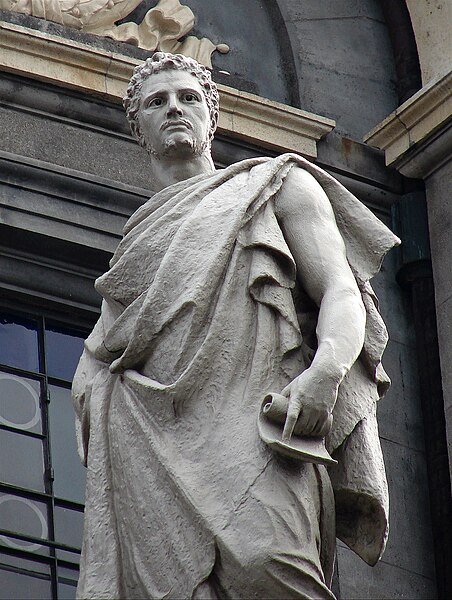
St. Athanasius (1883–84), sculpted by Carl Rohl-Smith, adorns Frederik’s Church, Copenhagen.





