Athens 1896: History and Major Facts about the First Olympic Games in Modern History
The 1896 Summer Olympics, officially known as the Games of the I Olympiad, marked the beginning of the modern Olympic movement. Held in Athens, Greece, from April 6 to April 15, 1896, the Games were envisioned by Pierre de Coubertin, a French aristocrat who sought to revive the spirit of the ancient Olympic Games. The event symbolized a connection between Greece’s historical legacy and the global aspirations of modern sports.

The 1896 Athens Olympics were more than just a sporting event—they were a historic occasion that reconnected humanity with its ancient heritage while looking toward a future of global unity through sports. Image: The opening ceremony of the 1896 Olympics.
READ MORE: Modern Olympics: Timeline
Revival of the Ancient Olympics
The ancient Olympic Games, held in Olympia from 776 BCE to 393 CE, were a central part of Greek culture, celebrating athletic prowess and unity. However, they were discontinued during the Roman Empire. Centuries later, the Renaissance sparked interest in ancient Greek traditions, which eventually influenced Pierre de Coubertin’s vision of reviving the Olympics as an international sporting competition. He believed the Games could promote peace and cultural exchange.
The Birth of the IOC
In 1894, Coubertin convened a congress in Paris with delegates from various countries to establish the International Olympic Committee (IOC). This meeting set the groundwork for the modern Olympics and decided that the first Games would be held in Athens to honor its historical significance. The IOC was tasked with organizing and overseeing the Olympics, making the 1896 event the first of its kind.
Selecting Athens as the Host City
Athens was chosen unanimously as the host city during the 1894 Paris Congress. Greece’s ancient heritage and its symbolic connection to the Olympics made it an ideal location. Despite initial concerns about the financial and logistical challenges of hosting such an event, Greece embraced the opportunity. Crown Prince Constantine and other national leaders rallied public and private support, ensuring the Games could take place.
Preparations and Venues
The centerpiece of the Games was the Panathenaic Stadium, originally constructed in 330 BCE and rebuilt in marble for the event. It served as a direct link to the ancient past. Other venues included the Neo Phaliron Velodrome for cycling and the Zappeion Hall for fencing. The Greeks faced organizational challenges but successfully prepared for the Games, demonstrating remarkable dedication to reviving this historic event.

Image: A 2014 image of the Panathenaic Stadium.
Participants and Nations
Approximately 14 nations participated, with around 241 athletes competing in nine sports. However, the numbers are debated. Most athletes were European, with the United States being the sole exception outside Europe. Greek athletes made up over 65% of the participants. Women were excluded, reflecting the gender norms of the time. The Games’ multinational nature, though modest, was unprecedented for the era.
Why were women not allowed to compete at the event?
The exclusion of women from the 1896 Summer Olympics reflected the prevailing cultural and social norms of the late 19th century. Societies at the time largely relegated women to domestic roles, limiting their participation in public and physical activities. Competitive sports were viewed as unsuitable for women, reinforcing gender stereotypes.
Pierre de Coubertin, the founder of the modern Olympics, was a key proponent of excluding women. He believed the Games should reflect ancient traditions, where only men competed. Coubertin argued that women’s involvement would distract from the spectacle of male athleticism and that their role should be limited to spectatorship.
The decision also mirrored the practices of the Ancient Olympic Games, where women were barred from competing. This historical precedent further reinforced the exclusion of women from the inaugural modern Games.
Despite their exclusion in 1896, women began advocating for inclusion, leading to their first participation in the 1900 Olympics. Over time, the Olympics evolved to embrace gender equality, marking a significant shift from its restrictive beginnings.

Did you know…?
Medals and Awards
Unlike the modern gold, silver, and bronze system, winners in 1896 received silver medals, olive branches, and diplomas, while runners-up earned copper medals. The IOC later retroactively assigned gold, silver, and bronze to align with contemporary standards. Athletes from ten nations earned medals, showcasing the diversity of talent across participating countries.
Notable Moments and Athletes
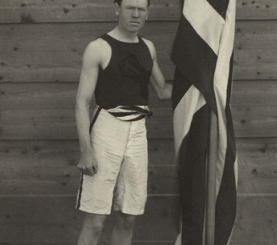
James Connolly of the United States made history as the first Olympic champion in modern times, winning the triple jump on the opening day. The marathon, inspired by the ancient Greek legend of Pheidippides, became a cultural highlight when Spyridon Louis, a Greek water carrier, won the event and gained national hero status. German athlete Carl Schuhmann excelled in gymnastics and wrestling, winning four events, making him the most successful competitor.

Image: James Connolly in 1896.
Opening Ceremony
The Games began with a grand opening ceremony at the Panathenaic Stadium on April 6, 1896, attended by an estimated 80,000 spectators. Crown Prince Constantine delivered an address, and King George I of Greece officially opened the event. Athletes paraded grouped by nationality, symbolizing international unity. A choir and orchestra performed the Olympic Hymn, composed by Spyridon Samaras, which has since become a staple of the Olympics.

Challenges Faced by Organizers
Despite its success, the 1896 Olympics faced numerous challenges. Funding was a significant issue, and the Greek government relied on donations from wealthy citizens and ticket sales to finance the event. The lack of experience in organizing international competitions also posed difficulties. However, the enthusiasm of the Greek people and the dedication of organizers ensured the Games’ smooth execution.
Athens’ Cultural and National Pride
For Greece, hosting the Olympics was a matter of national pride. The Games were a platform to showcase the country’s cultural heritage and historical significance. The Panathenaic Stadium became a symbol of Greek resilience and connection to its ancient past. The marathon victory by Spyridon Louis further cemented the Games as a defining moment for Greek identity.
Global Reception and Legacy
The 1896 Olympics were widely regarded as a success, setting a benchmark for future international sports events. The Games demonstrated the potential for global unity through competition and inspired the continued growth of the Olympic movement. Many participants and spectators petitioned for Athens to become the permanent home of the Olympics. Although this idea was not realized, it underscored the importance of Athens in Olympic history.
Impact on Modern Olympics
The success of the 1896 Olympics proved the viability of the modern Olympic movement. Pierre de Coubertin’s vision gained momentum, and the IOC expanded its influence. Athens’ example set organizational and ceremonial standards that continue to shape the Olympics today. The Games’ emphasis on internationalism, cultural exchange, and athletic excellence became enduring principles.
Return of the Olympics to Athens
Although Athens did not host the Olympics again until the Intercalated Games of 1906 and later the 2004 Summer Olympics, its role in the history of the Olympics remains unparalleled. The legacy of the 1896 Games is celebrated as the foundation of modern international sports competitions.
READ MORE: Reasons why these countries and individuals boycotted the 1936 Berlin Olympics
Questions and Answers on the 1896 Summer Olympics

By bringing athletes from diverse nations together in the shadow of the Acropolis, the Games of the I Olympiad laid the groundwork for what has become the world’s most celebrated sporting tradition. Image: A cover to the 1896 Olympics.
What were the 1896 Summer Olympics officially called?
The Games of the I Olympiad.
Who organized the 1896 Summer Olympics?
The International Olympic Committee (IOC), established by Pierre de Coubertin in 1894.
Why was Athens chosen as the host city?
Athens was selected because Greece is the birthplace of the Ancient Olympic Games, symbolizing a link between ancient and modern traditions.
How many nations and athletes participated in the Games?
Fourteen nations and approximately 241 male athletes participated, although these numbers are debated.
Which sports were included in the 1896 Olympics?
The nine sports were athletics, cycling, fencing, gymnastics, shooting, swimming, tennis, weightlifting, and wrestling.
What medals were awarded to winners and runners-up?
Winners received silver medals, and runners-up received copper medals. These were retroactively converted to gold and silver by the IOC, with bronze added for third place.
Who was the first Olympic champion in modern history?
James Connolly of the United States, who won the triple jump on April 6, 1896.
Which country won the most medals overall, and which won the most gold medals?
Greece won the most medals overall (47), while the United States claimed the most gold medals (11).
What was the most significant venue for the Games?
The Panathenaic Stadium, a historic site refurbished in marble, served as the primary venue.
What legacy did the 1896 Olympics leave?
The Games revived the Olympic tradition, established international sporting benchmarks, and laid the foundation for the modern Olympic movement.