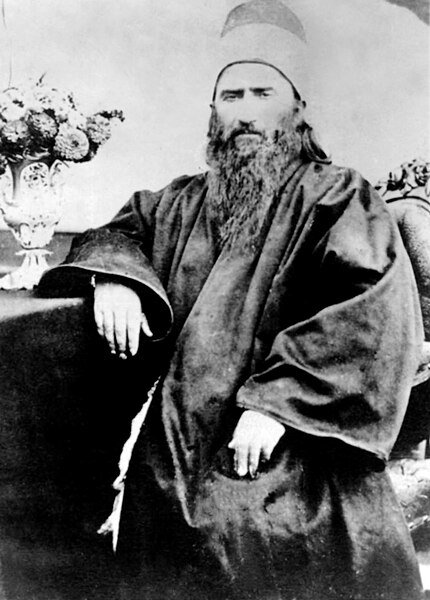
Baháʼu’lláh
Baháʼu’lláh was the founder of the Baháʼí Faith, born Ḥusayn-ʻAlí in 1817 in Iran. He declared his mission in 1863 and spent much of his life in exile and imprisonment under the Ottoman Empire.
Early Life and Background
Bahá’u’lláh, born Ḥusayn-ʻAlí Núrí on November 12, 1817, in Tehran, Iran, was raised in an aristocratic family. His father, Mírzá Buzurg, was a vizier in the Persian government, ensuring that Bahá’u’lláh had access to wealth and privilege. Despite his family’s elite status, he chose a different path, one of charity and religious devotion. At the age of 22, he declined a government position and instead used his wealth to support the poor and disadvantaged.
His rejection of material wealth in favor of spiritual and humanitarian pursuits foreshadowed his later role as a religious leader. Unlike many of his contemporaries, Bahá’u’lláh received no formal education but became well-versed in Persian and Islamic literature. His deep religious inclination led him to the Bábí Faith in 1844, a movement founded by the Báb, who proclaimed the imminent arrival of a new prophet.
Acceptance of the Báb and Early Persecution
In 1844, Bahá’u’lláh accepted the teachings of the Báb, quickly becoming one of the most prominent advocates of the movement. The Bábí Faith called for radical changes in Persian society, including the rejection of Islamic law, which led to strong opposition from religious and political authorities.
By 1850, the Báb was executed, and his followers faced brutal persecution. In 1852, two young Bábís attempted to assassinate Násiri’d-Dín Sháh in retaliation for the killing of the Báb. Although Bahá’u’lláh had no involvement in the plot, he was imprisoned in the Síyáh-Chál, a notorious dungeon in Tehran. While in prison, he experienced a profound spiritual revelation, which he later described as the divine call to his mission.
After four months of harsh imprisonment, Bahá’u’lláh was released but exiled from Persia. He was sent to Baghdad, beginning a long period of exile and imprisonment that would define his later life.
Bahá’u’lláh’s life was one of sacrifice, persecution, and exile, yet his message of unity and peace has resonated across cultures and generations.
Exile and Declaration of Mission
Settling in Baghdad, Bahá’u’lláh worked to unify the Bábí community, which was in disarray after the Báb’s execution. His leadership soon attracted followers, including many prominent Bábís. However, his influence also alarmed the Persian government, which pressured the Ottoman authorities to remove him further from Persia.
In 1863, shortly before leaving Baghdad for Constantinople (modern day Istanbul, Turkey), Bahá’u’lláh made a declaration in the Riḍvan Garden that he was “Him Whom God Shall Make Manifest,” the prophesied figure foretold by the Báb. This marked the beginning of the Bahá’í Faith as a distinct religion.
Following his declaration, Bahá’u’lláh was sent to Constantinople and later to Adrianople (modern-day Edirne, Turkey). During this period, he wrote extensively, addressing letters to world leaders, including Queen Victoria, Napoleon III, and the Ottoman Sultan, urging them to promote justice and peace.
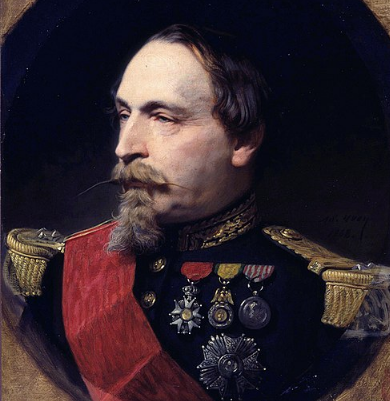
Napoleon III
Why was Queen Victoria known as the “Grandmother of Europe”?
Imprisonment in Acre and Final Years
In 1868, the Ottoman authorities further exiled Bahá’u’lláh to Acre (now in Israel), a penal colony where conditions were harsh. Initially confined in a prison, he was later allowed to live in a house under strict supervision. Despite his captivity, his teachings spread throughout the Middle East and beyond. His followers, known as Bahá’ís, continued to grow in number, carrying his message to Persia, India, and the West.
During his final years, Bahá’u’lláh wrote extensively on spiritual and social issues. His major works include the Kitáb-i-Aqdas, which outlines the laws of the Bahá’í Faith, and the Kitáb-i-Íqán, which clarifies the concept of progressive revelation. In 1877, his confinement was relaxed, and he moved to the Mansion of Bahjí, near Acre, where he continued to write and receive visitors.
On May 29, 1892, Bahá’u’lláh passed away at the age of 74. His burial site in Bahjí is considered the holiest place for Bahá’ís and a focal point of pilgrimage.
Teachings and Principles
The central theme of Bahá’u’lláh’s teachings is the unity of humanity. He proclaimed that all major religions come from the same divine source and that religious truth is progressive, evolving as humanity matures. Some of his key principles include:
- The Oneness of God and Religion: He taught that all religions stem from a single divine truth and that their differences are due to cultural and historical factors.
- The Unity of Humanity: He emphasized that all people, regardless of race, nationality, or gender, are equal in the sight of God.
- Universal Education: He advocated for compulsory education for all, believing that knowledge is essential for social progress.
- Equality of Men and Women: He championed gender equality, a revolutionary concept for his time.
- Elimination of Prejudice: He called for the eradication of racial, religious, and national prejudices.
- World Peace and Governance: He proposed the establishment of a global governing body to resolve conflicts and promote peace.
- Independent Investigation of Truth: He encouraged individuals to seek truth for themselves rather than blindly following religious traditions.
Legacy and Influence
Bahá’u’lláh’s influence continued to grow after his passing. His son, `Abdu’l-Bahá, was designated as his successor and worked tirelessly to spread the Bahá’í Faith worldwide. Today, the Bahá’í Faith has millions of followers in over 200 countries.
The Bahá’í World Centre, located in Haifa and Acre, Israel, serves as the spiritual and administrative hub of the faith. Bahá’í communities worldwide engage in social and educational projects aimed at promoting unity and justice. The teachings of Bahá’u’lláh continue to inspire efforts toward global peace, interfaith dialogue, and social reform.
Frequently Asked Questions
What were the main teachings of Baháʼu’lláh?
His teachings emphasize unity, religious renewal, spiritual and moral development, world peace, and social justice.
Why was Baháʼu’lláh exiled?
Due to his association with the Bábi Faith and his growing influence, Iranian and Ottoman authorities saw him as a threat, leading to his successive exiles from Iran to Iraq, Turkey, and eventually the prison-city of Acre.
What is the significance of the Riḍván Garden?
In 1863, before leaving Baghdad, Baháʼu’lláh spent twelve days in the Riḍván Garden, where he publicly declared his mission as the Promised One foretold by the Báb.
What are some of Baháʼu’lláh’s major works?
Notable works include The Hidden Words, The Kitáb-i-Íqán, and The Kitáb-i-Aqdas, addressing spiritual principles, religious laws, and social order.
How did his teachings differ from those of the Báb?
While the Báb prepared the way for a new revelation, Baháʼu’lláh established a distinct global religion with comprehensive social and spiritual teachings.
What is the Baháʼí concept of God?
Baháʼís believe in one unknowable God, who reveals guidance to humanity through successive Manifestations, including Moses, Jesus, Muhammad, and Baháʼu’lláh.
Why do Baháʼís not publicly display images of Baháʼu’lláh?
Out of respect, Baháʼís refrain from displaying his photographs in public or private spaces, showing reverence for his spiritual station.
What was the Covenant of Baháʼu’lláh?
Baháʼu’lláh designated his son, ʻAbdu’l-Bahá, as his successor, ensuring unity within the Baháʼí community and preventing schisms.
How did Baháʼu’lláh advocate for world peace?
He wrote to world leaders urging them to disarm, establish collective security, and work toward global unity and justice.
What role does Baháʼu’lláh’s burial site play in the Baháʼí Faith?
His shrine near Acre, Israel, is the most sacred site for Baháʼís and the Qiblih (prayer direction) for their daily prayers.
What was Baháʼu’lláh’s stance on gender equality?
He emphasized the equality of men and women, advocating for universal education and the empowerment of women as essential to world progress.
The Baháʼí Faith has no clergy and is administered by elected institutions, with the Universal House of Justice in Haifa serving as its supreme governing body.





