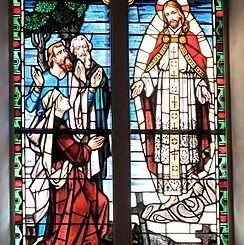
The Life of Jesus of Nazareth as described in the Gospels
The story of Jesus of Nazareth, as portrayed in the Gospels, is one of the most influential narratives in history, offering insights into his teachings, life, and the foundational events of Christianity.
This portrayal, found in the New Testament Gospels—Matthew, Mark, Luke, and John—provides a composite yet varied view of His life from different perspectives. Each Gospel presents a unique angle on Jesus, emphasizing different aspects of His mission and character.
In the article below, World History Edu presents a condensed overview of the life of Jesus as described in the Gospels.
Early Life and Birth
The Gospels of Matthew and Luke begin with accounts of Jesus’ miraculous conception and birth. Mary, a young woman in Nazareth, is visited by the angel Gabriel, who tells her that she will conceive a child through the Holy Spirit and that this child, Jesus, will be called the Son of God. Joseph, her betrothed, initially considers ending their engagement but is reassured in a dream that Mary’s child is conceived by the Holy Spirit.
Jesus is born in Bethlehem, fulfilling Jewish prophecies about the Messiah. This humble birth in a manger is marked by the visit of shepherds and, in Matthew, wise men from the East, who recognize Jesus as a significant figure. His early life is also marked by a flight to Egypt to escape King Herod’s decree to kill all male children in Bethlehem, fearing that the “King of the Jews” would usurp his power.

A painting entitled “The Adoration of the Shepherds” by Dutch painter Gerard van Honthorst.
Baptism and Early Ministry
As Jesus reaches adulthood, He emerges publicly with His baptism by John the Baptist in the Jordan River. John, a prophet who calls people to repentance, recognizes Jesus as someone greater and hesitates to baptize Him. Yet, Jesus insists, and during the baptism, the heavens open, the Spirit descends on Him like a dove, and a voice from heaven declares Him the beloved Son. This event marks the beginning of His public ministry.
Immediately after His baptism, Jesus spends 40 days in the wilderness, fasting and facing temptations from Satan, which He resists by quoting Scripture. This time in the wilderness prepares Him for the trials of His ministry.
Teachings and Miracles
Jesus begins teaching in Galilee, gathering followers and speaking in synagogues. His core message is that the Kingdom of God is near and that people should repent and believe in the gospel. He teaches using parables—stories that convey spiritual truths—covering themes like love, forgiveness, the nature of God, and the principles of His kingdom. For example, the Parable of the Good Samaritan highlights love and compassion beyond cultural boundaries, while the Parable of the Prodigal Son emphasizes God’s forgiveness and joy when sinners return.
Jesus also performs numerous miracles, which serve to authenticate His message and demonstrate His compassion and authority. He heals the sick, gives sight to the blind, drives out demons, and even raises the dead, as seen in the account of Lazarus. One of His most notable miracles is the feeding of 5,000 people with just five loaves of bread and two fish, showing His power to provide and the abundance of God’s kingdom.
He also walks on water and calms storms, displaying His authority over nature. These miracles inspire faith in His disciples and followers, but they also provoke opposition, especially among religious leaders who feel threatened by His influence and unconventional approach to traditional laws.
Disciples and Followers
Jesus calls a group of twelve men, known as the disciples or apostles, who travel with Him and learn from His teachings. Among these disciples are fishermen like Peter, James, and John, as well as Matthew, a tax collector. These men represent a cross-section of society, showing that Jesus’ message is accessible to all. He invests time teaching them privately, preparing them to continue His mission after His departure.
Jesus’ relationship with His disciples is close yet challenging. He teaches them through example and parable, often correcting their misunderstandings. The Gospel of John portrays a deep relationship between Jesus and His disciples, where He shares His love and wisdom with them. He washes their feet, modeling humility and service.
Clashes with Religious Leaders
Throughout His ministry, Jesus challenges the religious authorities—the Pharisees, Sadducees, and scribes. These leaders uphold strict interpretations of the Law and traditions, which Jesus often critiques. He condemns hypocrisy, legalism, and the emphasis on external religious practices over genuine heart transformation. For example, in the Sermon on the Mount, He says, “Blessed are the pure in heart, for they shall see God,” emphasizing inner purity rather than mere ritual compliance.
The religious leaders see Jesus as a threat to their authority, especially as He gains popularity and followers. The Gospel of John highlights their concerns, as they fear the Romans will crack down on them if Jesus’ movement stirs unrest. Tensions rise, and they begin plotting to kill Him, accusing Him of blasphemy for claiming to be the Son of God.
Passion Week and Final Teachings
The climax of Jesus’ life begins with His final week in Jerusalem, known as Passion Week. It starts with His triumphal entry into the city, where He is welcomed by crowds waving palm branches and shouting “Hosanna!” This act fulfills the prophecy of a coming king who would ride a donkey into Jerusalem.
In the days that follow, Jesus cleanses the Temple, condemning the money changers and those exploiting religious practices for profit. This act further infuriates the religious authorities. He teaches in parables about the Kingdom of God, warns of judgment, and foreshadows His death and resurrection.
During the Last Supper, Jesus shares a final meal with His disciples. He breaks bread and shares wine, symbolizing His body and blood, and establishes the practice that Christians later commemorate as Communion or the Eucharist. He speaks about love, unity, and the coming of the Holy Spirit to comfort and guide His followers.
Betrayal, Trial, and Crucifixion
Judas, one of Jesus’ twelve disciples, betrays Him to the authorities in exchange for thirty pieces of silver. Jesus is arrested in the Garden of Gethsemane, where He had prayed earnestly, asking God to take the burden of suffering from Him yet ultimately surrendering to God’s will. His disciples, in fear, scatter.
Jesus is subjected to trials before the Jewish council (Sanhedrin), where He is accused of blasphemy, and then before the Roman governor, Pontius Pilate, who finds no fault in Him but reluctantly orders His crucifixion to appease the crowd. The soldiers mock, beat, and crown Him with thorns, proclaiming Him “King of the Jews” in a cruel irony.
The crucifixion takes place at Golgotha, outside Jerusalem. Jesus is nailed to the cross, where He suffers immensely. Despite His pain, He speaks words of forgiveness for His executioners, saying, “Father, forgive them, for they do not know what they are doing.” His final words, “It is finished,” signify the completion of His redemptive mission.
Resurrection and Ascension
According to the Gospels, Jesus dies on the cross and is buried in a tomb. On the third day, women visit the tomb to anoint His body, only to find it empty. An angel announces that He has risen. Jesus appears to His disciples and followers in various locations, proving He is alive by showing His wounds and sharing meals with them.
The resurrected Jesus spends forty days with His disciples, instructing them to spread His teachings to all nations and baptize believers. He promises that the Holy Spirit will empower them to carry out this mission. Finally, He ascends into heaven, leaving His disciples to continue His work.

“Resurrection of Jesus”, a painting by German painter Lucas Cranach.
Legacy and Impact
The life of Jesus as depicted in the Gospels emphasizes His role as the Messiah, His teachings on love and the Kingdom of God, His compassion, and His power over sin and death. His resurrection is seen as the ultimate validation of His identity and mission, offering hope to His followers and marking the foundation of the Christian faith.
Questions and Answers
What are the primary sources for the life of Jesus of Nazareth, and when were they written?
The primary sources for Jesus’ life are the four canonical Gospels—Matthew, Mark, Luke, and John—written several decades after His death. The earliest of these, Mark, was written around 65–70 CE, followed by Matthew, Luke, and John.
Do we have any contemporary eyewitness accounts of Jesus’ life?
No, there are no contemporary eyewitness accounts. The Gospels offer perspectives on Jesus’ ministry and teachings based on oral traditions and later writings.
What is unique about Paul’s letters regarding the historical Jesus?
Paul’s letters, written in the 50s and 60s CE, are the earliest Christian writings but contain limited details about the historical Jesus. Instead, they focus primarily on theological teachings.
Where did Jesus primarily conduct His ministry, and what message did He preach?
Jesus conducted His ministry primarily in Galilee and preached a message of repentance, declaring, “Repent, for the Kingdom of God is at hand!” He emphasized that God would soon intervene to restore Israel and establish a divine kingdom on earth.
How did Jesus often teach people, and what themes did He emphasize?
Jesus frequently taught through parables—short stories with simple characters and situations—that illustrated themes such as forgiveness, love, and one’s relationship with God.
What miracles are attributed to Jesus in the Gospel of Mark?
The Gospel of Mark records Jesus performing miracles such as healing diseases, raising the dead, performing exorcisms, multiplying loaves and fishes, and walking on water. These acts strengthened His reputation as a figure of divine power.
How many disciples did Jesus gather, and what is the symbolic significance of this number?
Jesus gathered twelve disciples, symbolizing the twelve tribes of Israel, indicating His vision of restoring Israel.
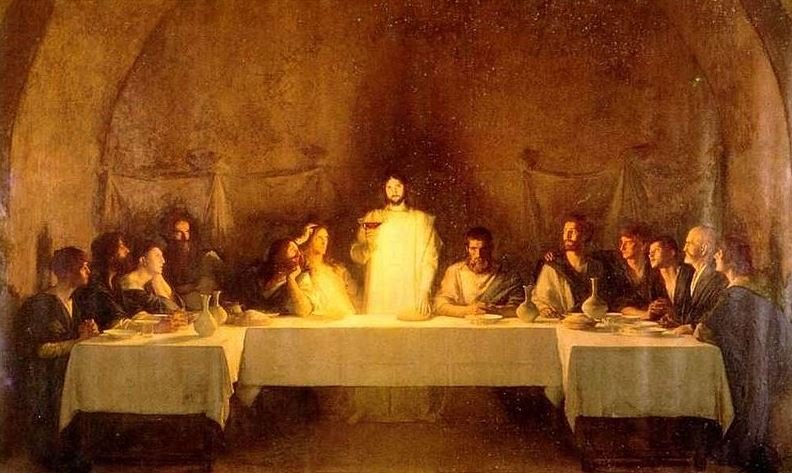
“Last Supper”, a painting by French painter Pascal Dagnan-Bouveret.
Who opposed Jesus, and why did they find His teachings controversial?
Jesus faced opposition from religious leaders, including the Pharisees, scribes, and Sadducees, who accused Him of violating Jewish law. However, the Gospels suggest that Jesus offered a “true” interpretation of the law rather than defying it, challenging the religious establishment’s focus on strict legalism.
What is significant about Jesus’ final journey to Jerusalem?
Jesus’ final journey to Jerusalem for Passover is significant because He was welcomed by crowds waving palm branches and calling Him “Messiah” and “King of the Jews.” This event, known as Palm Sunday, linked His ministry to King David’s lineage and added a political dimension to His role.
What did Jesus do upon arriving at the Temple in Jerusalem, and what were the consequences?
Upon entering the Temple, Jesus overturned the tables of money changers, condemning the commercial activity as turning “God’s house” into a “den of thieves.” This act, according to Mark, was pivotal in leading to His arrest.
What is the significance of the Last Supper in Christian tradition?
At the Last Supper, Jesus shared a Passover meal with His disciples, predicting His death and establishing what later became the Christian ritual of Communion, or the Eucharist. This event symbolizes Jesus’ sacrifice and the new covenant with God.
What events led to Jesus’ arrest, and who betrayed Him?
After the Last Supper, Jesus went to Gethsemane, where He was later betrayed by Judas, one of His disciples. This betrayal led to His arrest by the temple authorities.
How did Jesus’ trial proceed, and what was He ultimately charged with?
Jesus faced trials before the Jewish council and then the Roman governor, Pontius Pilate. Although Pilate was reluctant, he sentenced Jesus to crucifixion on the charge of claiming to be “King of the Jews,” which was considered treason against Rome.
What happened after Jesus’ crucifixion?
After His death on a Friday, Jesus’ body was quickly buried due to the Sabbath. On Sunday morning, His followers found His tomb empty. The Gospel of Mark reports that an angel instructed the women to tell others that Jesus had risen.
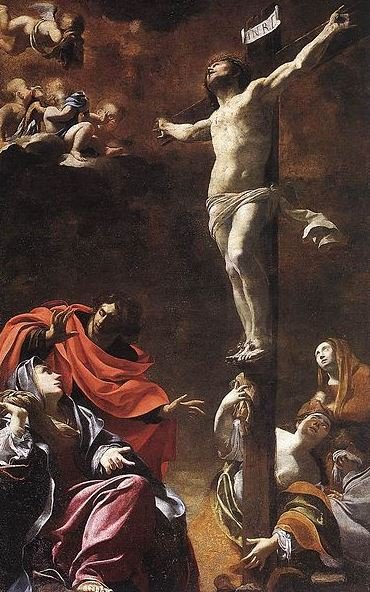
“The Crucifixion”, by by French painter Simon Vouet.
How did the resurrection of Jesus influence Christian beliefs?
Jesus’ resurrection, celebrated as Easter, became central to Christian beliefs about salvation and forgiveness, with His death and resurrection symbolizing atonement for human sins.
How do the Gospels differ in their portrayal of Jesus?
Mark, Matthew, and Luke emphasize Jesus’ prophetic ministry, miracles, and parables, while John focuses on His divine nature as the “Word” made flesh. Together, the Gospels portray Jesus as both a religious teacher and a Savior.