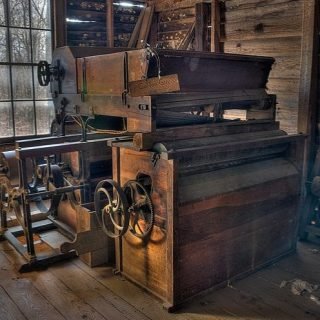
The cotton gin is a machine designed to separate cotton fibers from their seeds efficiently.
Below are 14 of the most asked questions about cotton gin:
Who invented the cotton gin?
The cotton gin was invented by Eli Whitney in 1793.
How did the cotton gin impact slavery?
The cotton gin increased the profitability of cotton farming, leading to an expansion in cotton plantations in the American South. This, in turn, increased the demand for labor, which unfortunately resulted in the expansion of slavery.
What was the primary purpose of the cotton gin?
Its main purpose was to speed up the process of cleaning cotton, making it faster and more efficient than manual methods.
How did the cotton gin affect the economy?
The cotton gin revolutionized the cotton industry, making cotton a dominant cash crop in the U.S., especially in the South. This economic reliance on cotton influenced trade patterns, politics, and societal structures.
Why was the cotton gin so significant during the Industrial Revolution?
The increased supply of cleaned cotton fueled the textile mills during the Industrial Revolution, leading to a boom in the textile industry both in the U.S. and Europe.
Were there any legal disputes related to the cotton gin?
Yes, Eli Whitney faced numerous patent infringements on his cotton gin, leading to several legal battles to defend his invention.
How did the cotton gin affect global trade?
With the rise in cotton production, the U.S. became a leading exporter of cotton, affecting global trade patterns, especially with European countries that had burgeoning textile industries.
Were there cotton gins before Eli Whitney’s version?
While Eli Whitney is credited with the invention of the modern cotton gin, rudimentary devices to separate cotton seeds from fibers existed in other parts of the world, such as India, before Whitney’s innovation.
How does a cotton gin actually work?
The machine uses a combination of hooks or wire teeth to pull cotton fibers through a mesh. The cotton seeds, being too large to pass through this mesh, are left behind, effectively separating the seeds from the fibers.
What were the environmental implications of the cotton gin?
The increased profitability of cotton farming led to the expansion of cotton plantations, resulting in significant deforestation and changes in land use. Intensive cotton farming also depleted soil nutrients over time.
Are cotton gins still used today?
Modern cotton gins, which are more advanced and efficient, are still used today in the cotton industry. They have evolved from Whitney’s original design but serve the same primary function of separating cotton fibers from seeds.
Did the cotton gin directly lead to the U.S. Civil War?
While the cotton gin didn’t directly cause the Civil War, it played a role in solidifying the South’s economic dependence on slavery, deepening the societal and economic divides between the North and the South, which were among the factors leading to the war.
How did the cotton gin impact other industries?
The rise of the cotton industry due to the gin led to advancements in transportation (like steamboats and railroads) to facilitate the movement of raw cotton and finished goods. It also fueled the growth of the textile industry.
Was Eli Whitney’s cotton gin patented?
Yes, Eli Whitney patented the cotton gin in 1794.