Attila the Hun: 16 Facts about the “Scourge of God”
Considered by many as one of the most brutal and awe-inspiring military commanders, Attila the Hun was the leader of the Hunnic Empire who inflicted unimaginable pain and misery on...
The Huns were a nomadic warrior people who emerged as a formidable force in Europe and Asia during the late 4th and 5th centuries AD. They played a significant role in the decline of the Western Roman Empire and had a lasting impact on the history of Eurasia.
Here’s a brief overview of their history and major facts:
The exact origin of the Huns is shrouded in mystery, but they are believed to have originated from the Central Asian steppes, possibly in the region of modern-day Mongolia. They were a confederation of various tribes and were known for their fierce warrior culture, horseback riding skills, and expertise in mounted archery.
One of the most famous Hunnic leaders was Attila the Hun (reigned 434-453 AD), often referred to as “the Scourge of God.” Attila united the various Hunnic tribes into a powerful military force and launched devastating campaigns across Europe. His leadership and military tactics struck fear into the hearts of both the Roman Empire and the Eastern Roman Empire (Byzantine Empire).
The Huns conducted a series of raids and invasions into the Eastern Roman Empire, forcing the Romans to pay hefty tributes to buy peace. In 451 AD, Attila invaded Western Europe, causing panic and destruction in Gaul (modern France). He was eventually defeated by a combined Roman and Visigothic army at the Battle of the Catalaunian Plains (Châlons), preventing further westward expansion.
The Huns posed a grave threat to the Western Roman Empire, which was already weakened by internal strife and economic difficulties. In 452 AD, Attila invaded Italy and reached as far as the outskirts of Rome. Pope Leo I famously met with Attila and persuaded him to withdraw his forces, sparing the city.
Attila’s death in 453 AD marked the beginning of the decline of the Hunnic Empire. Following his death, the Huns fragmented into smaller groups, and their power waned. They gradually disappeared from historical records, absorbed by neighboring peoples.
The Huns left a lasting cultural impact on Europe. Their nomadic lifestyle and military tactics influenced various groups, including the Magyars (Hungarians) who settled in the Carpathian Basin.
Historical accounts of the Huns often depict them as ruthless and destructive invaders. These accounts were often written by their enemies, such as the Romans, which may have contributed to their negative image in history.
The Huns have frequently appeared in literature, art, and popular culture. Attila the Hun, in particular, is a legendary figure who has been portrayed in various novels, films, and television series.
Despite their historical significance, much about the Huns remains mysterious. Their language, for example, has left few traces and is not well understood. The question of their exact origin and the nature of their society continue to be subjects of scholarly debate.

Considered by many as one of the most brutal and awe-inspiring military commanders, Attila the Hun was the leader of the Hunnic Empire who inflicted unimaginable pain and misery on...
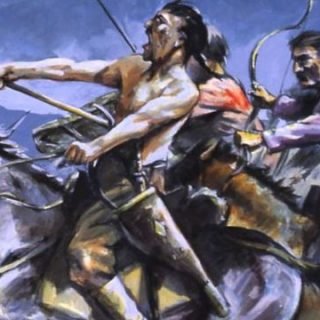
The Huns were groups of nomad horsemen that reigned from 370 AD to around 469 AD. The history of the Huns shows that they were an organized set of barbaric...

Western Europeans probably did not do the Huns enough justice by portraying them as simply barbaric nomads that destroyed and pillaged cities. Recent findings have shown that there was more...





