Celtic Goddess Epona
Epona is a Celtic goddess associated with horses, fertility, and protection, primarily worshipped in the Roman Empire during the 1st through 3rd centuries AD. Her origins can be traced back to the Gauls, a group of Celtic tribes, and her name comes from the Gaulish word “epos,” meaning horse.
Epona was revered as a protector of horses, horse riders, and those who worked with them, such as cavalry soldiers and stable hands. Her significance in ancient Celtic and Roman culture illustrates the importance of horses in everyday life, warfare, and agriculture.
Origins and Background
The worship of Epona likely emerged in what is now modern-day France, where the Gauls lived before Roman colonization. The Gauls had a strong affinity for horses, as they were central to transportation, farming, and military activities. Epona’s role as a protector of horses reflects the deep relationship between humans and horses in Celtic societies.
The Celtic people did not have a single, unified pantheon of gods, and their religious practices varied across regions. However, horses played a crucial role in their culture, and it’s believed that Epona emerged as a prominent deity as a result of this deep connection. Her importance grew as Celtic tribes came into contact with Roman civilization.

Image: A statue of Epona with her horses.
Epona and the Romans
When the Romans conquered Gaul in the 1st century BC, they assimilated many of the local gods into their own religious system. Epona was among the deities adopted by the Romans, which is somewhat unusual, as most Roman gods were male. The fact that a goddess like Epona was integrated into Roman religion speaks to her widespread popularity and the significance of horses in both Celtic and Roman cultures.
In Roman society, horses were essential for transportation, communication, and military power. Roman cavalry units, or alae, often consisted of Celtic horsemen who had been conquered or recruited. These horsemen would have brought their reverence for Epona with them, and as a result, her worship spread throughout the Roman Empire, particularly among cavalry soldiers and those associated with horses.
Epona was typically depicted as a goddess riding or standing with horses. In many artistic representations, she is shown seated on a horse or standing beside one, holding symbols such as cornucopias, fruit, or grain, which are connected to fertility and abundance. The horse, in addition to being a symbol of power and speed, also represented fertility and vitality, aligning with Epona’s role as a life-giving goddess.
Epona’s Role in Religion and Mythology
Epona’s association with fertility extends beyond horses. She was also considered a mother goddess, linked to agricultural fertility, abundance, and the prosperity of the land. This connection to both animals and the earth positioned Epona as a well-rounded deity who governed life, growth, and protection.
Her role as a protective goddess made her a natural patron of cavalry soldiers and anyone working with horses. She was invoked for the safety of horses during battle and travel, as well as for the well-being of riders. Roman cavalry units, especially those stationed in the far reaches of the empire, often dedicated altars to Epona to ensure their horses were healthy and ready for combat.
Epona’s protective qualities were not limited to horses and riders. In some regions, she was also worshipped as a household deity, ensuring the protection and fertility of the home. Her images were placed in stables and homes to safeguard both animals and humans. In this role, she resembled other mother goddesses in ancient cultures who were thought to oversee the prosperity and safety of the household.
Iconography and Symbolism
Epona’s iconography typically centers around horses, but she is often depicted holding or standing next to other symbols of abundance, such as the cornucopia (horn of plenty) or baskets of fruit and grain. These symbols connect her to fertility and agricultural prosperity, further emphasizing her role as a life-giving goddess.
One of the most common depictions of Epona is as a seated figure on a throne, with horses at her side or feet. In other representations, she is shown riding a horse, a position that highlights her mastery and dominion over these powerful animals. This imagery of Epona riding a horse symbolizes not just her connection to horses but also her authority and protective powers.
In Roman times, statues and altars dedicated to Epona were common in stables and places where horses were kept, reflecting her role as a guardian. In some cases, cavalrymen would carry small figurines or amulets of Epona for protection during battle.
Epona’s imagery is sometimes linked to the broader Celtic tradition of horse symbolism. In many ancient cultures, horses were seen as intermediaries between the human and divine worlds. They were often connected to the sun, fertility, and the cycle of life and death. In Celtic mythology, horses were associated with journeys to the afterlife, and it’s possible that Epona’s protective role extended to guiding souls on their final journey.
Spread of Epona’s Worship
Epona’s worship spread throughout the Roman Empire, particularly in regions where horses played a central role in daily life. Her altars and shrines have been found in Britain, Gaul, Germany, and even as far east as the Balkans. These areas were home to Roman cavalry units or had a strong tradition of horse breeding and riding.
In Roman Britain, for instance, Epona was revered by the cavalry stationed along Hadrian’s Wall. The wall, built to defend the northern frontier of the Roman Empire, was heavily garrisoned by cavalry units who relied on horses for mobility and warfare. Altars dedicated to Epona were common in these garrisons, and her worship likely provided comfort and protection to the soldiers stationed in such remote and hostile environments.
Interestingly, Epona’s worship was not confined to the military or rural areas. Archaeological evidence suggests that she was also venerated in urban settings. Her role as a household deity and protector of animals made her popular in both rural farms and city homes, where she ensured the safety and prosperity of livestock and agriculture.
Epona’s Legacy in European Culture
As the Roman Empire declined and Christianity spread across Europe, the worship of pagan deities like Epona gradually diminished. However, traces of her cult remained in folklore and regional traditions, especially in areas with a strong connection to horses.
In some parts of Europe, horses continued to be linked to fertility and protection, echoing Epona’s earlier role. For example, in rural France, Belgium, and Germany, certain rituals and festivals involving horses have persisted into modern times. These traditions may have roots in the ancient worship of Epona and reflect the enduring cultural significance of horses in these regions.
Epona’s influence can also be seen in medieval Christian iconography. Some scholars believe that certain depictions of the Virgin Mary, particularly those involving her role as a protector of animals and agriculture, may have been influenced by earlier depictions of Epona. In this way, Epona’s legacy persisted in subtle ways even as the dominant religious framework shifted.
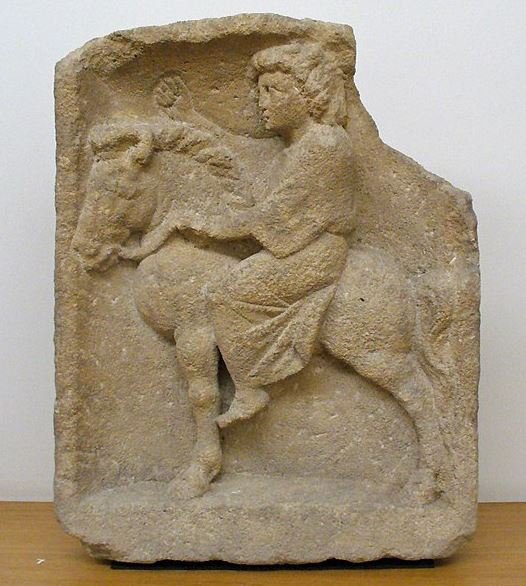
Image: Epona sitting on a horse.
Comparative Mythology: Epona and Other Horse Deities
Epona is not the only deity associated with horses in ancient mythology. Many cultures with strong equestrian traditions had gods and goddesses connected to horses, reflecting the universal importance of these animals in human history.
For example, in Greek mythology, the god Poseidon was associated with horses and was sometimes referred to as the creator of horses. He was worshipped as the god of the sea, earthquakes, and horses, and his association with horses highlights their significance in Greek culture, particularly in warfare and transportation.
In Norse mythology, the eight-legged horse Sleipnir, ridden by the god Odin, was a powerful symbol of speed and supernatural strength. Horses played a significant role in Norse culture, and they were often associated with both life and death. Like Epona, Sleipnir could travel between worlds, further emphasizing the horse’s symbolic connection to journeys, both physical and spiritual.
In Hindu mythology, the Ashvins were twin gods associated with horses, health, and healing. They were known for their ability to cure diseases and protect travelers, much like Epona’s role as a protector. The Ashvins’ connection to horses reflects the broader Indo-European tradition of horse reverence, which can be seen across many ancient cultures.
These examples show that the veneration of horses as sacred animals was not limited to Celtic or Roman traditions. Horses were universally seen as powerful, life-giving animals, and the gods and goddesses associated with them often embodied similar themes of protection, fertility, and travel between worlds.
Conclusion
Epona stands out as a unique figure in both Celtic and Roman mythology due to her association with horses, fertility, and protection. Her widespread worship among both the Celts and the Romans highlights the importance of horses in ancient societies, particularly in agriculture, transportation, and warfare. Epona’s role as a protector of horses and riders, as well as her connection to fertility and abundance, made her a versatile and widely revered goddess.
Though the formal worship of Epona diminished with the spread of Christianity, her legacy can still be traced in European folklore and traditions that emphasize the importance of horses. Epona’s influence also extends to comparative mythology, where she shares common themes with other horse-related deities from around the world.
Questions and Answers about Epona

What is the meaning of Epona’s name?
Epona’s name is derived from the Celtic word “epos,” meaning “horse,” and the suffix “-ona,” which simply means “on.”
What are the earliest references to Epona?
The oldest references to Epona are found in Juvenal’s Satires (VIII, 155 ff), where he mentions her worship in horse stables, and in Minucius Felix’s Octavius (XXVII, 7), which refers to the dedication of stables and donkeys to her.
Where have inscriptions dedicated to Epona been discovered?
Inscriptions dedicated to Epona have been found in ancient Gaul, Germany, the Danube provinces, and even in Rome. Many of these inscriptions were signed by soldiers and were located near military settlements.
The location of Epona’s inscriptions, often near military settlements, suggests that her worship, especially in eastern regions of the Roman Empire, may have been more of a military cult than an indigenous one.
Why was Epona significant in Gallic religion?
Epona held a significant place in Gallic religion because horses were vital to the lives of the Gauls, particularly in warfare. The Gallic cavalry played a crucial role in military conflicts, and this importance carried over into Epona’s continued veneration, especially among Roman soldiers.
How was Epona typically depicted in art?
Epona is consistently depicted alongside horses and is always fully clothed. She is often shown alone, portrayed as celibate, with her position and attitude differing based on the region. She might be seated on a horse, surrounded by horses, or reclining on one.
In northeastern Gaul and the Rhine region, Epona is often shown seated on a mare, sometimes with a foal. These depictions are believed to symbolize the soul’s journey to the afterlife, reflecting the Celtic belief that horses were connected to the spiritual world.
In central Gaul, Epona is usually depicted standing or seated among horses, sometimes feeding them. These representations emphasize her nurturing and protective role.
In Burgundy, Epona is depicted reclining on a horse and partially nude. This depiction is more unique and differs from the more common representations where she is fully clothed and seated or standing.
What symbols and companions often accompany Epona in depictions?
Epona is often accompanied by symbols of abundance, such as a cornucopia, and sometimes by animals like dogs. In some depictions, she is shown with other deities, such as Mars, Hercules, or Silvanus.
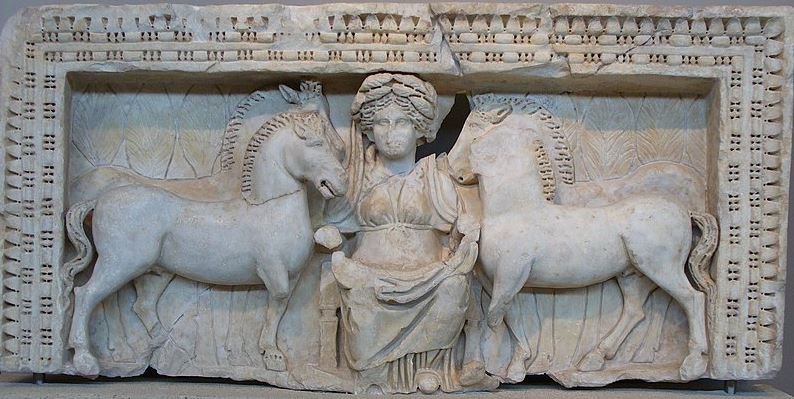
Image: Epona between two horses.
How can Epona be compared to the Welsh goddess Rhiannon?
Epona and the Welsh goddess Rhiannon share several similarities, particularly their association with horses and the afterlife. In Welsh mythology, Rhiannon is known for her speed on horseback and her role as a companion to the dead, which mirrors aspects of Epona’s symbolism.
What are the key differences between Epona and Rhiannon?
Epona is typically depicted as unmarried and was primarily worshipped by soldiers and rural communities, while Rhiannon is portrayed as a queen in mythological literature and is married to Pwyll and Manawydan.
Additionally, Epona’s worship was widespread across the Roman Empire, while Rhiannon’s presence is limited to Celtic literature, particularly in Britain.
Why should Epona and Rhiannon not be completely equated, despite their similarities?
Although both figures share common themes, such as their connection to horses and the afterlife, they differ in terms of cultural context and specific roles. Epona was revered more in a military and rural context, while Rhiannon’s stories are confined to Celtic literature and mythology in Britain. Therefore, it is important to recognize their distinct cultural significance.





