Early Life and Background
Cleopatra I Syra was born around 204 BC into the illustrious Seleucid dynasty, one of the prominent Hellenistic kingdoms that emerged following the fragmentation of Alexander the Great’s empire.
She was the daughter of Antiochus III the Great, the King of the Seleucid Empire, and Queen Laodice III. Antiochus III was a formidable ruler known for his attempts to restore the former glory of the Seleucid Empire, which had been significantly diminished by internal strife and external pressures from rival states, particularly the Ptolemaic Kingdom of Egypt.
Growing up in the heart of the Seleucid realm, Cleopatra I was immersed in the rich cultural and political milieu of the Hellenistic world. The Seleucid Empire, encompassing vast territories across Asia Minor, Syria, Mesopotamia, and Persia, was a melting pot of Greek and local cultures. This environment shaped Cleopatra’s upbringing, making her well-versed in both Greek and Near Eastern customs and languages.
Her education would have included not only the typical Hellenistic curriculum of literature, philosophy, and rhetoric but also an understanding of the complex political dynamics of her time.
Ancient Near East Civilizations and their Accomplishments
Marriage and Political Alliance
In 197 BC, Cleopatra I’s father, Antiochus III, embarked on an ambitious military campaign to expand his empire by capturing several cities in Asia Minor that were under the control of the Ptolemaic Kingdom of Egypt. This aggressive expansion posed a significant threat to Egyptian interests and destabilized the region, prompting diplomatic intervention from Rome, which sought to maintain a balance of power in the Eastern Mediterranean.
Negotiations between Antiochus III and the Egyptian ruler, Ptolemy V, took place in Lysimachia in 196 BC, with the Romans playing a mediating role. To secure peace and forge a strong alliance, Antiochus III proposed a marriage alliance between his daughter, Cleopatra I Syra, and Ptolemy V of Egypt. This strategic union was intended to stabilize relations between the two Hellenistic powers and prevent further military conflicts.

Tetradrachm of Ptolemy V Epiphanes issued c. 200 BC
Cleopatra I and Ptolemy V were betrothed in 195 BC and subsequently married in 193 BC in the city of Raphia. At the time of their marriage, Ptolemy V was approximately 16 years old, while Cleopatra I was around 10.
The marriage was both a personal union and a political maneuver, with Cleopatra I’s dowry reportedly including the region of Coele-Syria. Although the Ptolemaic rulers later asserted that this dowry granted Egypt sovereignty over Coele-Syria, the region remained under Seleucid control following the Battle of Panium in 198 BC.
Role and Titles in Egypt
Upon her marriage, Cleopatra I Syra assumed the role of queen consort in the Ptolemaic Kingdom. In Alexandria, the cultural and political capital of Egypt, she was known as “the Syrian,” a nod to her Seleucid heritage. This title underscored her role as a bridge between the Greek and Egyptian cultures, facilitating the integration of Seleucid and Ptolemaic traditions within the kingdom.
Within the Ptolemaic religious framework, Cleopatra I and her husband Ptolemy V were honored as “Theoi Epiphaneis,” meaning “Manifest Gods.” This divine status was part of the broader Ptolemaic strategy to legitimize their rule by associating themselves with the gods, a common practice in Hellenistic monarchies. Additionally, adhering to the Egyptian tradition of sibling marriage, Cleopatra I was also recognized as the sister of Ptolemy V, further strengthening the dynastic ties and consolidating their authority.
In 185 BC, a synod of priests held in Memphis granted Cleopatra I the same honors as Ptolemy V, a significant acknowledgment of her status and influence. This honor was inscribed on the Rosetta Stone, a bilingual decree that later became crucial in deciphering Egyptian hieroglyphs. The Rosetta Stone not only highlights Cleopatra I’s esteemed position but also symbolizes the harmonious blending of Greek and Egyptian cultures under the Ptolemaic rule.
Answers to popular questions about the Rosetta Stone
Regency and Governance
The death of Ptolemy V in September 180 BC, at the young age of 30, created a power vacuum in the Ptolemaic Kingdom. Their son, Ptolemy VI, was only six years old at the time, necessitating a regency to govern the kingdom until he could assume full authority. Cleopatra I Syra stepped into this role, becoming the first Ptolemaic queen to rule independently without her husband. As regent, she was referred to as “Thea Epiphanes,” and her name frequently appeared before her son’s on official documents and coins, signifying her paramount authority.
During her regency, Cleopatra I made pivotal decisions that shaped the future of the Ptolemaic Kingdom. Notably, she halted the war preparations that Ptolemy V had intended against the Seleucid Empire. This decision was influenced by her Seleucid lineage and a strategic understanding that engaging in further conflict could destabilize her son’s reign and her own position. By pursuing a peaceful policy, Cleopatra I maintained internal stability and secured her son’s future as the legitimate ruler of Egypt.
After her husband’s (Ptolemy VI) death around 180 BC, Queen Cleopatra I acted as regent for their young son, Ptolemy VI, overseeing Egypt’s governance until her own death around 176 BC.
Cleopatra I’s governance style was characterized by prudence and diplomatic acumen. She focused on strengthening the administrative structures of the kingdom, ensuring the continuity of effective governance during her son’s minority. Her efforts to blend Greek and Egyptian traditions not only legitimized Ptolemaic rule but also fostered cultural integration, promoting harmony between the Greek ruling class and the native Egyptian population.
Offspring and Their Roles
Cleopatra I Syra and Ptolemy V had at least two children: Ptolemy VI Philometor and Cleopatra II. Ptolemy VI was born around 186 BC and became the primary heir to the Ptolemaic throne. Cleopatra II, their daughter, played a significant role in the dynastic politics of the time.

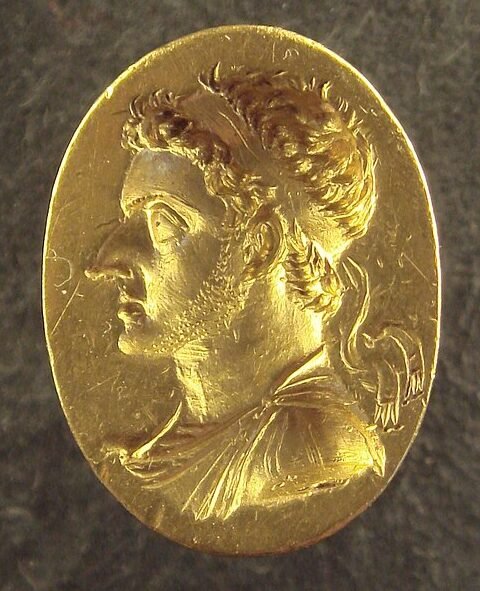
A ring showing Ptolemy VI Philometor wearing a diadem and the double Egyptian crown as Egyptian pharaoh. Louvre Museum
As regent, Cleopatra I ensured that her son was groomed for kingship, providing him with an education that combined Greek and Egyptian elements. This dual cultural education was crucial in maintaining the Ptolemaic tradition of cultural syncretism and preparing Ptolemy VI to rule a kingdom that was both Greek and Egyptian in its cultural and political makeup.

Cleopatra II Philometor Soteira was the daughter of Cleopatra I and Ptolemy V.
Death and Succession
Cleopatra I Syra’s regency concluded with her death around late 178 or early 177 BC, though some scholars suggest it occurred in late 176 BC. On her deathbed, Cleopatra I appointed Eulaeus and Lenaeus as regents to oversee the kingdom until Ptolemy VI could assume full control. Eulaeus was a eunuch who had served as Ptolemy V’s tutor, while Lenaeus was a Syrian slave likely part of Cleopatra I’s entourage during her marriage to Ptolemy V.
Despite Cleopatra I’s efforts to stabilize the kingdom, Eulaeus and Lenaeus faced significant challenges in maintaining peace and managing foreign relations. Their inability to prevent the deterioration of relations with the Seleucid Empire eventually led to the Sixth Syrian War, highlighting the fragile nature of alliances and the ongoing power struggles among the Hellenistic states.
Legacy
Cleopatra I Syra’s marriage to Ptolemy V and her subsequent regency were instrumental in shaping the Ptolemaic dynasty’s policies and ensuring the stability of Egypt during a turbulent period. Her strategic marriage alliance helped secure peace between the Seleucid and Ptolemaic kingdoms, while her effective governance during her son’s minority maintained the continuity of Ptolemaic rule.
Her efforts to blend Greek and Egyptian traditions reinforced the Ptolemaic strategy of cultural syncretism, which was essential for legitimizing their rule over a predominantly Egyptian population while maintaining their Hellenistic identity. By promoting the integration of Greek and Egyptian customs, Cleopatra I fostered a sense of unity and stability within the kingdom, ensuring that the Ptolemaic dynasty could endure despite internal and external pressures.
During her regency, Cleopatra I played a crucial role in maintaining political stability, supporting the continuity of the Ptolemaic dynasty, and fostering the integration of Greek and Egyptian cultural practices.
Cleopatra I Syra’s legacy is also reflected in the significant historical artifacts from her time, most notably the Rosetta Stone. This artifact, which features her and Ptolemy V as “Theoi Epiphaneis,” symbolizes the cultural and religious blending that characterized the Ptolemaic Kingdom. The Rosetta Stone’s bilingual inscriptions in Greek and Egyptian hieroglyphs exemplify the harmonious integration of Greek and Egyptian cultures, a hallmark of Cleopatra I’s reign.
Moreover, Cleopatra I’s role as a female regent set important precedents for female leadership within the Ptolemaic dynasty. Her successful regency demonstrated the capacity of women to wield significant political power and influence, paving the way for future Ptolemaic queens, including the famed Cleopatra VII, to assume prominent roles in governance and diplomacy.
Conclusion
Cleopatra I Syra was a pivotal figure in the history of the Ptolemaic Kingdom. Her strategic marriage, effective regency, and efforts to integrate Greek and Egyptian cultures were crucial in maintaining the stability and continuity of the dynasty during a critical period. Cleopatra I’s legacy is a testament to her political acumen, her role in fostering cultural syncretism, and her contributions to the enduring legacy of the Ptolemaic dynasty in ancient Egypt.
10 Major Events in Ancient Egyptian History