Columbaria of Imperial Rome: History and Major Facts
The columbaria of Imperial Rome offer a fascinating glimpse into the social, cultural, and architectural dynamics of death in ancient Roman society. These structures, designed to house the ashes of the deceased, reveal the interplay of tradition, practicality, and social stratification in Roman funerary practices. Columbaria were not merely repositories for the dead but also reflections of Roman life, showcasing the beliefs, economic realities, and communal identities of those who constructed and used them.
Origins and Function
The word columbarium is derived from the Latin columba, meaning dove, as the niches in these structures resembled the compartments of dove cotes. This term aptly describes the tightly arranged, small niches used to store urns containing cremated remains.
The practice of cremation gained prominence in Rome during the Republic and early Empire, replacing earlier burial traditions. Cremation offered a space-efficient and practical solution to the challenges posed by Rome’s growing urban population.
The construction of columbaria coincided with the rapid urban expansion of the city. As land within the city became increasingly scarce and expensive, columbaria emerged as a cost-effective alternative to individual tombs. Their development reflected a shift in societal attitudes toward communal burial practices, emphasizing practicality and collective memory over the grandeur of individualized monuments.
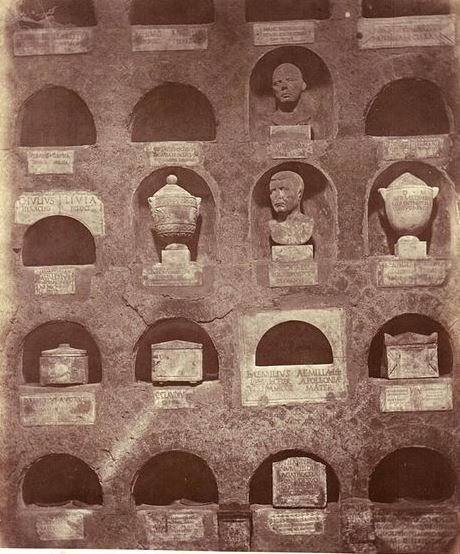
Unlike catacombs, Roman Columbaria provided self-contained environments for cremation, preservation, and memorialization, often established by associations of individuals pooling resources. Image: Lodovico Tuminello’s photograph of the Columbarium at Vigna Codini.
Design and Architecture
Roman columbaria were typically underground or semi-underground vaulted chambers, often rectangular or square, though some were circular. They ranged in size from modest, single-room structures to expansive complexes that could house thousands of urns. Inside, the walls were lined with rows of niches, each just large enough to accommodate a small urn or box containing ashes. The niches were sometimes organized in tiers, maximizing the use of available space.
Architectural elements of columbaria varied widely depending on the wealth and status of those buried within. In more modest columbaria, niches were simple and undecorated, while elite versions might feature elaborate stucco work, frescoes, or inscriptions detailing the names and statuses of the deceased. The use of marble plaques and portrait busts to mark niches added a personal and commemorative touch, allowing descendants and visitors to honor the memory of the deceased.
Above ground, columbaria were often nondescript, with entrances sometimes marked by simple inscriptions or small memorials. Many were located along major roads leading out of Rome, such as the Via Appia, as Roman law prohibited burial within the city limits.
Social Implications
The rise of columbaria was deeply entwined with the social and economic structure of Imperial Rome. These communal burial structures were often associated with collegia—mutual aid societies that provided members with access to a columbarium as part of their membership benefits. Collegia served various purposes, including religious worship, professional networking, and, significantly, ensuring a proper burial for their members.
Membership in a collegium provided lower- and middle-class Romans with an affordable means of securing a dignified burial, which was a significant concern in a society that placed great importance on funerary rites. For many, columbaria represented a collective identity, allowing individuals to be remembered as part of a group rather than in isolation.
While columbaria were primarily used by the lower classes, including freedmen and slaves, some were also commissioned by wealthier patrons. These elite columbaria often served as burial spaces for extended families or close-knit groups, showcasing the flexibility of this funerary practice across social strata.
Cultural and Religious Dimensions
Roman attitudes toward death were complex and multifaceted, blending practicality with deeply held religious and cultural beliefs. The act of cremation and the storage of ashes in columbaria reflected Roman ideas about purification, the afterlife, and the soul’s journey. The process of cremation was believed to release the soul from the body, allowing it to join the ancestors or the divine realm.
Columbaria also played a role in maintaining the pietas—the Roman virtue of duty and respect toward one’s family and ancestors. Inscriptions and epitaphs on niches often included expressions of love, grief, and devotion, underscoring the importance of preserving the memory of the deceased. These inscriptions provide invaluable insights into the personal lives of ordinary Romans, capturing their relationships, occupations, and even aspirations.
Artistic and Epigraphic Evidence
The artistic and epigraphic features of columbaria are key to understanding their cultural significance. Frescoes, mosaics, and reliefs adorning the walls of more elaborate columbaria often depicted scenes of mythology, daily life, or symbolic motifs such as birds, flowers, and garlands. These images served both decorative and symbolic purposes, offering comfort and hope to the living while honoring the deceased.
Inscriptions, or epitaphs, were another important feature. They typically included the name of the deceased, their age at death, and occasionally their occupation, social status, or a personal message. Some inscriptions reveal touching details about familial bonds, friendships, and the communal nature of columbaria. For example, it was common to find phrases like DM (Dis Manibus, “to the spirits of the departed”) or expressions of gratitude and remembrance.
Notable Examples
Several well-preserved columbaria provide rich insights into this funerary tradition. The Columbarium of Pomponius Hylas, located near the Porta Latina in Rome, is a particularly striking example. Dating to the 1st century CE, it features beautifully decorated walls with frescoes and stucco work, along with numerous inscriptions that shed light on the lives of those interred within.
Another notable site is the Columbarium of Vigna Codini, which includes a vast number of niches arranged in neat rows, showcasing the practical and organized approach to communal burial. The careful planning and execution of such structures highlight the importance Romans placed on creating dignified resting places, even for those of modest means.
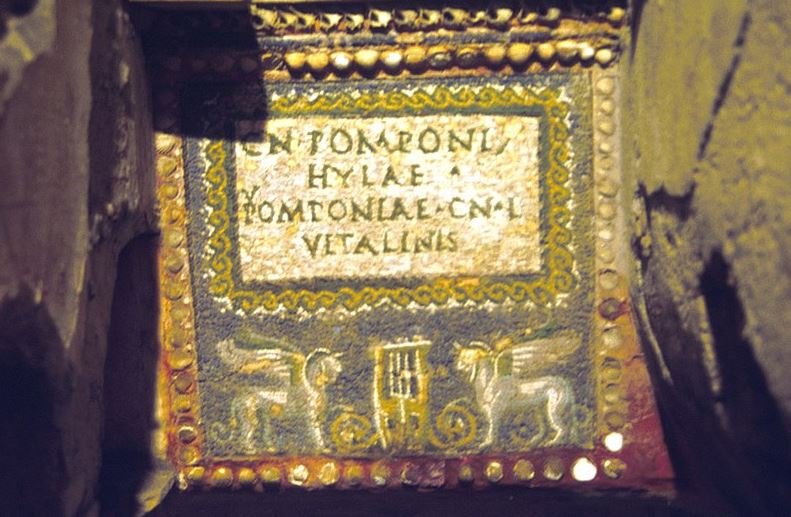
Image: A beautifully crafted mosaic panel marking the entrance to the columbarium of Pomponius Hylas.
Decline and Legacy
The use of columbaria began to decline in the 2nd century CE, as burial practices shifted back toward inhumation under the influence of changing religious and cultural norms, including the rise of Christianity. The Christian emphasis on bodily resurrection led to a preference for burial over cremation, marking the gradual disappearance of columbaria as a dominant funerary form.
However, the legacy of columbaria endures in the archaeological record and in the cultural memory of ancient Rome. These structures provide a window into the daily lives and beliefs of ordinary Romans, offering a counterpoint to the grandiose monuments of emperors and elites. They remind us of the shared humanity of those who lived and died in the shadow of the Eternal City.
READ MORE: Roman Emperors Who Changed the Course of History
Conclusion
The columbaria of Imperial Rome stand as a testament to the ingenuity and adaptability of Roman society in addressing the universal realities of death and remembrance. Through their architectural design, social function, and cultural significance, these “mansions of the dead” reveal a rich tapestry of life in ancient Rome, offering enduring lessons on community, identity, and the ways in which we honor those who came before us.
Questions and Answers
Where were columbaria commonly located, and what spurred their development?
Columbaria were primarily located in Rome, with smaller examples found in Etruria and Campania. Their development was linked to Emperor Augustus‘s reforms of burial laws, which included reclaiming the Esquiline cemetery for public gardens. They offered an affordable means for disposing of remains in a growing population, especially for slaves and freedmen.
Who funded columbaria, and what role did funerary clubs play?
Some columbaria were funded by emperors, the imperial family, or wealthy patrons, while others were established by funerary clubs formed by slaves, freedmen, or unrelated individuals. These clubs pooled resources to ensure proper cremation and placement in designated niches, serving as both social organizations and commemorative associations.
How were columbarium clubs organized and operated?
Columbarium clubs held meetings to address maintenance, regulations, and decoration, similar to modern condominium associations. Members elected officers called decuriones to oversee tasks and allocate niches. These clubs embodied rare democratic structures in hierarchical Roman society and commemorated the dead through festivals such as Parentalia and Rosalia.
What were the design and construction features of columbaria?
Columbaria varied in size and shape, with some large complexes housing thousands of urns and smaller structures accommodating a few dozen. Many were semi-subterranean, lit by light-wells, and lined with niches (loculi) resembling small apartments. They often included amenities like kitchens and dining areas and featured frescoes of animals, landscapes, and domestic scenes.
What role did inscriptions and epitaphs play in columbaria?
Inscriptions and epitaphs emphasized individuality, detailing names, professions, and social connections. Some inscriptions excluded specific individuals from burial rights, reflecting personal disputes. Efforts to stand out included larger lettering or placing niches in prominent locations. Epitaphs also highlighted talents or connections to elite households, such as Emperor Tiberius‘s jester or slaves of Agrippina.
How were columbaria preserved or transformed over time?
Many columbaria were destroyed or repurposed during urban development, with artists like Piranesi documenting their dismantling. Some, like those at Vigna Codini and Pomponius Hylas, survived in remarkable states of preservation. Others were transformed into spaces like wine shops or restaurants, or integrated into innovative projects like the Museum Drugstore complex.
What historical significance do columbaria hold?
Columbaria provide valuable insights into the lives of ordinary Romans, especially those omitted from elite historical narratives. Their inscriptions reveal personal stories, social connections, and the roles of marginalized individuals, offering a glimpse into the everyday life and death of ancient Rome.