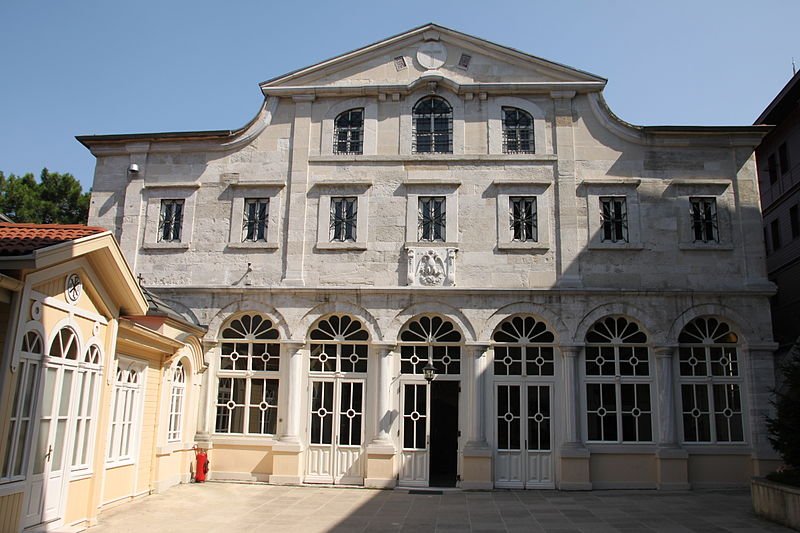
Saint George’s Cathedral, situated in Istanbul, Turkey.
The Eastern Orthodox Church, officially known as the Orthodox Catholic Church, represents one of Christianity’s three major branches, alongside Roman Catholicism and Protestantism. With approximately 230 million baptized members globally, it functions as a communion of autocephalous churches governed by bishops through synods. Unlike the Roman Catholic Church, it lacks a central figure analogous to the pope. The Ecumenical Patriarch of Constantinople holds the title of primus inter pares (“first among equals”), a symbolic role reflecting historical and spiritual significance rather than authority.
Historical Roots
The Eastern Orthodox Church claims direct descent from the Christian communities established by Jesus Christ and his apostles. By the 4th century, Christianity’s center of influence expanded from Jerusalem to cities like Antioch, Alexandria, and Byzantium (later Constantinople). Emperor Constantine’s conversion to Christianity and his establishment of Constantinople as the “New Rome” in 330 CE provided the church with an enduring imperial and cultural foundation.
Between the 4th and 8th centuries, the church convened seven ecumenical councils to address theological controversies, including the nature of Christ and the Trinity. These councils formalized doctrines, such as those articulated in the Nicene Creed, and rejected heretical teachings, establishing unity within the faith. The councils’ resolutions remain central to Orthodox theology.
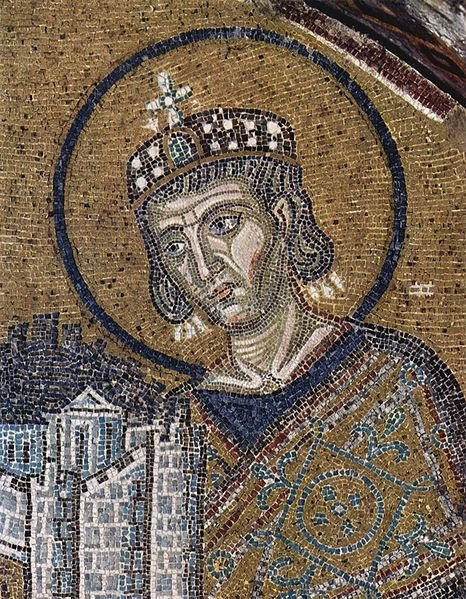
In this church mosaic, Emperor Constantine presents a depiction of the city of Constantinople as tribute to an enthroned Mary and the infant Jesus.
Key Doctrinal Beliefs
Holy Tradition and Scripture
Eastern Orthodox theology emphasizes the synergy between Holy Tradition and Scripture. While the Bible holds primacy as the written Word of God, tradition encompasses the lived faith transmitted through the Church Fathers, liturgy, and ecumenical councils.
Sacraments
The church recognizes seven sacraments, or holy mysteries, with the Eucharist at the center. The Eucharist involves the transformation of bread and wine into the body and blood of Christ, celebrated liturgically. Other sacraments include baptism, chrismation (confirmation), confession, marriage, ordination, and unction (anointing the sick).
The Trinity
Orthodox Christians affirm the doctrine of the Trinity: one God in three persons—Father, Son, and Holy Spirit. They emphasize the relational unity of the Trinity, describing the Holy Spirit as proceeding from the Father alone, in contrast to the Catholic addition of the filioque clause (“and from the Son”).
Cultural and Geographic Influence
As the state church of the Byzantine Empire, the Eastern Orthodox Church became deeply intertwined with Eastern European and Middle Eastern cultures. Iconography, liturgical music, and architecture, exemplified by the Hagia Sophia, flourished during this period.
The formal division between the Eastern Orthodox and Roman Catholic Churches occurred in 1054, resulting from theological, political, and cultural disputes, including disagreements over papal authority and the filioque clause. This schism remains a defining event in Christian history.
Slavic Missionary Work
In the 9th and 10th centuries, Saints Cyril and Methodius evangelized the Slavs, developing the Glagolitic alphabet to translate scriptures into Slavonic. This missionary effort led to the Christianization of Bulgaria, Serbia, and Kievan Rus’, cementing Orthodoxy’s influence in Eastern Europe.
Church Structure and Governance
The Eastern Orthodox Church is composed of autocephalous (self-governing) churches, each led by a patriarch, metropolitan, or archbishop. Decisions are made collectively through synods. The Ecumenical Patriarch of Constantinople holds honorary primacy but wields no direct jurisdiction over other churches.
The church’s structure reflects its historical roots in the Pentarchy, the five ancient patriarchates of Rome, Constantinople, Alexandria, Antioch, and Jerusalem. After the Great Schism, the Eastern Orthodox patriarchates expanded to include Moscow, Serbia, Romania, Bulgaria, and others.
Worship and Liturgy
The Divine Liturgy, central to Orthodox worship, is a eucharistic service celebrated with elaborate ritual and symbolism. The liturgy of Saint John Chrysostom is the most commonly used, followed by the liturgy of Saint Basil.
Icons are integral to Orthodox worship, serving as “windows to heaven.” These sacred images are venerated, not worshiped, and play a vital role in liturgical and personal devotion.
Key Historical Events
The Ottoman conquest of Constantinople in 1453 marked a significant turning point, relegating the Orthodox Church to minority status under Islamic rule. The Patriarch of Constantinople became the ethnarch of Orthodox Christians within the Ottoman Empire.
Following Constantinople’s fall, Moscow emerged as the center of Orthodoxy, with the Russian Orthodox Church declaring itself the “Third Rome.” The church’s influence grew, despite periods of state interference and persecution under communist rule.
In the 20th century, Orthodox Christians faced severe repression in communist states, particularly in the Soviet Union. Many churches were destroyed, clergy executed, and believers persecuted. Despite these challenges, Orthodoxy experienced a revival following the collapse of communism in 1991.
Modern Challenges and Developments
Orthodox communities have expanded globally through migration, missionary activity, and conversions. Significant Orthodox populations now exist in North America, Western Europe, and Australia, contributing to the church’s cultural diversity.
The Eastern Orthodox Church has faced internal divisions, such as the ongoing schism between the Ecumenical Patriarchate and the Russian Orthodox Church over the autocephaly of the Ukrainian Orthodox Church. These disputes underscore challenges in maintaining unity within a decentralized structure.
Relations with Other Christians
The Eastern Orthodox Church participates in dialogues with other Christian denominations, including the Roman Catholic Church and Protestant communities, through platforms like the World Council of Churches. However, theological differences, particularly concerning papal authority, continue to impede full reconciliation.
Efforts to reconcile with the Oriental Orthodox Churches, which split after the Council of Chalcedon (451), have made progress in recent decades, focusing on resolving Christological disagreements.
Theological Emphasis on Mysticism
Eastern Orthodoxy emphasizes experiential knowledge of God through mysticism. Practices such as the Jesus Prayer and hesychasm (silent prayer) aim to achieve union with God. This mystical theology contrasts with Western Christianity’s more scholastic approach.

History of the Catholic Church: How and When Did Catholicism Begin?
Frequently Asked Questions
What caused the Western Schism?
The Western Schism arose due to disagreements over the papal election after Gregory XI’s death in 1378. French cardinals disputed the election of Urban VI and elected a rival pope, Clement VII, splitting the Catholic Church.
What role did the Avignon Papacy play?
The Avignon Papacy (1309–1377) fostered corruption and strong French influence, creating tensions that contributed to the schism after Gregory XI returned to Rome in 1377.
Why were there three popes at one point?
The Council of Pisa (1409) attempted to resolve the schism by declaring both the Roman and Avignon popes illegitimate, electing Alexander V. This created three rival papal claimants instead of resolving the issue.
How was the schism resolved?
The Council of Constance (1414–1418) ended the schism by securing the resignation of Roman pope Gregory XII, deposing Pisan pope John XXIII, excommunicating Avignon pope Benedict XIII, and electing Martin V as the sole pope.
What were the political implications of the schism?
The schism reflected and deepened political divisions in Europe, with nations like France supporting the Avignon papacy, while England and the Holy Roman Empire backed the Roman pope.
What impact did the schism have on the Church’s authority?
The schism undermined the Catholic Church’s credibility and unity, contributing to calls for reform and eventually paving the way for the Protestant Reformation.
What is “Conciliarism,” and how did it emerge?
Conciliarism is the belief that a general council holds supreme authority over the pope. It gained traction during the schism as councils were seen as necessary to resolve disputes.
What was the long-term outcome of the Western Schism?
The Catholic Church officially recognized the Roman line of popes as legitimate and implemented reforms to avoid similar conflicts, though the schism left lasting divisions and weakened papal authority.
FACT CHECK: At World History Edu, we strive for utmost accuracy and objectivity. But if you come across something that doesn’t look right, don’t hesitate to leave a comment below.





