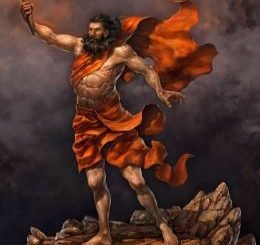
Eris in Greek Mythology
Eris, the Greek goddess of strife and discord, plays a multifaceted role in mythology as a symbol of chaos and a catalyst for conflict. Her origins, described in Theogony by Hesiod, link her to Nyx (Night), from whom she is born without a partner. Eris is part of a lineage that personifies human struggles, including Death (Thanatos), Deceit (Apate), and Doom (Moros). Unlike most of her siblings, who lack progeny, Eris has offspring representing various misfortunes, such as Toil (Ponos) and Famine (Limos), embodying the disruptive forces she unleashes.
Origins and Etymology
The name Eris stems from the Greek noun for “strife” or “discord.” Its etymology has sparked scholarly debate, with proposed links to verbs like orínein (“to stir”) or roots such as ere- (“to separate”). These linguistic connections emphasize her intrinsic association with upheaval and division. Her name also inspired derivatives in Ancient Greek, including erízō (“to fight”) and érisma (“object of a quarrel”), underscoring her foundational role in conflict.
Role in Mythology
Eris’s primary mythological significance lies in her ability to provoke turmoil, often serving as an instigator rather than a direct participant. In Homeric literature, she is Ares’ sister and a personification of the strife inherent in war.
In Hesiod’s works, she has a dual aspect: a destructive Eris who fosters war and discord, and a constructive Eris who drives competition and inspires progress. This duality illustrates the complex nature of her influence—both harmful and beneficial, depending on the context.
The Judgement of Paris and the Trojan War
Eris’s most iconic myth is her involvement in the Judgement of Paris, a pivotal event that ultimately sparked the Trojan War. Excluded from the wedding of Peleus and Thetis, Eris retaliated by throwing a golden apple inscribed “For the fairest” among the attendees. This act ignited a rivalry between Hera, Athena, and Aphrodite, leading to Paris’s fateful decision to award the apple to Aphrodite in exchange for Helen of Troy’s love. The resulting conflict underscored Eris’s role as a disruptor, emphasizing her power to create far-reaching consequences from seemingly minor provocations.
Eris famously sparked the Trojan War by causing a dispute among Hera, Athena, and Aphrodite, leading to the Judgement of Paris.
While Homer references the events surrounding the Trojan War, he omits Eris’s direct involvement, focusing instead on the broader narrative of divine and mortal conflict. Later accounts, including the Cypria and works by Roman authors like Hyginus, expand on Eris’s role, introducing elements like the golden apple of discord. These versions highlight her as a necessary force in the mythological framework, driving the inevitability of war and chaos.
Influence in War
Eris’s presence in Greek literature extends beyond her role in the Judgement of Paris. In the Iliad, she embodies the chaotic nature of battle, inciting armies and fueling the violence of war. Although she does not engage directly in combat, her influence permeates the battlefield, urging both sides toward greater conflict. This is vividly portrayed in Homer’s descriptions of her lowering her head to the ground and later raising it to the heavens, symbolizing the escalation of strife.
In the Shield of Heracles, Eris appears alongside other personifications of war, such as Fear (Phobos) and Rout (Alke). She hovers over battlefields, reveling in the carnage and confusion she inspires. These depictions cement her role as an omnipresent force in times of conflict, driving the chaos and destruction that define warfare.
The Two Eris Figures
Hesiod’s Works and Days provides a nuanced perspective by introducing two distinct representations of Eris. The first is the malevolent Eris, associated with war, discord, and suffering. The second is a benevolent Eris, created by Zeus, who fosters healthy competition and motivates individuals to strive for success. This duality reflects a broader Greek philosophical understanding of conflict: while destructive strife leads to chaos, constructive rivalry drives innovation and progress.
Other Mentions and Cultural Context
Beyond her central mythological narratives, Eris appears in various Greek texts as a symbol of discord and a catalyst for misfortune. In Antoninus Liberalis’s Metamorphoses, she is sent by Hera to sow discord among mortals. Similarly, in Quintus Smyrnaeus’s Posthomerica, Eris delights in the bloodshed of war, embodying the chaos that follows her provocations. These later interpretations emphasize her unwavering association with conflict and strife.
Eris’ Roman counterpart is Discordia. Hesiod also mentions a second Eris, separate from Nyx’s daughter, who brings beneficial competition to humanity.
In Nonnus’s Dionysiaca, Eris takes an active role in battles, often paired with war deities like Enyo. Her influence extends beyond Greek literature, appearing in Roman adaptations where she is known as Discordia, the embodiment of discord in Roman mythology. This continuity across cultures highlights her universal appeal as a representation of chaos and division.
Iconography
Eris is rarely depicted in ancient Greek art, but when she is, her imagery underscores her unsettling nature. Described by Pausanias as “most repulsive” on the Chest of Cypselus, she is often shown with wings and sandals, symbolizing her swift and pervasive influence. A red-figure krater connects her to the Judgement of Paris, further solidifying her role in the events leading to the Trojan War. These artistic depictions, though sparse, capture the essence of her disruptive character.
Modern Interpretations and Legacy
Eris’s enduring relevance extends into modern times, where she serves as a symbol of chaos and unpredictability. She is central to the satirical Discordian religion, which embraces absurdity and disorder as fundamental aspects of existence. This reinterpretation aligns with her mythological roots, emphasizing her role as a force of disruption.
In popular culture, Eris appears in various forms, from animated television series like The Grim Adventures of Billy & Mandy to films such as Sinbad: Legend of the Seven Seas. These portrayals often exaggerate her chaotic nature, presenting her as a mischievous antagonist who thrives on creating turmoil.
Did you know…?
Eris’s influence also extends to science and taxonomy. The dwarf planet Eris, named after the goddess in 2006, reflects her association with discord, as its discovery challenged existing definitions of planetary status. Similarly, the New Zealand moth Ichneutica eris, named in 2019, continues her legacy in natural sciences.
Significance in Greek Mythology
Eris embodies the dual nature of strife—both destructive and transformative. Her role in Greek mythology illustrates the inevitability of conflict as a driving force in human and divine narratives. Through her actions, she shapes pivotal events, from the Judgement of Paris to the chaos of battle. Her presence serves as a reminder of the power of discord to disrupt, challenge, and ultimately redefine the status quo.
In conclusion, Eris’s origin, role, and significance in Greek mythology highlight her as a complex and multifaceted figure. Whether inciting the Trojan War, reveling in the chaos of battle, or fostering competition, she remains a potent symbol of both the destructive and creative forces of strife. Her legacy, preserved in ancient texts, art, and modern interpretations, underscores her timeless relevance as a representation of the unpredictable and transformative nature of discord.
Frequently Asked Questions

In Greek mythology, Eris (Ἔρις) is the goddess of strife and discord, especially in war, and appears as Ares’ sister in the Iliad. Hesiod describes her as Nyx’s daughter and mother of abstract woes like Toil and Famine. Image: Eris on an Attic plate, ca. 575–525 BC
What is the origin and meaning of the name “Eris”?
The name Eris derives from the Ancient Greek noun eris, meaning “strife” or “discord.” Its etymology is debated, with suggestions linking it to the verb orínein (“to stir”) and the Proto-Indo-European root ere- (“to separate”). The name also inspired derivatives like erízō (“to fight”) and érisma (“object of a quarrel”).
How does Hesiod portray Eris in Greek mythology?
Hesiod portrays Eris as the daughter of Nyx (Night) in Theogony and the mother of personified misfortunes such as Toil, Famine, and Deceit. These figures represent the consequences of strife and discord.
What role does Eris play in Homer’s works?
In Homer’s Iliad, Eris is depicted as Ares’ sister and personifies strife in warfare. She incites armies and symbolizes chaos without directly participating in battles.
What is Eris’s role in the Judgement of Paris?
Eris instigates the events leading to the Trojan War by throwing a golden apple inscribed “For the fairest” at the wedding of Peleus and Thetis. This causes a rivalry among Hera, Athena, and Aphrodite, ultimately leading to Paris’s decision favoring Aphrodite and the abduction of Helen.
How does Hesiod differentiate between the two Eris figures in Works and Days?
Hesiod describes two types of Eris: one destructive, fostering war and conflict, and the other beneficial, promoting productive competition and hard work among humans.
How is Eris depicted in war-related contexts?
Eris is frequently associated with battle scenes in Greek literature. In The Shield of Heracles and the Iliad, she incites chaos, fosters bloodshed, and revels in destruction without directly engaging in combat.
How is Eris portrayed in later Greek texts?
In texts like Antoninus Liberalis’s Metamorphoses and Quintus Smyrnaeus’s Posthomerica, Eris is depicted as an instigator of conflict and chaos, consistent with her mythological role.
What are some artistic representations of Eris in ancient Greek culture?
Eris appears as a winged figure on vase art and is described as “most repulsive” on the Chest of Cypselus. A red-figure krater links her to the Judgement of Paris, emphasizing her role in the Trojan War.
How is Eris interpreted in modern culture?
Eris is central to the satirical Discordian religion, symbolizing chaos and absurdity. She also appears in media such as The Grim Adventures of Billy & Mandy and Sinbad: Legend of the Seven Seas.