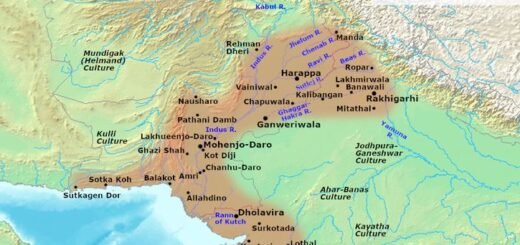
Famous Cities from the Harappan Civilization
Harappan cities were part of the Indus Valley Civilization (IVC), one of the world’s earliest urban cultures that thrived around 2600–1900 BCE. Located primarily in present-day Pakistan and northwest India, the Harappan civilization is known for its well-planned cities, advanced infrastructure, and sophisticated urban organization. These cities were among the most advanced of their time and provide significant insight into the early development of urban life.
Discovery and Significance
The Harappan Civilization was discovered in the 1920s when archaeologists unearthed two of its major cities—Harappa and Mohenjo-daro. Since then, over 1,000 Harappan sites have been discovered, ranging from large cities to small towns and villages. Harappa and Mohenjo-daro serve as key reference points for understanding the characteristics of the civilization. Other important cities include Dholavira, Rakhigarhi, and Lothal.
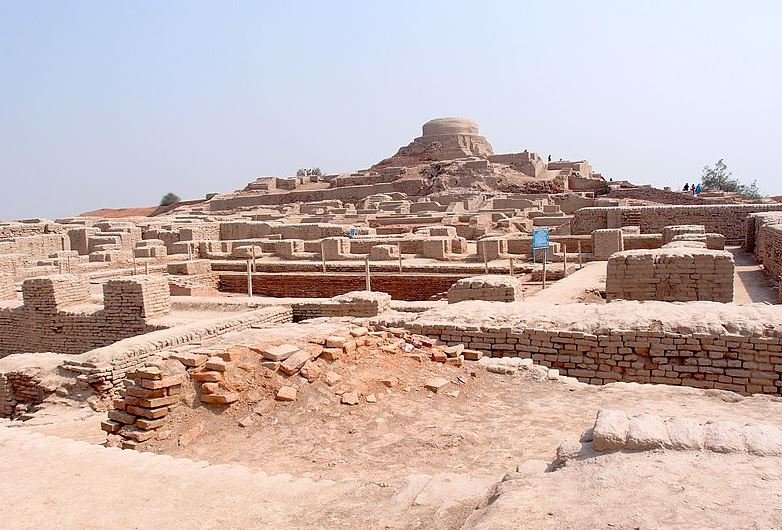
Ruins of the ancient city of Mohenjo-daro.
Urban Planning and Architecture
One of the most remarkable aspects of Harappan cities was their sophisticated urban planning. The cities were laid out on a grid pattern, with streets running in straight lines and intersecting at right angles, a feature rarely seen in ancient cities. This level of planning suggests a high degree of organization and centralized control.
Grid Layout
The grid layout of Harappan cities is one of the most distinguishing features of the civilization. Cities like Mohenjo-daro and Harappa were divided into sectors or blocks, each block containing groups of houses, public buildings, and open spaces. The streets varied in width, with some main avenues as wide as 30 feet, allowing for the movement of carts and people.
Citadel and Lower Town
Harappan cities were typically divided into two main parts: the Citadel and the Lower Town. The Citadel was often located on higher ground and was likely the administrative and religious center of the city. It contained large public buildings, granaries, and possibly temples or palaces. The Lower Town, on the other hand, was where the majority of the population lived. It had residential areas, marketplaces, and workshops.
Brick Construction
The Harappans were also skilled in brick-making, and the majority of their buildings were made of uniformly sized baked bricks. This use of standardized bricks across cities suggests a uniform system of construction and a strong centralized authority overseeing urban planning.
Water Management
The Harappan civilization was particularly advanced in terms of water management, which is evident from the elaborate drainage systems found in their cities. Every house in the major cities had access to water and drainage, a feature that was unparalleled in the ancient world.
Drainage System
The drainage system in Harappan cities was highly sophisticated. Underground drains, made from bricks, ran along the streets, connecting with larger main drains. Wastewater from houses and public buildings was directed into these drains, ensuring a clean and hygienic environment. Manholes were also found along the streets, indicating that the drains were cleaned regularly.
Wells and Bathing Areas
Many houses in Harappan cities had their own wells, ensuring a reliable water supply. The discovery of numerous wells across Harappan sites shows how important water was to their daily life. In addition, large public bathing areas, such as the Great Bath at Mohenjo-daro, suggest that bathing held a significant cultural or religious importance.
Trade and Economy
The Harappans had a thriving economy based on agriculture, trade, and craft production. They cultivated crops like wheat, barley, peas, and cotton, and engaged in animal husbandry. The discovery of granaries in several cities indicates that surplus food was stored for future use.
Internal and External Trade
Trade played a crucial role in the Harappan economy. Internally, goods like pottery, tools, and jewelry were produced and traded between cities and towns. Externally, the Harappans engaged in long-distance trade with Mesopotamia, Oman, and regions of Central Asia. The presence of seals, weights, and measures found in both Harappan cities and Mesopotamian cities suggests a standardized trade system.
Craft Production
The Harappans were skilled artisans, producing a wide range of goods, including pottery, beads, and metal objects. They were particularly known for their fine pottery, which was often decorated with geometric and floral patterns. The Harappans also excelled in bead-making, using materials like semi-precious stones, gold, and silver. They had advanced metallurgical skills, producing bronze tools and weapons.
Social Organization and Governance
The social structure of Harappan cities remains a topic of debate due to the lack of written records. However, the uniformity in city planning and the standardization of weights and measures suggest that the civilization was highly organized, with a centralized authority overseeing urban life. The absence of palaces or monumental architecture, such as those found in Mesopotamia or Egypt, indicates that Harappan society may have been more egalitarian, with power possibly distributed among local elites rather than concentrated in the hands of a king or priestly class.
Writing System
The Harappans developed a writing system, known as the Indus script, which has been found on seals, pottery, and other artifacts. However, the script remains undeciphered, and as a result, much about their governance, religion, and social structure is still unknown. The script appears to consist of pictographs and symbols, and it is assumed to have been used for administrative and trade purposes.
Decline of Harappan Cities
Around 1900 BCE, the Harappan civilization began to decline. Several theories have been proposed to explain the decline of the Harappan cities, including climate change, river shifts, and invasions.
Climate Change and Environmental Factors
One of the most widely accepted theories is that climate change played a significant role in the decline of the Harappan civilization. Geological evidence suggests that the region experienced a gradual drying of the climate, leading to reduced rainfall and the eventual decline of agriculture. The shifting course of rivers, such as the Ghaggar-Hakra (believed to be the ancient Sarasvati River), may have also led to the abandonment of certain cities.
Invasion and Conflict
Another theory, once popular but now largely discounted, is that the Harappan cities were invaded and destroyed by the Aryans, a nomadic group from Central Asia. While there is some evidence of conflict, such as unburied skeletons found in Mohenjo-daro, most scholars believe that the decline was gradual and more likely due to environmental factors than violent conquest.
Legacy of the Harappan Civilization
Despite its decline, the Harappan civilization left a lasting legacy on the Indian subcontinent. Their advanced urban planning, water management systems, and craft production influenced later cultures in the region. The civilization also contributed to the development of trade networks that continued to flourish in subsequent centuries.
The grid layouts, drainage systems, and public works of Harappan cities reflect a level of sophistication rarely seen in other contemporary civilizations.
The Harappan cities represent a unique chapter in human history, demonstrating how an ancient civilization could develop complex urban centers with advanced infrastructure, trade, and social organization. Although much about their culture remains a mystery, ongoing archaeological research continues to uncover new insights into the lives of the people who lived in these remarkable cities.
Major Harappan Sites
Harappa
Harappa is one of the largest and most well-known cities of the Indus Valley Civilization. The city is located on the Ravi River in modern-day Punjab, Pakistan. Excavations at Harappa have revealed an intricate city layout, sophisticated drainage systems, and a granary that likely served as a central storehouse for food supplies.

Harappa’s Granary and Great Hall.
Mohenjo-daro
Located in the Sindh region of Pakistan, Mohenjo-daro is one of the most famous Harappan cities. The city’s Great Bath, a large public bathing area, is one of its most iconic features. Mohenjo-daro also had a highly developed drainage system, and its streets were laid out in a precise grid pattern. The city appears to have been a major political and economic hub of the civilization.
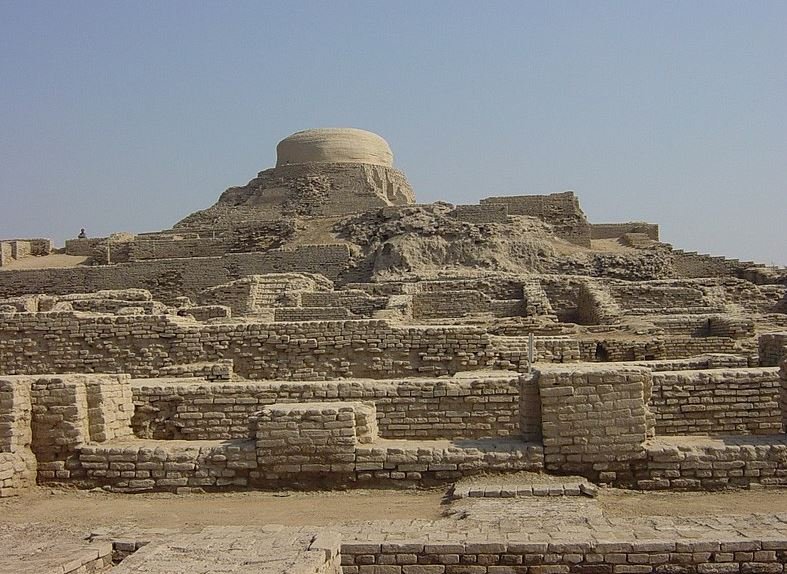
The ancient archaeological site of Mohenjo-daro.
Dholavira
Dholavira, located in present-day Gujarat, India, is one of the most extensively excavated Harappan sites. The city is unique for its complex water management system, which included reservoirs and channels to store and distribute water. Dholavira also had large public buildings, suggesting that it may have been an important administrative center.
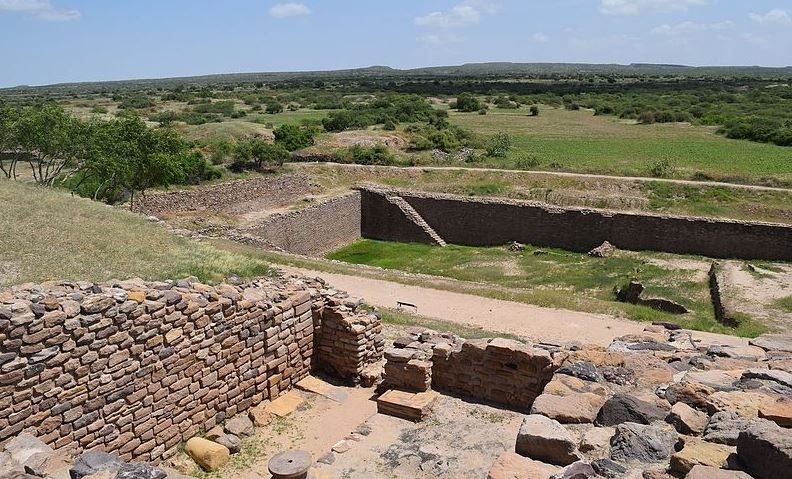
An excavated site in Dholavira.
Lothal
Lothal, located near the Gulf of Khambhat in Gujarat, is particularly significant for its dockyard, which indicates that the city was a major center of maritime trade. Lothal’s layout and construction reflect the standard Harappan model, with well-planned streets, drainage systems, and standardized brick construction.
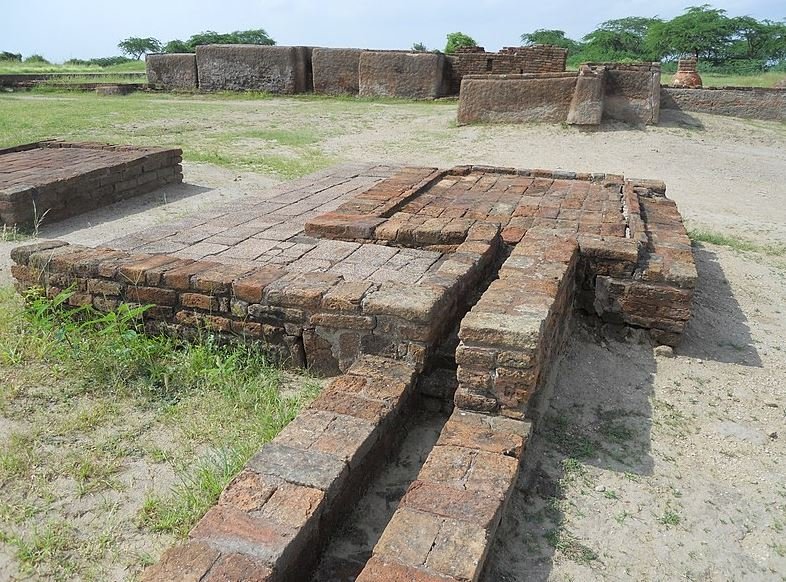
The remains of an ancient washroom drainage system at Lothal.
Rakhigarhi
Rakhigarhi, located in the Indian state of Haryana, is one of the largest known Harappan sites. Excavations at Rakhigarhi have revealed evidence of a large, prosperous city with advanced craft production and trade networks. The discovery of human remains at Rakhigarhi has also provided valuable insights into the genetic makeup of the Harappan population.
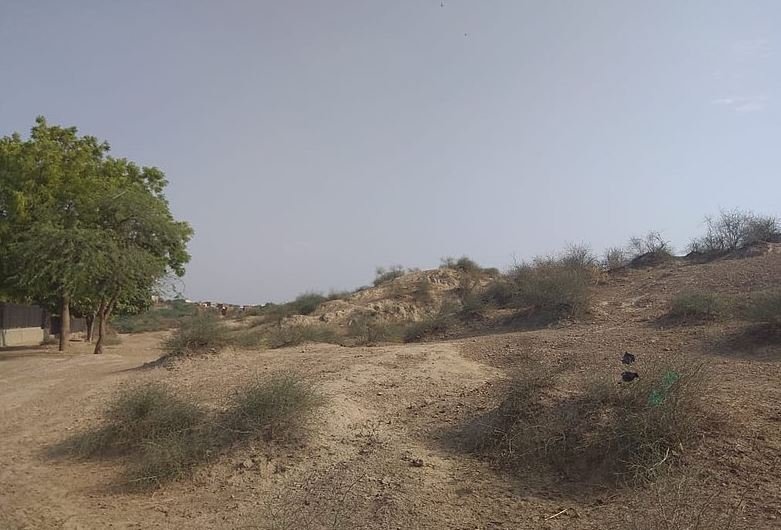
Ancient site in Rakhigarhi.
Frequently asked questions
What was the most remarkable feature of Harappan cities?
The most remarkable feature of Harappan cities was their advanced town planning, which demonstrated a high level of organization and efficiency.
How were Harappan cities divided?
Harappan cities were divided into two main parts: the upper town, known as the Citadel, and the lower town, where the majority of the population lived.
What were the granaries used for in Harappan cities?
Granaries in cities like Mohenjo-daro and Harappa were large structures used for storing grain. These granaries were essential for managing food supplies and storing surplus crops.
What is the Great Bath, and where is it located?
The Great Bath was a large, watertight pool located in Mohenjo-daro. It had a floor made of five layers of materials and likely played a role in religious or ceremonial activities, possibly for ritualistic bathing during festivals.
What was the purpose of the Town Hall in Harappan cities?
The Town Hall, a large palace-like building found in some Harappan cities, possibly served as an assembly hall for city government or as a meeting place for public gatherings.
What characterized the lower town in Harappan cities?
The lower town was the residential area where common people lived. It featured a grid layout of streets and blocks, reflecting careful urban planning.
How were the streets organized in Harappan cities?
The streets were laid out in a precise grid pattern, intersecting at right angles. This design facilitated efficient movement within the city. Covered drains ran alongside the streets to carry wastewater away, contributing to cleanliness and sanitation.
What was significant about the drainage system in Harappan cities?
Harappan cities had one of the most sophisticated drainage systems of the ancient world. The brick drains, covered with stone slabs, prevented leaks, and wooden screens blocked solid waste. The system allowed for easy cleaning and maintenance, ensuring a hygienic environment.
What were the characteristics of Harappan houses?
Harappan houses varied in size, with some being two storeys high. They were built from burnt bricks and typically included a central courtyard for ventilation, a well, a bathing area, and a kitchen, indicating attention to both privacy and comfort.
How does Harappan town planning reflect the civilization’s understanding of urban infrastructure?
Harappan town planning showed an advanced understanding of urban infrastructure, sanitation, and public health. Their well-planned streets, efficient drainage systems, and thoughtfully designed houses laid the groundwork for future urban planning in the region.
What role did the Citadel play in Harappan cities?
The Citadel, located in the upper town, likely served as the administrative and ceremonial center of the city, housing important public buildings like granaries, town halls, and religious structures.
Why is the Harappan civilization considered one of the most sophisticated early urban cultures?
The Harappan civilization is considered one of the most sophisticated early urban cultures due to its meticulous town planning, including its advanced drainage systems, structured layout of streets and buildings, and a focus on public health and sanitation.