Food and agriculture were integral to the functioning of ancient Greek society, shaping its economy, culture, and daily life. The Greek environment, with its rugged terrain, diverse climates, and limited arable land, played a significant role in determining the types of crops and livestock that could be cultivated. Ancient Greeks developed innovative agricultural techniques and trade networks to optimize production and sustain their growing populations.
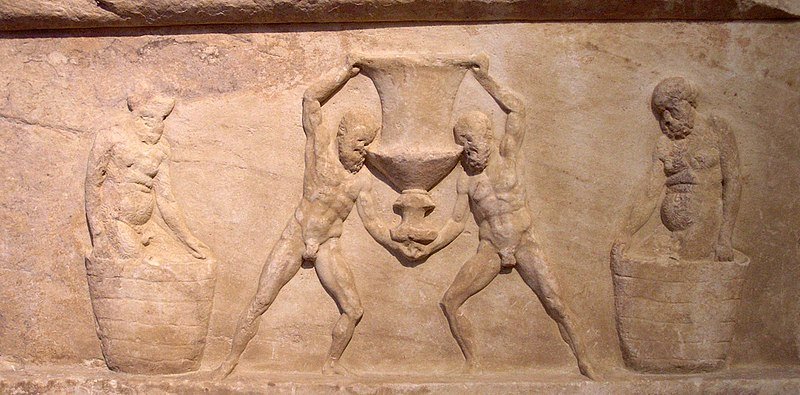
A bas-relief of satyrs making wine, depicting a Dionysian scene, housed at the National Archaeological Museum of Athens. The altar’s date remains unknown.
Agricultural Practices and Environment
Ancient Greece’s geography was characterized by mountainous terrain and limited fertile plains, which meant that only about a quarter of the land was arable. The Mediterranean climate, with hot, dry summers and mild, wet winters, dictated the agricultural calendar and the types of crops that could thrive. Olive trees, grapevines, and cereals like barley were well-suited to this environment.
Farming Techniques
- Terracing: To maximize agricultural output on hillsides, farmers built terraces, which reduced soil erosion and improved irrigation.
- Crop Rotation: While basic compared to modern standards, ancient Greeks practiced crop rotation to maintain soil fertility.
- Irrigation and Tools: Simple irrigation systems and hand tools like plows, hoes, and sickles facilitated cultivation. Wealthier farmers used oxen to plow fields.
Land Ownership
Land was a critical resource in ancient Greece. Small-scale farmers owned and worked their plots, but large estates controlled by aristocratic families were common in wealthier regions like Thessaly. The land tenure system often reflected social and economic hierarchies.
Key Crops Planted in Ancient Greece
Barley was the staple crop, as it required less water and grew well in the dry Greek climate. It was primarily used to make bread and porridge. Wheat was cultivated but was less common due to its higher water needs.
Olive trees were central to Greek agriculture and culture. They provided olives for consumption and olive oil, which was a versatile product used in cooking, lighting lamps, religious rituals, and personal grooming.
Grapes were another cornerstone of Greek agriculture, and wine production was a hallmark of their economy and culture. Wine was a daily staple, diluted with water and often flavored with herbs or resin.
Pulses like lentils, chickpeas, and broad beans were essential sources of protein. Vegetables such as onions, garlic, leeks, and cabbages supplemented diets.
The agricultural and culinary practices of ancient Greece significantly influenced later civilizations, including the Romans and, ultimately, modern Mediterranean cultures.
Figs, apples, pears, pomegranates, and almonds were common. Figs, in particular, held symbolic and dietary significance.
Culinary herbs like oregano, thyme, and mint were grown widely and used to flavor dishes. Spices were less common and often imported.
Livestock and Animal Husbandry
Oxen were vital for plowing fields, while cattle were raised mainly for milk and, occasionally, meat.
These animals were central to Greek pastoralism due to their adaptability to rugged terrains. They provided wool, milk (used for cheese-making), and meat.
Pigs were raised for pork, a staple meat, while chickens and geese provided eggs and occasional meat.
Bees were highly valued for their honey, the primary sweetener in Greek cuisine, and beeswax, used for candles and other purposes.
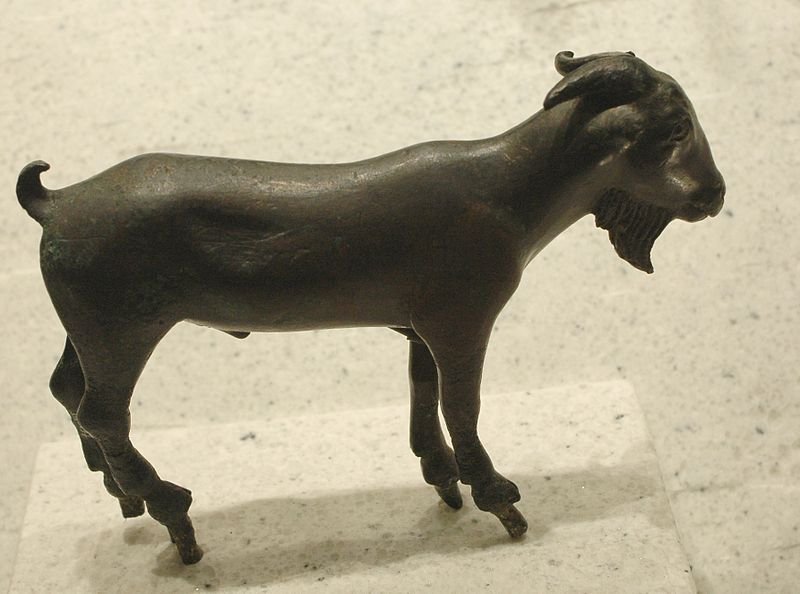
A bronze billygoat from the 5th century BCE, discovered in the deme of Kephissia, now in the Louvre.
Diet and Food Culture of the Ancient Greeks
- The Mediterranean Triad of bread, wine, and olive oil formed the backbone of the Greek diet. Meals were simple but nutritious.
- Meat was rarely consumed, reserved for religious sacrifices or festivals.
- Dairy products, particularly cheese, were common.
Meal Structure
- Breakfast (Akratismos): A light meal consisting of barley bread dipped in wine, often accompanied by figs or olives.
- Lunch (Ariston): A midday meal that was similarly simple, featuring bread, cheese, or fruits.
- Dinner (Deipnon): The main meal, often more elaborate, with vegetables, legumes, and occasional fish or meat.
Symposia
Social drinking gatherings, or symposia, were an important cultural institution where wine, food, and intellectual conversation flowed freely. Snacks (tragemata) like nuts, dried fruits, and cheese accompanied the wine.
Religious and Cultural Significance
Agricultural products were frequently offered to gods during sacrifices and festivals. For example, Demeter, the goddess of agriculture, was honored with offerings of grains and fruits.
Animal sacrifices often involved sharing the meat among participants, reinforcing community bonds.
Festivals
Agricultural festivals like the Thesmophoria (dedicated to Demeter) celebrated planting and harvest cycles.
The Anthesteria, a festival of wine and fertility, marked the opening of new wine casks.
Domestic Trade
Regions specialized in certain products based on their environment. For example, Attica was known for its olives, while islands like Chios produced high-quality wine.
International Trade
Greek colonies and city-states established extensive trade networks across the Mediterranean. They exported olive oil, wine, and pottery while importing grains, metals, and luxury items like spices.
The reliance on imported grain, particularly from Egypt and the Black Sea, highlighted the limitations of Greek agriculture.
Markets (Agora)
The agora served as the central marketplace where farmers sold their produce, fostering economic and social interactions.
Challenges and Adaptations
The geography of ancient Greece posed significant challenges, including limited arable land, rocky terrain, and scarce rainfall. These environmental constraints made agriculture difficult, requiring innovative solutions.
Farmers adapted by practicing crop rotation and allowing fields to lie fallow periodically to restore soil fertility. Terracing hillsides maximized cultivable land, while olive trees and grapevines, suited to the rugged environment, became staple crops.
The emphasis on olives, grapes, and cereals, along with the social and religious roles of food, laid the foundation for contemporary Mediterranean diets.
The Greeks also relied heavily on trade, exchanging surplus olive oil and wine for essential grains and resources. In addition, the scarcity of large rivers led to the development of rainwater storage systems and irrigation techniques. These adaptations ensured survival and facilitated the growth of Greek city-states despite their challenging environment.
Population Growth, Wars and Land Use
As populations grew, reliance on imported grain increased, leading to geopolitical tensions and colonization efforts to secure resources.
Frequent wars disrupted agricultural production, and armies often ravaged farmland. This led to food shortages and the need for redistribution efforts.
Frequently Asked Questions
What was the basis of prosperity in Greek city-states?
The prosperity of Greek city-states was largely based on agriculture and the ability to produce surplus food, which enabled citizens to engage in trades, arts, and other pursuits. Surplus production also facilitated the creation of export goods to acquire necessities unavailable locally.
What were the main crops grown in ancient Greece?
The main crops grown in ancient Greece were cereals like emmer wheat, durum wheat, and barley; olives for oil; and grapes for wine. These crops were well-suited to the Mediterranean climate.
How did Greek colonization influence agriculture?
Greek colonization spread agricultural practices and products to regions like Asia Minor and Magna Graecia, expanding their influence across the Mediterranean.
Who controlled Greek agriculture, and how was land distributed?
Greek agriculture was primarily a private endeavor, with landownership restricted to residents. Land was divided equally among male heirs, leading to fragmented estates and the prevalence of smallholdings.
How large were farms in ancient Greece?
Farm sizes varied based on region and social status. In Athens, small farms averaged 5 hectares, while aristocratic estates could reach 20 hectares. Spartan farms were typically larger, ranging from 18 to 44 hectares.
What challenges did Greek farmers face?
Farmers faced challenges such as irregular rainfall, which caused frequent crop failures, and limited arable land, as only about 23% of Greece was suitable for farming.
What were the dietary staples of ancient Greece?
Dietary staples included barley (used for gruel and barley cakes), wheat, broad beans, chickpeas, lentils, figs, apples, pomegranates, olives (for oil), and grapes (for wine).
What was the agricultural calendar in ancient Greece?
The agricultural calendar included ploughing and sowing in autumn, pruning vines in spring, harvesting grain in summer, and harvesting olives and pressing them for oil in autumn and winter.
How did Greeks manage their crops?
Greeks used techniques like crop rotation, leaving fields fallow, and planting legumes to replenish soil nutrients. Small plots were irrigated with cisterns and trenches to conserve water.
What tools were used in Greek agriculture?
Greek farmers used simple tools like wooden or iron-tipped plows, mattocks, hoes, sickles, and stone presses. Oxen were used for plowing, and grains were threshed on stone floors.
What role did livestock play in Greek agriculture?
Livestock such as sheep, goats, pigs, chickens, and cattle provided meat, milk, wool, and labor. Animals also fertilized crops and consumed agricultural by-products. Horses, donkeys, and mules were used for transport.
How did ancient Greeks trade agricultural products?
Most farmers bartered surplus produce, while wealthier citizens sold cash crops in markets. Agricultural products like cereals, wine, olives, and figs were traded domestically and internationally, with Athens’ port of Piraeus serving as a major hub.
What was the role of the state in Greek agriculture and trade?
The state minimally intervened in agriculture but regulated grain imports to prevent shortages. Officials like the sitones controlled grain trade, and market supervisors ensured fair prices and quality of goods.