10 Most Famous Ancient Greek City-States
In ancient Greek, “polis” referred to a city-state, encompassing both the urban core and its surrounding territory. It was not only a physical space but also the central unit of organization, governance, and identity in ancient Greek society.
Below, World History Edu provides an in-depth exploration of the 10 most famous ancient Greek city-states, detailing their history, culture, and significance.
Athens
Athens is perhaps the most famous of all ancient Greek city-states, renowned for its contributions to art, philosophy, and democracy. Situated in the region of Attica, Athens was a hub of intellectual and cultural advancements, influencing the Western world for millennia.
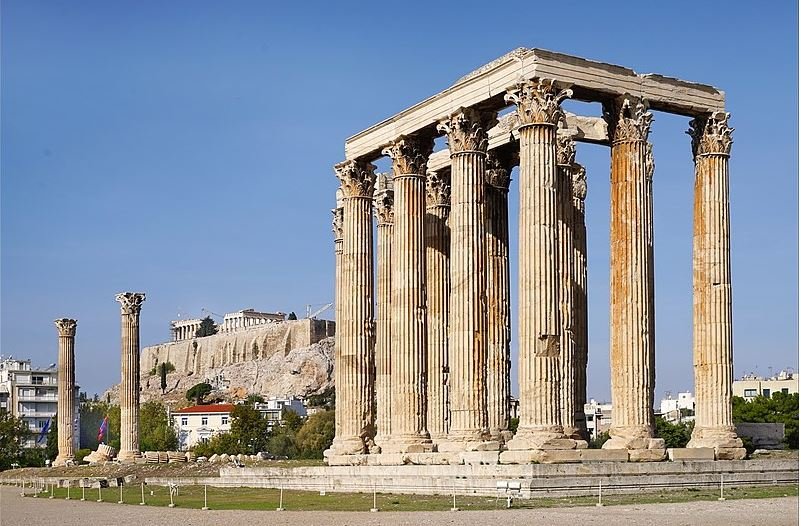
Image: Temple of Olympian Zeus, in Athens
Key Features:
- Democracy: Athens is celebrated as the birthplace of democracy. Under leaders like Cleisthenes and Pericles, citizens were granted the right to participate in governance through assemblies.
- Philosophy and Education: Athens was home to great philosophers such as Socrates, Plato, and Aristotle, who laid the foundations of Western philosophy.
- Art and Architecture: Athens showcased its cultural prowess through architectural marvels like the Parthenon and artistic achievements that set the standard for classical art.
- Naval Power: During the 5th century BC, Athens dominated the Delian League, transforming it into an Athenian Empire that controlled much of the Aegean.
The time when Athenians prayed to Boreas to deliver them from the Persians
Sparta
Sparta, located in Laconia in the southeastern Peloponnesus, was a city-state famed for its military prowess and strict social structure. Its society revolved around discipline, strength, and loyalty.

Image: Ruins of an ancient Spartan theater
Key Features:
- Military Society: Spartan life was centered on warfare. Male citizens underwent rigorous training in the agoge, a state-sponsored education system designed to produce elite soldiers.
- Oligarchy: Sparta was ruled by a mixed governmental structure that included two kings, a council of elders (Gerousia), and elected officials (ephors).
- Helots: The Spartan economy depended on a subjugated population called helots, who were forced to farm and provide sustenance for the Spartan elite.
- Women’s Rights: Spartan women enjoyed more freedoms and responsibilities compared to their counterparts in other city-states, including property rights and physical training.
Corinth
Corinth was a wealthy city-state located on the narrow Isthmus of Corinth, which connected mainland Greece to the Peloponnesus. Its strategic location made it a hub for trade and commerce.
Key Features:
- Trade and Wealth: Corinth controlled key trade routes between the Aegean and Adriatic Seas, becoming one of the richest city-states in Greece.
- Architecture: Known for its monumental architecture, Corinth developed the Corinthian column, a style that influenced classical and modern design.
- Religious Significance: Corinth was home to important temples, including the Temple of Aphrodite, which was associated with the goddess of love and beauty.
Corinth’s legacy lies in its economic ingenuity, architectural innovations, and cultural vibrancy, which made it a central power in ancient Greece.
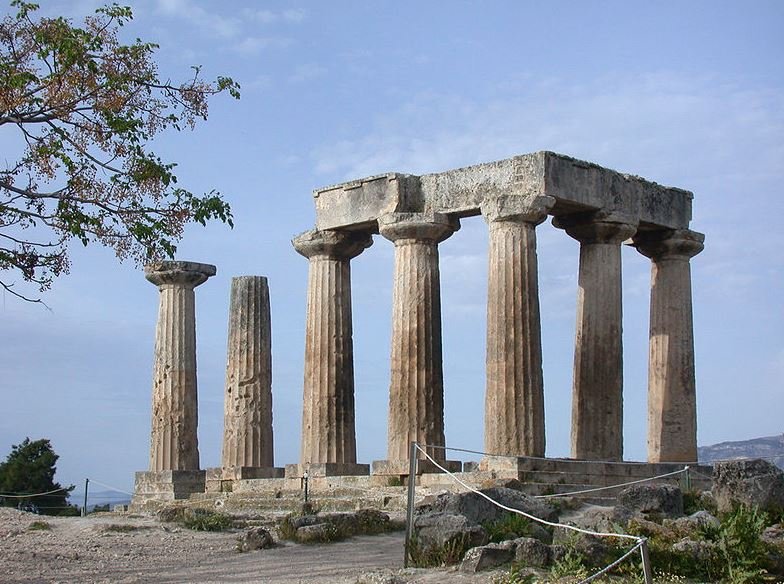
Image: Apollo temple in Corinth
Thebes
Thebes, located in central Greece in the region of Boeotia, was a powerful city-state with a history of rivalry with Athens and Sparta. It played a critical role in various conflicts throughout Greek history.

A view of the city of Thebes.
Key Features:
- Rivalry with Athens: Thebes often allied with Sparta to counterbalance Athens’ influence, notably during the Peloponnesian War.
- Sacred Band of Thebes: Thebes fielded an elite military unit known as the Sacred Band, composed of 150 pairs of male lovers whose loyalty to one another was believed to enhance their combat effectiveness.
- Battle of Leuctra (371 BC): Thebes achieved a major victory over Sparta at Leuctra, ending Sparta’s dominance in Greece.
- Mythological Importance: Thebes is the setting for many Greek myths, including the stories of Oedipus and Heracles.
Delphi
Delphi was a small but highly influential city-state in central Greece, famous for its religious significance and as the site of the Oracle of Apollo.

Image: Ruins of the Temple of Athena in Delphi.
Key Features:
- Religious Center: Delphi was considered the center of the world by the ancient Greeks, marked by the sacred omphalos stone. It housed the Temple of Apollo, where the Pythia (priestess) delivered prophetic messages.
- Delphic Games: Delphi hosted the Pythian Games, a major athletic and cultural festival held in honor of Apollo, second only to the Olympic Games.
- Amphictyonic League: Delphi was governed by a coalition of Greek city-states called the Amphictyonic League, which protected its sanctity and ensured its neutrality.
Rhodes
Rhodes, located on the island of the same name in the southeastern Aegean, was known for its maritime strength and cultural achievements.
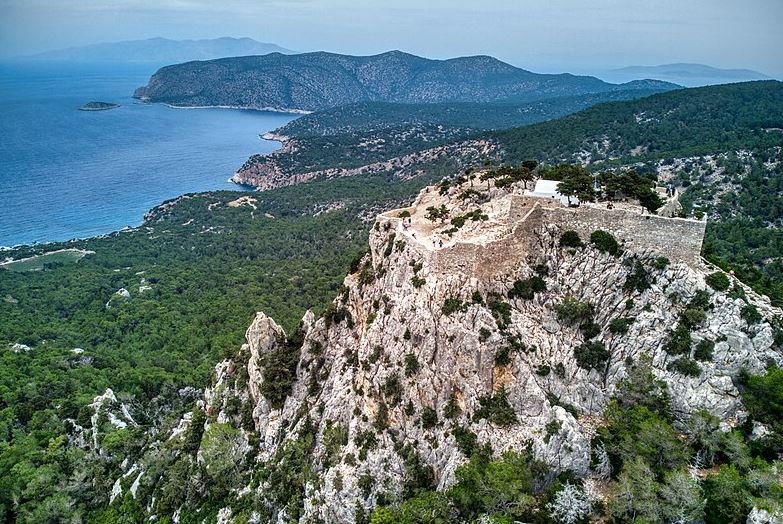
Image: Monolithos Castle (Kastro Monolithou) on the island of Rhodes.
Key Features:
- Naval Power: Rhodes established itself as a formidable naval power, facilitating trade and maintaining peace in the Aegean through its alliance systems.
- Colossus of Rhodes: The city was home to one of the Seven Wonders of the Ancient World, the Colossus of Rhodes, a massive statue of the sun god Helios.
- Rhodian Law: Rhodes developed a maritime legal code that influenced later Roman and modern legal systems.

Delos
Delos, a small island in the Cyclades, held immense religious and commercial significance in ancient Greece.

A view of Delos.
Key Features:
- Religious Importance: Delos was considered the birthplace of Apollo and Artemis, making it a major religious sanctuary.
- Delian League: The island served as the original meeting place and treasury of the Delian League, an alliance led by Athens.
- Trade and Commerce: Delos became a thriving trade center, especially during the Hellenistic period, serving as a marketplace for goods from across the Mediterranean.
Argos
Argos, located in the northeastern Peloponnesus, was one of the oldest city-states in Greece and a center of early Greek civilization.

Image: Castle on Larissa Hill in Argos.
Key Features:
- Early Greek Culture: Argos was a pioneer in art and architecture during the Geometric and Archaic periods, known for its contributions to sculpture and pottery.
- Mythological Significance: Argos played a central role in Greek mythology, being associated with heroes like Perseus and events such as the founding of the Argive Heraion (sanctuary of Hera).
- Neutrality in Wars: Argos often remained neutral during major Greek conflicts, focusing instead on cultural and infrastructural development.

Ephesus
Ephesus, located in Asia Minor (modern-day Turkey), was a wealthy and influential city-state known for its religious and commercial significance.

Image: Library of Celsus in Ephesus
Key Features:
- Temple of Artemis: Ephesus housed the Temple of Artemis, one of the Seven Wonders of the Ancient World, dedicated to the goddess of the hunt and fertility.
- Trade Hub: Its position on key trade routes made Ephesus a prosperous city, attracting merchants and artisans from across the Mediterranean.
- Hellenistic Influence: Ephesus thrived under Hellenistic rulers and later under Roman control, blending Greek and Eastern cultural elements.
Knossos
Knossos, located on the island of Crete, was an influential city-state and the center of Minoan civilization, predating the classical Greek era.

Image: North Portico in Knossos
Key Features:
- Minoan Civilization: Knossos was home to the Minoans, an advanced Bronze Age culture known for its art, architecture, and maritime trade.
- Palace of Knossos: The city’s centerpiece was a sprawling palace complex featuring advanced engineering, frescoes, and a labyrinthine design associated with the myth of the Minotaur.
- Cultural Influence: Knossos played a crucial role in shaping early Greek culture, including religious practices and trade networks.
Conclusion
The ancient Greek city-states were diverse in their contributions to history, culture, and politics. Each polis had unique characteristics and strengths, from Athens’ intellectual dominance to Sparta’s military might, from Corinth’s economic ingenuity to Delphi’s spiritual guidance. Together, these city-states formed the foundation of Greek civilization, leaving a legacy that continues to inspire and influence the modern world.
Frequently Asked Questions
How does the modern Greek word πόλη (polē) differ from the ancient concept of the polis?
While πόλη (polē) in modern Greek means “city” or “urban area,” the ancient polis had broader socio-political and cultural significance. It represented a sovereign community with its own constitution, governance, and citizenry, rather than just a physical urban area.
What was the role of the khôra (χώρα) in relation to the polis?
The khôra referred to the countryside and agricultural land surrounding the polis. It supported the city-state but was not considered an independent entity. In the ancient context, the polis, not the khôra, was the native land of its citizens.
What was the significance of the term asty (ἄστυ) in ancient Greece?
The term asty referred specifically to the physical structures of the urban area within the polis, such as buildings, streets, and public spaces. Unlike polis, it did not include the broader socio-political or cultural dimensions.
How widespread were the ancient Greek poleis?
Approximately 1,500 poleis have been identified across the Greek-speaking world, spanning regions from the Caucasus to southern Spain and from southern Russia to northern Egypt. These settlements formed a vast network of city-states around the Mediterranean and Black Seas.

What made the polis a unique socio-political entity in ancient Greece?
The polis was a sovereign political entity with its own government, military, and laws. Citizenship was tied to active participation in governance, making it the primary unit of loyalty and identity for its inhabitants.
How did the polis differ from modern cities?
Unlike modern cities, which are part of larger nation-states, the ancient polis was an independent state. It combined urban and rural elements, functioning as a self-governing community rather than a subordinate part of a country.
What role did colonization play in the expansion of the polis?
Colonization helped spread Greek culture, language, and institutions. Colonies were often established by a single polis, known as the metropolis or “mother city,” and maintained cultural and political ties to their origin while extending Greek influence across the Mediterranean.
How did colonization reinforce the concept of polis-based identity?
Colonies retained the identity of their mother city, regardless of location. For example, a colony founded by the polis of Acarnania would still be considered Acarnanian. This maintained the cultural and political continuity of the polis model.
Did non-Greek settlements ever qualify as poleis?
Yes, the term polis was not exclusively applied to Greek-speaking settlements. Aristotle, for example, compared the constitution of the Phoenician city of Carthage to that of Sparta, showing that the concept of a polis extended to some non-Greek city-states.
What were the key characteristics of the polis
- Autonomy and Sovereignty: Each polis was independent, with its own government and military.
- Citizen Participation: Citizens actively participated in governance, particularly in democratic poleis like Athens.
- Geographic Structure: The polis included an urban center and surrounding khôra.
- Cultural and Religious Significance: It was a center for temples, theaters, and communal life.
- Colonization and Connectivity: Colonies maintained ties to their mother cities and spread Greek culture.
What was the cultural and ethnic significance of the polis?
Each polis represented not just a political entity but also an ethnic or cultural community. Regions like Attica, Laconia, and Acarnania named their populations and poleis, reinforcing local identities while contributing to the larger Greek cultural tradition.
How did the polis influence the development of democracy?
The polis, particularly Athens, was foundational in the development of democracy. It emphasized citizen participation in governance, laying the groundwork for political systems that continue to influence governance worldwide.





