French Poet José-Maria de Heredia
José-Maria de Heredia (1842–1905) was a Cuban-born French poet renowned for his exquisite sonnets and his association with the Parnassian movement. His work is celebrated for its classical themes, meticulous craftsmanship, and the evocative power of his imagery. Despite a relatively modest literary output, Heredia’s influence on French poetry was significant, and his dedication to the art of the sonnet has earned him a lasting place in literary history.
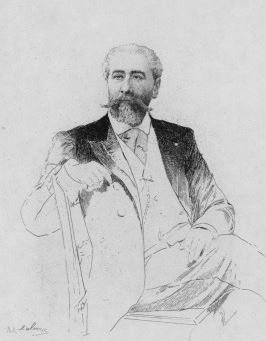
Celebrated for his exquisite sonnets on classical and historical themes, José-Maria de Heredia became the fifteenth member elected to seat 4 of the Académie Française in 1894, marking his significant contribution to French literature. Image: An illustration of Heredia by French artist Adolphe Lalauze.
Early Life and Education
Born on November 22, 1842, at the coffee plantation of Fortuna Cafeyere near Santiago de Cuba, José-Maria de Heredia was the son of Domingo de Heredia, a native of Santo Domingo (present-day Dominican Republic), and Louise Girard d’Houville, who was of French descent. This bicultural heritage exposed him to both Spanish and French cultures from an early age, which later influenced his literary themes and language.
At the age of eight, Heredia was sent to France to begin his formal education. He attended the Institution des Frères des Écoles Chrétiennes in Saint-Brieuc and later the prestigious Lycée Louis-le-Grand in Paris. His studies were deeply rooted in the classics, and he developed a profound appreciation for ancient history, mythology, and literature. This classical education laid the foundation for his poetic themes and his adherence to formal poetic structures.
After completing his schooling, Heredia returned briefly to Cuba at the age of seventeen. However, he found himself drawn back to France, where he decided to settle permanently. His attachment to French culture and language became a defining aspect of his identity, and he eventually naturalized as a French citizen in 1893.
Association with the Parnassian Movement
In the late 1860s, Heredia became associated with the Parnassian movement, a group of poets who advocated for “art for art’s sake” and emphasized the importance of form, precision, and detachment in poetry. The Parnassians reacted against the emotional excesses of Romanticism, favoring instead a more objective and disciplined approach to poetic expression.
Heredia joined the circle of poets that included figures like François Coppée, Sully Prudhomme, and Paul Verlaine, all of whom gathered around Charles Leconte de Lisle, a leading proponent of Parnassian ideals. This group valued technical mastery and sought inspiration from classical antiquity, exotic locales, and historical subjects.
Heredia’s own philosophy aligned closely with the Parnassian emphasis on form and timeless themes. He believed that true poetry resided in the eternal aspects of nature and humanity rather than in the fleeting emotions of the individual. This belief is encapsulated in his statement upon entering the Académie française: “True poetry dwells in nature and in humanity, which are eternal, and not in the heart of the creature of a day, however great.”
Literary Career and “Les Trophées”
Heredia’s literary output was modest in quantity but exceptional in quality. He was meticulous in his craft, often spending considerable time refining each poem. His reputation grew as his sonnets circulated privately among literary circles, earning admiration for their precision and evocative imagery.
In 1893, Heredia published his only collection of poetry, “Les Trophées” (“The Trophies”), which comprised 118 sonnets divided into four sections: “Antiquity,” “Middle Ages and Renaissance,” “The Orient and the Tropics,” and “The Nature.” Each sonnet is a polished gem, reflecting his mastery of form and his ability to capture vivid scenes and emotions within the strict constraints of the sonnet structure.
“Les Trophées” explores themes drawn from classical mythology, historical events, exotic landscapes, and nature. Heredia’s poems are characterized by rich descriptions, precise language, and a sense of timelessness. For example, in his sonnet “Les Conquérants” (“The Conquerors”), he evokes the spirit of Spanish explorers setting sail for the New World, capturing both the grandeur and the underlying tensions of their journey.
The collection was well-received by critics and peers alike. Fellow poet François Coppée described “Les Trophées” as a “Légende des siècles in sonnets,” referencing Victor Hugo’s epic work and highlighting Heredia’s achievement in encapsulating vast historical and cultural narratives within his concise poetic forms.
Recognition and Later Life
Heredia’s contributions to literature were formally recognized when he was granted French citizenship in 1893, the same year “Les Trophées” was published. His election to the Académie française on February 22, 1894, was a testament to his esteemed position in French literary circles. Occupying seat 4, he succeeded the publicist Charles de Mazade. His election was notable given his limited body of published work, emphasizing the high regard in which his peers held his poetic talent.
In 1901, Heredia was appointed the librarian of the Bibliothèque de l’Arsenal in Paris. This role allowed him to immerse himself further in literary scholarship and historical research. During this period, he undertook the task of producing a critical edition of the works of the 18th-century poet André Chénier, contributing to the preservation and appreciation of French literary heritage.
Heredia also engaged in translation work, bringing significant historical texts to a French audience. Notably, he translated Bernal Díaz del Castillo’s “History of the Conquest of New Spain” (1878–1881), providing valuable insights into the Spanish conquest of Mexico. Additionally, he translated Thomas De Quincey’s “The Spanish Military Nun” (1894), further showcasing his interest in historical and exotic subjects.
Legacy and Influence
José-Maria de Heredia passed away on October 3, 1905, at the Château de Bourdonné in Seine-et-Oise, France. His legacy as one of the most skilled sonneteers of his time endures. Heredia’s dedication to the artistry of poetry, particularly the sonnet form, has influenced subsequent generations of poets who admire his precision and ability to evoke powerful imagery.
Heredia’s work represents the pinnacle of Parnassian ideals, demonstrating how strict adherence to form can coexist with rich emotional and sensory experiences. His sonnets continue to be studied for their technical excellence and their exploration of universal themes.
While his literary output was limited, the impact of “Les Trophées” on French poetry was profound. Heredia showed that poetry could transcend personal emotion to touch upon the eternal aspects of human experience. His meticulous craftsmanship set a high standard for poetic composition, and his influence can be seen in the works of later poets who sought to balance form and feeling.
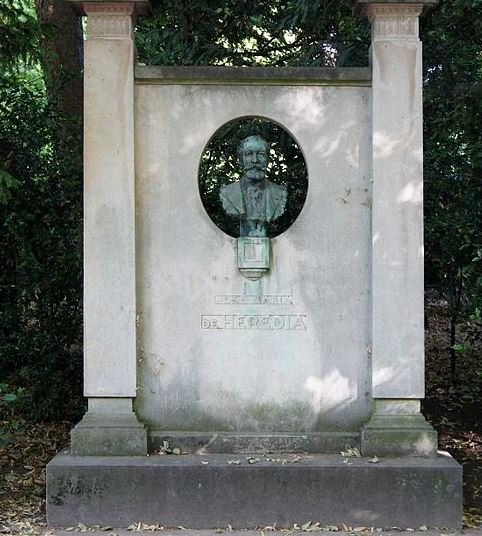
Image: Monument to Heredia by Victor Segoffin.
Conclusion
José-Maria de Heredia’s life and work exemplify the synthesis of cultural influences and artistic dedication. Born in Cuba to a multicultural family, he embraced French culture and contributed significantly to its literary tradition. His association with the Parnassian movement placed him at the heart of a pivotal moment in poetic history, and his commitment to form and classical themes revitalized interest in structured poetic expression.
Through “Les Trophées,” Heredia achieved a timeless quality in his poetry, capturing moments of history, myth, and nature with clarity and beauty. His legacy as a master of the sonnet and a key figure in French literature remains secure, and his works continue to inspire appreciation for the artistry of poetry.
Frequently Asked Questions
How did Heredia’s multicultural background influence his literary work?
Being the son of a Dominican father and a French mother, Heredia’s multicultural heritage exposed him to diverse cultural perspectives. This background influenced his poetry, leading him to draw upon classical and historical themes in his writings.
At what age did Heredia move to France, and where did he receive his education?
He moved to France at the age of eight to begin his education. He attended school with the priests of Saint Vincent at Senlis and later studied at the École des Chartes in Paris, where he received a classical education.
Who were some of the notable poets Heredia collaborated with in the Parnassian movement?
Heredia collaborated with poets such as François Coppée, Sully Prudhomme, and Paul Verlaine. They were part of a group that gathered around Charles Leconte de Lisle, a leading figure in the Parnassian movement.
What was the main philosophy of the Parnassian movement regarding poetry?
The Parnassian movement believed that true poetry should focus on eternal aspects of nature and humanity rather than personal emotions. They emphasized form, technical skill, and impersonal expression, reacting against the emotionalism of the Romantic poets.
How did Heredia express the Parnassian philosophy in his own words?
Upon entering the Académie française, Heredia stated that “true poetry dwells in nature and in humanity, which are eternal, and not in the heart of the creature of a day, however great,” highlighting the movement’s focus on timeless themes over personal feelings.
What is the significance of Heredia’s collection “Les Trophées”?
Published in 1893, “Les Trophées” is a collection of sonnets and a few longer poems that solidified Heredia’s reputation as a master poet. The work was celebrated for its literary quality and meticulous craftsmanship, showcasing his skill in the sonnet form.
Why was Heredia’s election to the Académie française remarkable?
His election on February 22, 1894, was notable because he had a relatively small body of original work—a single volume ofpoetry and some translations—yet his exceptional skill and contributions to literature earned him this prestigious recognition.
Besides his original poetry, what other literary contributions did Heredia make?
Heredia translated significant historical works into French, including Bernal Díaz del Castillo’s “History of the Conquest of New Spain” and Thomas De Quincey’s “The Spanish Military Nun.” He also wrote occasional verses and introductions for other works.
What role did Heredia take on later in life, and what scholarly work did he complete before his death?
In 1901, he became the librarian of the Bibliothèque de l’Arsenal in Paris. Before his death in 1905, he completed a critical edition of the works of André Chénier, contributing to literary scholarship and preserving the works of other poets.





