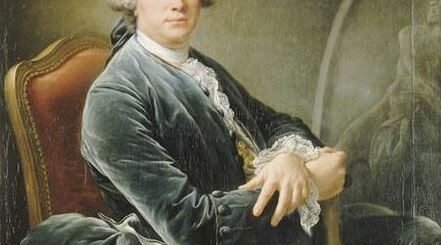
French Sculptor and Painter Frédéric Auguste Bartholdi
Frédéric Auguste Bartholdi, born on August 2, 1834, in Colmar, France, is most renowned for his creation of the Statue of Liberty, one of the most iconic symbols of freedom and democracy in the world. His career as a sculptor and painter spanned several decades, during which he produced numerous works, including monumental sculptures, statues, and public monuments. His achievements are not only a testament to his skill and vision but also reflect the political and cultural climate of his time.

An 1880 photo of Frédéric Auguste Bartholdi.
Early Life and Education
Bartholdi’s family hailed from Alsace, a region rich in history and culture. He was born to Jean Charles Bartholdi and Augusta Charlotte Bartholdi, both of Protestant heritage. He was the youngest of four children, though only he and his elder brother, Jean-Charles, survived infancy. Bartholdi’s father passed away when he was only two years old, an event that significantly impacted his early years. His mother and brother relocated to Paris, where they became part of a larger extended family.
Growing up in Paris, Bartholdi attended the prestigious Lycée Louis-le-Grand, where he earned his baccalauréat in 1852. His early artistic influences included drawing lessons from Martin Rossbach in Colmar, followed by studies in Paris. He trained in sculpture under Antoine Étex and architecture under renowned figures such as Henri Labrouste and Eugène-Emmanuel Viollet-le-Duc. Bartholdi’s formative education laid the foundation for his later masterpieces, combining classical art with a growing interest in monumental scale and symbolic expression.
Early Career and Inspirations
In 1853, Bartholdi debuted at the Paris Salon with a sculpture of a Good Samaritan-themed group, which was later recreated in bronze. His early works gained attention, leading to a commission in 1855 to create a statue of Jean Rapp, a Napoleonic General, for his hometown of Colmar. However, it was during his travels to the Middle East that Bartholdi’s career truly began to take shape.
Between 1855 and 1856, Bartholdi traveled to Egypt and Yemen, an experience that would have a profound influence on his artistic style. Accompanied by the painter Jean-Léon Gérôme and other Orientalist artists, Bartholdi’s exposure to the grandeur of ancient structures and the mystique of the East sparked his interest in monumental sculpture. His travels informed his later works, such as the colossal Statue of Liberty.

An 1875 photo of Frédéric Auguste Bartholdi.
The Statue of Liberty: A Symbol of Freedom
Bartholdi’s most famous creation, Liberty Enlightening the World (commonly known as the Statue of Liberty), began as a project rooted in the desire to celebrate the enduring relationship between France and the United States.
In 1865, Bartholdi was introduced to Édouard René de Laboulaye, a French political thinker who proposed the idea of gifting a monumental statue to commemorate the centennial of American independence in 1876. The concept was rooted in a shared belief in liberty and democracy, values championed by both the United States and the newly established French Third Republic.
In 1871, Bartholdi first visited the United States to present the idea to American officials, eventually gaining approval for the project. Over the next decade, Bartholdi designed the statue, which would represent a beacon of freedom and hope. Standing 151 feet tall with its pedestal, the Statue of Liberty was designed to hold a torch in its right hand and a tablet inscribed with the date of the Declaration of Independence, July 4, 1776, in the left. Bartholdi’s vision for the statue included symbolic details such as the broken chains at her feet, representing the end of slavery and tyranny.
The statue’s construction was a monumental task. Bartholdi worked closely with French engineers and American collaborators to ensure the statue’s design would be both structurally sound and aesthetically compelling. The massive copper structure was completed in France by 1884, and after a year of fundraising for its pedestal in the United States, it was shipped to New York. The unveiling of the Statue of Liberty on October 28, 1886, was a momentous occasion, symbolizing the enduring friendship between the two nations and celebrating the values of freedom, democracy, and human rights.
Bartholdi’s Other Major Works
While the Statue of Liberty remains Bartholdi’s most famous work, his contributions to public art extended well beyond this single masterpiece. Bartholdi’s prolific career saw him create numerous statues, fountains, and public monuments across France, the United States, and other countries.
One of his earlier major works, the Monument du Général Rapp, a statue commemorating a Napoleonic general from Colmar, was unveiled in 1856 and marked the beginning of Bartholdi’s successful career. The Fontaine Schongauer (1863) and Fontaine de l’Amiral Bruat (1864) are two of his notable public fountains in Colmar, which showcase his skill in combining functional art with symbolic meaning.
Another iconic work by Bartholdi is the Lion of Belfort, a colossal sculpture in Belfort, France, which was completed in 1880. The lion, carved into a massive rock outcrop, commemorates the French resistance during the Franco-Prussian War of 1870-71. The Lion of Belfort remains one of Bartholdi’s most impressive and enduring creations, symbolizing courage and resilience in the face of adversity.
Bartholdi’s influence also reached the United States, where he designed the Bartholdi Fountain in Washington, D.C., and the Lafayette Monument in Union Square, New York. The Statue of Lafayette and Washington, a monument erected in Paris in 1895, further solidified Bartholdi’s connection to both American and French history.
The Statue of Liberty remains Frédéric Auguste Bartholdi’s most lasting legacy, a symbol that continues to inspire millions around the world, standing tall in New York Harbor as a beacon of hope and freedom.
Personal Life and Later Years
Despite his professional achievements, Bartholdi’s personal life remained relatively private. In 1876, he married Jeanne-Emile Baheux in Providence, Rhode Island, and the couple later visited the 1893 World’s Columbian Exposition in Chicago, where Bartholdi’s works were showcased. Bartholdi maintained a close connection to his childhood home in Colmar, and in 1922, the house was turned into the Musée Bartholdi, dedicated to preserving his legacy and works.
Bartholdi’s final years were marked by continued artistic activity, though his health began to decline. He was made a Commander of the Legion of Honor in 1886, one of the highest honors in France, recognizing his contributions to French and international art. Despite his accomplishments, Bartholdi suffered from tuberculosis, and he passed away in Paris on October 4, 1904, at the age of 70.

Legacy and Influence
Frédéric Auguste Bartholdi’s work has left an indelible mark on the world of art and culture. His creation of the Statue of Liberty stands as one of the most recognizable symbols of freedom, offering hope and inspiration to millions of people around the globe. It is a symbol of the enduring values of liberty, democracy, and the power of international friendship.
Bartholdi’s other monuments, such as the Lion of Belfort, have also become important cultural symbols, reflecting the national pride and historical resilience of France. His works continue to be studied and admired by art lovers and historians alike, and his legacy lives on through the many statues, fountains, and monuments he designed during his lifetime.
Bartholdi’s influence can also be seen in the continued popularity and significance of the Statue of Liberty in popular culture. The statue has appeared in numerous films, documentaries, and other media, further cementing its role as a symbol of American ideals. Bartholdi’s life and work were featured in the 1985 documentary The Statue of Liberty by Ken Burns, and his story was revisited in the 2019 film Liberty: Mother of Exiles, highlighting his enduring impact on history and culture.

Lion of Belfort
Frequently Asked Questions
What influenced Bartholdi’s interest in monumental sculpture?
Bartholdi’s travels to Egypt and Yemen between 1855 and 1856 exposed him to large-scale monuments and inspired his interest in colossal sculpture, which later influenced his design of the Statue of Liberty.
How did Bartholdi contribute to the Franco-American relationship?
Bartholdi designed the Statue of Liberty as a gift from France to the United States in honor of the centennial of American independence, symbolizing friendship and shared values of liberty.

What was the significance of the Statue of Liberty?
The Statue of Liberty was a gift to the United States from France, symbolizing freedom, democracy, and the enduring bond between the two nations. It was officially inaugurated in 1886.
What are some other notable works by Bartholdi?
Bartholdi created several other significant works, including the Lion of Belfort, the Bartholdi Fountain in Washington, D.C., and the Lafayette Monument in Union Square, New York.

Statue of Liberty on Liberty Island in New York City.
How did Bartholdi’s early life influence his career?
Bartholdi grew up in Colmar, France, and Paris, where he received a solid education in drawing, architecture, and sculpture. His early exposure to art and his family’s influence played a crucial role in shaping his artistic career.
What recognition did Bartholdi receive during his lifetime?
Bartholdi was honored as a Commander of the Legion of Honor in 1886, one of the highest accolades in France, recognizing his artistic achievements.
When and how did Bartholdi pass away?
Bartholdi died from tuberculosis on October 4, 1904, in Paris at the age of 70, leaving behind a lasting legacy in public monuments and sculptures.