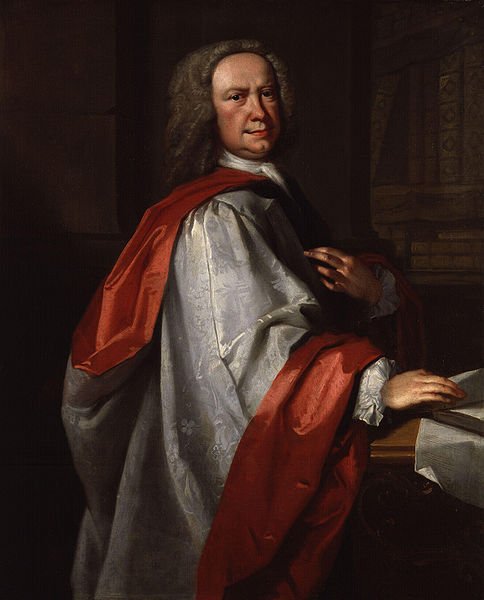
Johann Christoph Pepusch
Johann Christoph Pepusch (1667–1752), also known in English as John Christopher Pepusch or Dr. Pepusch, was a German-born composer who spent the majority of his career in England. Renowned for his contributions to music education and history, he played a significant role in establishing England as a hub for the study of early music. Below, World History Edu delves into his early life, career, and lasting legacy.
Birth and Education
Pepusch was born in Berlin in 1667, the son of a vicar. From an early age, he showed an aptitude for music, which led him to study under Martin Klingenberg, the cantor of the Marienkirche in Berlin. Under Klingenberg’s guidance, Pepusch developed a solid foundation in music theory and composition, which would later shape his career.
Early Career in Berlin
At the remarkably young age of 14, Pepusch secured a position at the Prussian court. There, he provided music lessons to the future Frederick William I of Prussia, a testament to his early musical prowess. However, his tenure at the court was marked by an event that would alter his life’s trajectory. In 1698, after witnessing the execution of an officer without trial, Pepusch resigned in protest, signaling his strong moral convictions. Seeking new opportunities, he left Berlin and traveled to Amsterdam.
Move to Amsterdam and England
Pepusch’s time in Amsterdam allowed him to engage with the vibrant music scene and publish his works. In 1704, he moved to England, where he would spend the rest of his life. Despite his relocation, Pepusch continued to publish music in Amsterdam until 1718, indicating his enduring connection to the Dutch musical community.
Early Work in England
Upon arriving in England, Pepusch initially made a living as a violist, theater director, teacher, and organist. His versatility and broad skill set allowed him to integrate into the English music scene. His early years in England were marked by a growing reputation as both a performer and a scholar.
The Academy of Vocal Music
One of Pepusch’s most significant contributions to music was the founding of The Academy of Vocal Music in 1726. This organization, later renamed The Academy of Ancient Music around 1730–31, was established to study and perform music of earlier periods, particularly focusing on the Elizabethan era. Pepusch’s initiative reflected his deep interest in music history and his dedication to preserving and understanding past musical traditions.
In Joseph Doane’s 1794 Musical Directory, Pepusch’s pivotal role in the Academy’s foundation is acknowledged, alongside other prominent figures like John Earnest Galleard and Bernard Gates. Doane notes that the Academy garnered the support of influential individuals, underscoring Pepusch’s ability to unite England’s musical elite in pursuit of a common goal.
Madrigal Society
Pepusch also founded the Madrigal Society, an organization devoted to the study and performance of madrigals and other early vocal works. This endeavor further exemplified his commitment to the historical preservation of music, particularly from the Renaissance and early Baroque periods.
Doctorate and Academic Contributions
In 1713, Pepusch’s contributions to music were formally recognized when he was awarded a Doctor of Music degree by the University of Oxford. This honor solidified his reputation as a scholar and underscored the respect he commanded within academic and musical circles.
Association with Cannons
For two decades, Pepusch served as the music director at Cannons, the stately home of James Brydges, the 1st Duke of Chandos, located in Edgware, Middlesex. Cannons was a significant cultural center, attracting prominent artists and composers of the time. During his tenure, Pepusch worked alongside George Frideric Handel, who was also employed at Cannons as a composer-in-residence in 1717–18.
Johann Christoph Pepusch created stage, church, and instrumental works, often incorporating popular dance forms like the gigue and sarabande.
Pepusch’s collaboration with Handel at Cannons highlights the interconnectedness of the musical community during this period. While Handel composed grand works for the Duke, Pepusch contributed his expertise in directing and organizing the musical activities of the estate.
The Beggar’s Opera
One of Pepusch’s most enduring legacies is his arrangement of the music for The Beggar’s Opera (1728). With a libretto by John Gay, this work became a groundbreaking piece in English theater. Pepusch’s role was to adapt and arrange popular tunes of the time into a cohesive score, combining them with his original compositions. The opera’s success was immense, influencing the development of ballad opera and satirizing contemporary politics and society.
Mentorship and Pupils
Pepusch was a highly influential teacher, shaping the next generation of English composers and musicians. His notable students included:
- William Boyce: A prominent composer and organist who became one of England’s leading musical figures.
- John Bennett: A composer of madrigals and other vocal works, reflecting Pepusch’s influence on his style.
Through his teaching, Pepusch ensured the transmission of his knowledge and passion for early music, leaving a lasting impact on English music education.
Director of The Academy of Ancient Music
Pepusch remained the director of The Academy of Ancient Music until his death in 1752. Under his leadership, the Academy became a vital institution for the study of music history, particularly focusing on rediscovering works from earlier periods. His successor, Benjamin Cooke, continued his work, further cementing the Academy’s importance in English musical life.
Musical Forms and Influences
Pepusch was a versatile composer, creating works across various genres, including:
- Stage Music: He composed music for theatrical productions, including operas and incidental music.
- Church Music: His sacred compositions reflect his roots in traditional forms and his training in Germany.
- Instrumental Music: He wrote concertos and continuo sonatas, often incorporating popular dance forms like the gigue and sarabande.
Pepusch’s music often blended elements of German, Dutch, and English traditions, reflecting his cosmopolitan background. While his compositions were not as revolutionary as those of his contemporaries like Handel, they showcased his technical skill and understanding of historical styles.
Marriage to Margherita de l’Epine
Pepusch married Margherita de l’Epine, a celebrated singer and performer. De l’Epine often participated in his theatrical productions, and their collaboration exemplified a fruitful partnership both professionally and personally. Her talents as a performer likely influenced some of Pepusch’s compositional choices.
Legacy
Among musicologists, Pepusch is celebrated not only for his compositions but also for his scholarly contributions. His efforts to study and preserve the music of earlier periods helped lay the groundwork for the field of musicology in England.
Through his work with institutions like The Academy of Ancient Music and The Madrigal Society, Pepusch played a pivotal role in shaping England’s musical identity. His focus on historical music inspired later generations of musicians and scholars to explore and revive early works.
From his early career at the Prussian court to his pioneering work in England, Johann Christoph Pepusch left an indelible mark on the world of music.
Pepusch lived to the age of 85, a remarkable lifespan for the time. His dedication to music remained unwavering throughout his life, and his influence continued to be felt long after his death. He is remembered as a key figure in the development of English music during the early 18th century.
As a composer, teacher, and musicologist, Johann Christoph Pepusch bridged the past and present, ensuring that the rich traditions of earlier periods remained alive and relevant.
Frequently Asked Questions
What was Johann Christoph Pepusch’s early career?
At age 14, he was appointed to the Prussian court as a music tutor. He resigned in 1698 and later moved to Amsterdam before settling in England in 1704.
What were Pepusch’s significant contributions to English music?
He co-founded The Academy of Ancient Music and the Madrigal Society, promoting the study of early English music, particularly from the Elizabethan period.
What was The Academy of Ancient Music?
Founded in 1726, it was a society for researching and performing vocal and instrumental music, with Pepusch serving as its director until his death.
What notable positions did Pepusch hold?
He directed the musical establishment at Cannons for 20 years, working alongside George Frideric Handel, and was awarded a Doctor of Music degree by Oxford in 1713.
Who were Pepusch’s notable students?
His pupils included prominent English composers William Boyce and John Bennett, as well as Benjamin Cooke, who succeeded him at the Academy.
What is Pepusch best known for?
He is most famous for arranging the music for John Gay’s The Beggar’s Opera, which became a landmark in theatrical music.





