History and Major Facts about the Black Watch, the Famous Scottish Army Regiment
The Black Watch, one of the most famous and distinguished regiments in the British Army, boasts a rich history spanning nearly three centuries. Known for its bravery, discipline, and service across multiple continents, the Black Watch has played a crucial role in numerous conflicts, from its formation in the 18th century to modern-day operations.
Below, World History Edu traces the evolution of the regiment, key moments of its service, and its continuing legacy.
Formation and Early History (1725–1881)
The origins of the Black Watch date back to 1725 when General George Wade was authorized by King George I to create six “watch” companies. These companies were tasked with maintaining peace in the Scottish Highlands after the Jacobite rising of 1715. The Highlanders were deeply divided, and the British government feared another rebellion.
Wade’s watch companies were composed of soldiers from local Highland clans, including three from Clan Campbell, one from Clan Fraser of Lovat, one from Clan Munro, and one from Clan Grant. Their mission was to patrol the Highlands, disarm rebellious clans, prevent theft and cattle rustling, and ensure peace in a region known for its instability.
The name “Black Watch” is believed to come from their distinctive dark tartan uniforms, a stark contrast to the bright red coats worn by other British soldiers. In Gaelic, they were known as Am Freiceadan Dubh, meaning “the dark watch” or “black watch.” Some sources suggest that the name may have also referred to their role as enforcers of British law in the Highlands, which led some to view them as traitors to their fellow Scots.
In 1739, the watch companies were formalized into a regiment, and in 1740, they became the 43rd Regiment of Foot. Shortly afterward, the regiment was renumbered to the 42nd Regiment of Foot. In their early years, they were engaged in various colonial and European campaigns, including the War of Austrian Succession and the French and Indian War (the North American theater of the Seven Years’ War).
One of the earliest and most significant deployments of the Black Watch occurred during the Battle of Fontenoy in 1745. The regiment earned a reputation for its ferocity and steadfastness in battle, earning respect across Europe. This reputation was further solidified during the French and Indian War in North America, where the regiment fought bravely at the Battle of Ticonderoga (1758). Though they suffered heavy losses, their courage became legendary.
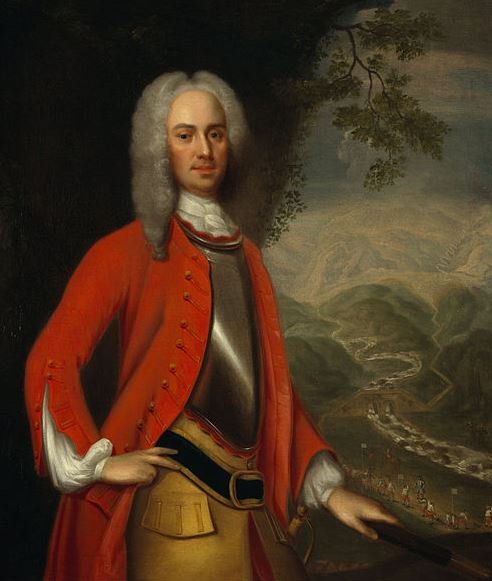
Image: George Wade (1673 – 1748)
The Childers Reforms and the Birth of the Modern Black Watch (1881)
The regiment’s identity was further defined during the Childers Reforms of 1881. These reforms were aimed at reorganizing the British Army’s infantry regiments. The 42nd Regiment of Foot (The Black Watch) was amalgamated with the 73rd (Perthshire) Regiment of Foot, forming a two-battalion regiment known as The Black Watch (Royal Highlanders). The 42nd became the 1st Battalion, while the 73rd became the 2nd Battalion. The reforms sought to maintain regimental traditions while enhancing military efficiency.
During this period, the 1st Battalion was deployed to Egypt as part of the Anglo-Egyptian War, participating in the Battle of Tel el-Kebir in 1882. They then saw action in the Mahdist War, fighting in the First and Second Battles of El Teb (1884) and the Battle of Tamai. In the latter part of the 19th century, the Black Watch fought in the Second Boer War in South Africa, where they faced harsh conditions and suffered significant losses at battles such as Magersfontein (1899). These experiences further cemented the regiment’s reputation for resilience and courage under fire.
First World War (1914–1918)
When the First World War broke out in 1914, the Black Watch played a critical role on multiple fronts. The 1st Battalion was part of the British Expeditionary Force (BEF) and landed in France in August 1914. They fought in several major battles on the Western Front, including the Retreat from Mons, the First Battle of the Marne, and the First Battle of the Aisne. As the war progressed, the battalion was heavily involved in the brutal trench warfare that defined much of the conflict, culminating in their participation in the advance to the Hindenburg Line in 1918.
The 2nd Battalion was also deployed early in the war, first fighting on the Western Front before being transferred to Mesopotamia (modern-day Iraq). There, they took part in several key operations, including the siege of Kut and the fall of Baghdad. They later moved to Palestine and contributed to the Allied victory at the Battle of Megiddo in 1918.
In addition to the regular battalions, several Territorial Force battalions, such as the 1/4th, 1/5th, 1/6th, and 1/7th, fought with distinction during the war. These units participated in major battles like Neuve Chapelle, Festubert, and the Ancre Heights. New Army battalions, such as the 8th and 9th (Service) Battalions, were raised to meet the demands of the war and fought in major engagements, including the Battle of Loos. The Black Watch suffered heavy casualties throughout the war but earned a reputation for its tenacity and professionalism.
Second World War (1939–1945)
The Black Watch once again found itself at the forefront of global conflict during the Second World War. The 1st Battalion landed in France in 1939 as part of the British Expeditionary Force (BEF) and fought during the Battle of France. However, like many BEF units, the battalion was captured at St Valery-en-Caux during the German advance. The battalion was later reformed in the UK and went on to participate in key operations, including the North African Campaign, where they fought at the Second Battle of El Alamein in 1942.
Following their success in North Africa, the 1st Battalion took part in the Allied invasion of Sicily in 1943 and the subsequent Italian Campaign. The Black Watch was also heavily involved in the D-Day landings and the Normandy Campaign in 1944. They fought in major battles such as the Battle for Caen and the Falaise Pocket, playing a key role in the liberation of France. Toward the end of the war, the battalion saw action during the Battle of the Bulge and the crossing of the Rhine.
The 2nd Battalion was initially stationed in Palestine before moving to East Africa, where they were involved in the Italian conquest of British Somaliland. They later took part in the Battle of Heraklion in Crete (1941) and fought in North Africa, including the breakout from Tobruk. Territorial battalions, including the 4th, 5th, 6th, and 7th, played significant roles in campaigns across North Africa, Italy, and Northwest Europe. The 7th Battalion was among the first units to cross the Rhine during Operation Plunder in March 1945.

Image: Black Watch soldier firing a rifle grenade in 1917.
Post-War Conflicts and Peacekeeping
After the Second World War, the Black Watch continued to serve in key global conflicts. During the Korean War (1950–1953), the regiment earned further distinction, particularly during the Second Battle of the Hook in 1952. In the 1950s, the regiment was also deployed to Kenya, where it played a role in suppressing the Mau Mau Uprising, and to Cyprus during the EOKA insurgency.
The regiment’s peacekeeping role continued throughout the latter half of the 20th century. In 1997, the Black Watch was the last British military unit to leave Hong Kong, playing a prominent role in the handover ceremony. They also served during the Troubles in Northern Ireland as part of Operation Banner, where they were frequently targeted by paramilitary groups like the Provisional IRA (PIRA) and the Irish National Liberation Army (INLA).
The Iraq War (2003) and Afghanistan
The Black Watch was deployed during the Iraq War as part of Operation Telic. In 2003, they participated in the initial attack on Basra and played a critical role in stabilizing the region. The regiment saw further action in Iraq when it was dispatched to an area known as the “Triangle of Death” in 2004. This deployment was politically controversial, but the Black Watch’s efforts in securing the region were significant. Unfortunately, several soldiers were killed during this period due to insurgent attacks.
In later years, the Black Watch was deployed to Afghanistan as part of NATO’s International Security Assistance Force (ISAF). They played a key role in operations aimed at countering Taliban insurgents, contributing to security and stabilization efforts in the region.
Modern Reorganization
In 2004, the Black Watch was merged with other historic Scottish regiments to form the Royal Regiment of Scotland, which officially took place in 2006. Despite this, the Black Watch retained its identity as the 3rd Battalion, Royal Regiment of Scotland (3 SCOTS). The merger was part of broader reforms aimed at creating a more flexible and modern army structure, though it was controversial, particularly among those who wished to preserve the distinct identities of Scotland’s historic regiments.
As part of the Royal Regiment of Scotland, the Black Watch has continued to serve in modern military operations. Under the Army 2020 Refine plan, the battalion is expected to remain based in Scotland until at least 2023, continuing its long tradition of service.
Legacy and Cultural Significance
Throughout its long history, the Black Watch has maintained a reputation for bravery, discipline, and professionalism. The regiment has earned numerous battle honors and gallantry awards, reflecting its contributions to British military history. The Black Watch is also a symbol of Scottish pride and military tradition, and its iconic dark tartan is recognized worldwide.
The regiment’s history has been immortalized in literature, music, and art, with the Black Watch featuring prominently in military ceremonies and parades. The Black Watch Museum, located in Balhousie Castle in Perth, Scotland, serves as a memorial to the regiment’s rich history and allows visitors to learn more about its contributions to British and world history.
Question and Answers
When was the Black Watch regiment established, and how was it formed?
The Black Watch regiment was established in 1881 as part of the Childers Reforms, which merged the 42nd (Royal Highland) Regiment of Foot with the 73rd (Perthshire) Regiment of Foot. This created two battalions: the 42nd became the 1st Battalion, and the 73rd became the 2nd Battalion.
What notable battles did the 1st Battalion of the Black Watch participate in during the late 19th century?
The 1st Battalion saw action in the Anglo-Egyptian War at the Battle of Tel el-Kebir in 1882 and fought in the Mahdist War, including the battles at El Teb and Kirbekan. They were later stationed in India and deployed to South Africa for the Second Boer War.
How did the 2nd Battalion fare in the Second Boer War?
The 2nd Battalion was deployed to South Africa in 1899 and suffered heavy losses at the Battle of Magersfontein. After the war, they were sent to British India, where they were stationed in Punjab.
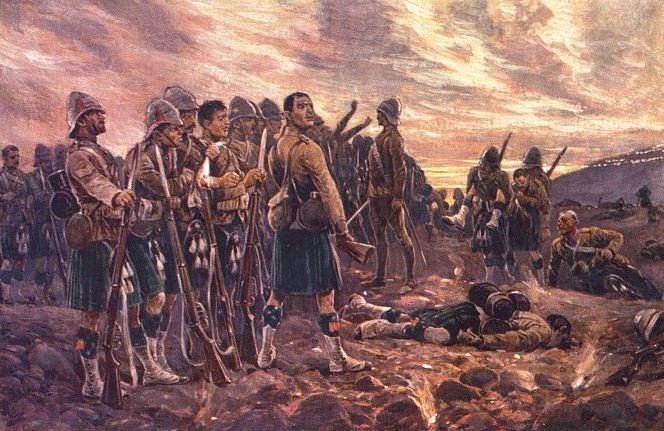
Image: An illustration depicting the Black Watch at the end of the Battle of Magersfontein.
What changes occurred within the Black Watch regiment in 1908?
In 1908, the Black Watch regiment was reorganized into one Reserve battalion and five Territorial battalions as part of a broader military restructuring.
What role did the 1st and 2nd Battalions play during World War I?
The 1st Battalion participated in major battles on the Western Front, including the Retreat from Mons and the First Battle of the Marne. The 2nd Battalion also fought on the Western Front but was later transferred to Mesopotamia and Palestine, where they participated in the siege of Kut and the capture of Baghdad.
Which Territorial Force battalions of the Black Watch saw action during World War I?
Several Territorial Force battalions, including the 1/4th, 1/5th, 1/6th, and 1/7th, saw action in battles like Neuve Chapelle, Festubert, and the Ancre Heights during World War I.
What significant engagements did the 8th and 9th (Service) Battalions of the Black Watch participate in during World War I?
The 8th and 9th (Service) Battalions participated in key engagements like the Battle of Loos, Delville Wood, Passchendaele, and the Scarpe. Both battalions endured the harsh conditions of trench warfare on the Western Front.
How did the 10th (Service) Battalion of the Black Watch contribute to World War I efforts?
The 10th (Service) Battalion served in France before being transferred to Salonika for operations on the Macedonian front. It was later disbanded in 1918 after suffering significant losses.
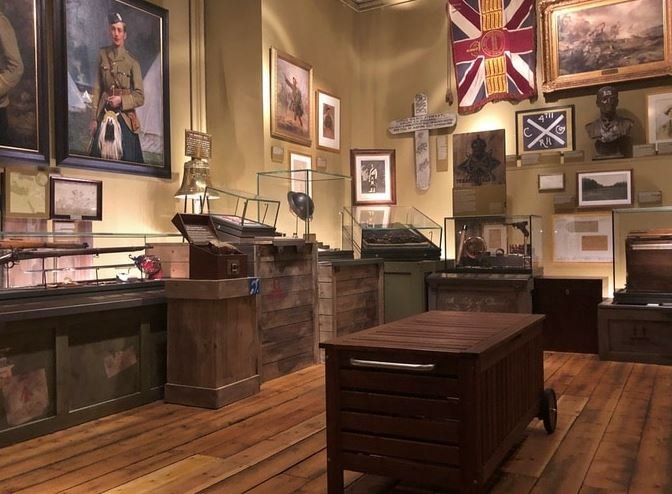
A collection of historical items on display inside the Inside the Black Watch Museum. Image source: theblackwatch.
What were the major theaters of war for the Black Watch during World War II?
During World War II, the Black Watch fought in multiple theaters, including North Africa, Sicily, Normandy, and major battles like El Alamein, the Battle of Caen, and the Battle of the Bulge. The 2nd Battalion also served in East Africa, Crete, and North Africa.
Which territorial battalions played key roles during World War II, and where did they serve?
The 4th, 5th, 6th, and 7th Territorial battalions fought in North Africa, Sicily, Normandy, and the Italian Campaign, including the Battle of Monte Cassino. The 7th Battalion was one of the first to cross the Rhine during Operation Plunder in 1945.
What postwar conflicts did the Black Watch participate in?
After World War II, the Black Watch served in various post-colonial conflicts, including the Mau Mau Uprising in Kenya and maintaining order during the Cyprus Emergency. The regiment also took part in peacekeeping missions, including the 1997 Hong Kong handover, and served during the Troubles in Northern Ireland.
What role did the Black Watch play in the 2003 Iraq War?
The Black Watch was deployed during the 2003 Iraq War as part of Operation Telic. They were involved in the initial attack on Basra and later conducted sustained operations in the “Triangle of Death,” playing a key role in stabilizing the region.
What changes occurred in 2006 regarding the structure of the Black Watch?
In 2006, the Black Watch merged with other Scottish regiments to form the Royal Regiment of Scotland. The Black Watch retained its identity within this structure as the 3rd Battalion, Royal Regiment of Scotland (3 SCOTS).
What has been the Black Watch’s role in recent years under the Royal Regiment of Scotland?
Since becoming part of the Royal Regiment of Scotland, the Black Watch has continued to serve in various roles, including deployments to Afghanistan as part of NATO operations. Under the Army 2020 Refine plan, they will remain based in Scotland until at least 2023.
How is the Black Watch’s long history characterized?
The Black Watch is known for its bravery, discipline, and service across many campaigns, earning numerous battle honors and gallantry awards throughout its long and distinguished history.
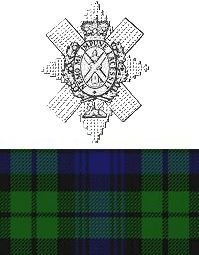
Image: Cap badge (top) and tartan (bottom) of the Black Watch.
What is the possible origin of the regiment’s name?
The origin of the Black Watch regiment’s name is uncertain. In 1725, after the Jacobite rebellion, six “watch” companies were formed to patrol the Scottish Highlands, including those from Clan Campbell, Fraser, Munro, and Grant. Their duties were to disarm Highlanders, prevent depredations, and capture criminals. Known in Gaelic as Am Freiceadan Dubh (“the dark” or “black watch”), the name likely came from their dark tartan uniforms. Other theories suggest it referred to their role in policing or their “black hearts” for siding with the government against Highland traditions.





