History of the Illyrian Kingdom
The Illyrian Kingdom was a prominent political entity on the western Balkan Peninsula in antiquity. It united various Illyrian tribes under a central monarchy, with rulers titled “King of the Illyrians” in Greek and Latin sources. This kingdom was a dynamic blend of tribal autonomy, a monarchic superstructure, and republican koina, which collectively shaped its identity. The Illyrian Kingdom’s influence peaked during specific periods, particularly under the rule of prominent dynasties like the Enchelei, Taulantii, and Ardiaei, each contributing uniquely to its historical evolution.
The Earliest Dynasties: The Enchelei and Taulantii
The Enchelei dynasty was the first known political entity among the Illyrians, flourishing between the 8th and 7th centuries BCE. Centered around the Lake Ohrid and Prespa regions, the Enchelei played a significant role in southern Illyrian politics. However, their decline by the 6th century BCE led to their assimilation into emerging realms like the Dassaretii, who rose to prominence in the same geographic region.
Illyria was a region in the northwestern Balkan Peninsula, inhabited by the Indo-European Illyrians from around the 9th century BCE. Its borders stretched from the Danube River to the Adriatic Sea and the Šar Mountains.
The Taulantii, based on the Adriatic coast of modern Albania, emerged as a powerful dynasty after the decline of the Enchelei. They played an active role in regional politics, influencing the development of cities like Epidamnus (modern Durrës). The Taulantii reached their zenith under King Glaukias in the late 4th century BCE, forming alliances with figures like Pyrrhus of Epirus and shaping southern Illyrian history.
Bardylis and the Dassaretan Power
The rise of Bardylis around 400 BCE marked a transformative period for Illyrian history. Bardylis united southern Illyrian tribes and established a powerful kingdom in Dassaretis. He repeatedly defeated Macedon and expanded his rule into Upper Macedonia and Lynkestis. However, his dominance ended when Philip II of Macedon defeated him in 358 BCE, shifting regional power dynamics.
Bardylis’ rule demonstrated Illyria’s potential to challenge regional powers like Macedon. The influence of the Dassaretan dynasty persisted even after his death, laying the foundation for subsequent Illyrian states.
The Ardiaei: Apex of the Illyrian Kingdom
The Ardiaei dynasty represented the peak of Illyrian power. King Agron (r. 250–230 BCE) assembled the most formidable army and navy in Illyrian history, expanding his kingdom from the Neretva River to Epirus. Agron’s victories, including his campaigns in Acarnania, showcased the kingdom’s maritime and military dominance.

Map of the Kingdom of Illyria between 250 BC and 230 BC.
Illyrian rulers, like Bardylis, Agron, and Gentius, showcased Illyria’s ability to challenge regional powers.
After Agron’s death, his widow, Queen Teuta, assumed regency. Known for her defiance, Teuta waged wars against Rome and supported piracy, which disrupted Adriatic trade. Her defeat in the First Illyrian War (229–228 BCE) marked the beginning of Rome’s intervention in the region.
Gentius: The Last King of the Illyrians
Gentius (r. 181–168 BCE), the last known Illyrian king, ruled the Labeatae tribe. Initially aligning with Rome, he later allied with Perseus of Macedon. This shift led to his defeat during the Third Illyrian War (168 BCE) by Roman forces under Lucius Anicius Gallus. Gentius’ capture and imprisonment marked the end of the Illyrian Kingdom as an independent entity.
Political Structure and Governance
The Illyrian Kingdom was a coalition of tribes, each retaining significant autonomy. The koina, or tribal federations, functioned as republican institutions coexisting with the monarchy. This unique blend of governance reflected the kingdom’s reliance on both central authority and local self-rule.
There were a number of notable Illyrian rulers. King Agron, who defeated the Aetolians in 231 BCE, and Queen Teuta, known for her conflicts with Rome, were key figures. The last ruler was King Genthius, who surrendered to Rome in 168 BCE.
The monarchy was hereditary, with rulers often using strategic marriages to forge alliances. Kings like Agron and Bardylis strengthened their realms through military conquests and political diplomacy, ensuring continuity of power.

Teuta’s statue with Pinnes, her stepson. This statue is located at Tirana, Albania.
Cultural and Military Contributions
The Illyrian navy, especially during Agron’s reign, was unparalleled in the Adriatic. The use of fast and maneuverable lembi warships enabled successful raids and military campaigns.
Illyrian cities like Daorson in Herzegovina became centers of classical Illyrian culture. These cities adopted Hellenistic influences, evident in their architecture, coinage, and sculptures.
Interactions with Neighboring States
Illyrian relations with Macedon were marked by both hostility and collaboration. Kings like Bardylis and Glaukias frequently clashed with Macedonian rulers, while others allied with Macedon, as seen in Illyrian support for Alexander the Great.
The Illyrian Kingdom was influenced by neighboring Greek city-states, evident in its adoption of Hellenistic governance and urban development. Rome’s eventual conquest brought about the region’s integration into the Roman Republic, ending centuries of Illyrian autonomy.
Did you know…?
After its conquest, Illyria became the Roman province of Illyricum, divided later into Dalmatia and Pannonia. It prospered as a trade hub with ports, roads, and mining activities, becoming integral to Roman defense and commerce.
In 395 CE, Illyria east of the Drina River became part of the Eastern Roman Empire. The region was later settled by Slavs in the 6th–7th centuries, reshaping its demographics.
Questions and Answers
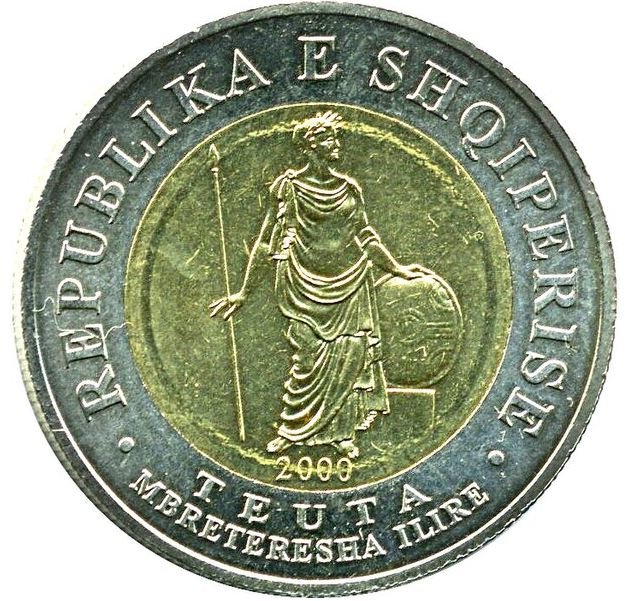
Queen Teuta depicted on an Albanian coin.
Who were the earliest known rulers of the Illyrian Kingdom?
The Enchelei dynasty produced the earliest rulers, with Bardylis emerging around 400 BCE as the first significant king, uniting southern Illyrian tribes.
Which dynasty marked the peak of Illyrian power?
The Ardiaei dynasty, under King Agron and Queen Teuta, marked the kingdom’s apex, dominating the Adriatic region with a powerful navy and army.
What role did Bardylis play in Illyrian history?
Bardylis united southern Illyrian tribes, expanded into Upper Macedonia, and challenged Macedon until defeated by Philip II of Macedon in 358 BCE.
How did Queen Teuta impact the kingdom?
Teuta expanded piracy and waged wars against Rome, but her defeat in the First Illyrian War (229–228 BCE) marked the kingdom’s decline.
Who was Gentius, and why is he significant?
Gentius, the last Illyrian king, ruled during the Third Illyrian War (168 BCE) and was defeated by Rome, leading to the kingdom’s dissolution.
What was the political structure of the Illyrian Kingdom?
The kingdom combined monarchy with tribal autonomy and republican koina, balancing central authority with local governance.





