History of the Kingdom of Aksum: Early Origins, Rise, Accomplishments, and Decline
The Kingdom of Aksum, also known as the Aksumite Empire, was one of the most influential civilizations of ancient Africa. Located in the highlands of modern-day Ethiopia and Eritrea, it flourished between the 1st and 10th centuries CE. The kingdom’s rich history is marked by its achievements in commerce, culture, and religion, as well as its strategic political power. Below, World History Edu provides explores the rise, grandeur, and eventual decline of Aksum.
Early Origins and Development
The Kingdom of Aksum emerged from the Dʿmt civilization, which flourished in northern Ethiopia and Eritrea prior to the rise of Aksum. Archaeological evidence shows that the region was influenced by the Sabaean civilization from Arabia, particularly in language and religious practices.
The Kingdom of Aksum thrived from classical antiquity into the Middle Ages, emerging from the earlier Dʿmt civilization around the 1st century CE.
By around the 1st century CE, Aksum began to develop as a prominent regional power. The city of Axum became the kingdom’s capital, and its strategic location on trade routes connecting the Mediterranean, India, and Africa played a crucial role in its growth.

An Axumite obelisk.
The Rise of Aksum: Trade and Cultural Influence
Aksum’s initial prosperity can be traced to its key position along the Red Sea trade routes. Through the port city of Adulis, the kingdom participated in vibrant trade exchanges with the Roman Empire, India, and Arabia. Exports like ivory, tortoiseshell, and rhinoceros horn fueled the kingdom’s economy, while imports included goods such as silk and spices. As trade flourished, Aksum gained political significance and territorial control, expanding into regions of southern Arabia and parts of Nubia (modern Sudan).
The Kingdom of Aksum was a remarkable civilization that rose to prominence through its strategic location, thriving trade, and cultural achievements.
The first historical mention of Aksum appears in the Periplus of the Erythraean Sea, a Greek text from the 1st century CE, which describes Aksum as a trading power. King Zoskales, a ruler of Aksum, is noted for having had a Greek education, indicating early interactions with Greco-Roman cultures. Over time, Aksum developed a distinctive architectural and artistic style, including the famous stelae (obelisk-like monuments) that served as markers for royal tombs and ceremonial purposes.
Expansion and Political Power
By the 3rd century CE, Aksum had expanded its territorial reach. The reign of King Gedara (c. 200–230 CE) marked the kingdom’s involvement in South Arabian affairs, particularly in Yemen. Aksum’s military efforts in Arabia were largely aimed at consolidating control over strategic regions like the Tihama and Najran. These conflicts with the Himyarite Kingdom of Yemen would continue throughout the 3rd century.
Aksum’s most significant territorial expansion occurred during the reign of King Ezana (c. 320–360 CE). Ezana’s conversion to Christianity around 324 CE made Aksum one of the first states to adopt Christianity as its official religion. This transformation had profound political, cultural, and religious consequences for the kingdom, aligning it with the Byzantine Empire and other Christian states of the time. Ezana also conquered the Kingdom of Kush around 330 CE, further solidifying Aksum’s position as a major regional power.
Who were the greatest military generals of the Byzantine Empire?
Christianization and Cultural Transformation
The conversion of King Ezana to Christianity was a defining moment in the history of Aksum. As a result, the Aksumite Empire became a part of the Christian world, establishing strong ties with the Byzantine Empire. Aksum’s rulers embraced Christianity, which gradually replaced the old polytheistic beliefs. King Ezana’s coins from this period display Christian symbols, such as the cross, marking the kingdom’s shift toward Christianity.
Aksum’s adoption of Christianity, territorial expansion, and role in international politics shaped the course of history in East Africa and beyond.
Aksum’s religious transformation also impacted its cultural landscape. The introduction of Coptic Christianity led to the establishment of the Ethiopian Orthodox Church, a significant institution that continues to shape Ethiopia’s religious identity today. The church became a major cultural force, influencing art, architecture, and language. The Ge’ez script, originally developed for writing in South Arabian languages, was adopted and became the liturgical language of the church.

A 2009 photo of the Obelisk of Axum.
Aksum’s Golden Age and Its Decline
The period between the 4th and 6th centuries CE is often considered the height of Aksum’s power. Under the reign of King Kaleb (514–542 CE), the kingdom reached its largest territorial extent, with control over parts of Arabia and the Horn of Africa. Kaleb’s military campaigns in Yemen, particularly against the Himyarite king Dhu Nuwas, brought him widespread acclaim as a protector of Christians. However, Aksum’s hold over Yemen was short-lived, as the kingdom faced challenges from the Sassanid Empire and internal instability.
By the 7th century, the rise of Islam had significant repercussions for Aksum. The spread of Islam across the Red Sea region, along with the growing dominance of Muslim powers, isolated Aksum from its former Greco-Roman allies. Trade routes were disrupted, and Aksum lost much of its influence in the Red Sea. Despite these challenges, Aksum continued to exist as a Christian kingdom, though its political and economic power had diminished.
The kingdom’s decline is often attributed to a combination of factors. Internal factors, such as environmental degradation, economic struggles, and military defeats, contributed to Aksum’s weakening. Additionally, the Persian and later Muslim control of the Red Sea and Arabian trade routes further isolated Aksum. The last recorded coinage from Aksum dates to the early 8th century, after which the kingdom ceased to mint coins altogether.
The Fall of Aksum: The Gudit Invasion
By the mid-10th century, the Kingdom of Aksum had entered a period of decline. The last known ruler, Emperor Dil Na’od, was either exiled or killed during a period of internal strife. According to Ethiopian oral tradition, a queen named Gudit (or Judith) invaded Aksum around 960 CE. Gudit, a Jewish queen, is said to have destroyed the city, burned churches, and persecuted Christians. However, historical evidence for Gudit’s reign is sparse, and some scholars question the details of her existence.
Despite its eventual decline, Aksum’s influence can still be seen in the religious and cultural landscape of Ethiopia and Eritrea.
Despite the destruction wrought by Gudit’s forces, Aksumite culture did not disappear entirely. The Zagwe dynasty, which succeeded the Aksumite Empire, continued to uphold many of Aksum’s traditions, including its religious practices and architectural styles. The Zagwe dynasty is best known for constructing the famous rock-hewn churches of Lalibela, which are considered an architectural legacy of Aksum.
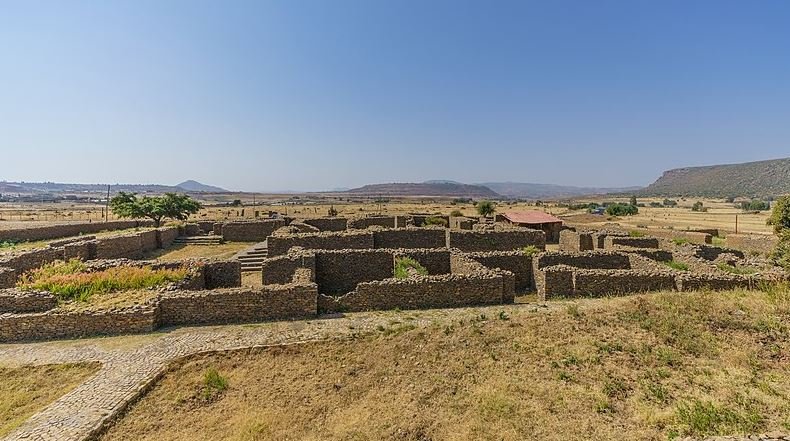
The ruins of Dungur, also referred to as the Queen of Sheba’s Palace. Its located in Aksum, in Ethiopia’s Tigray Region.
The Aftermath and Legacy
The fall of Aksum marked the end of an era in Ethiopian history. However, the cultural and religious influence of the Aksumite Empire persisted through the centuries. The Ethiopian Orthodox Church, which traces its origins to Aksum, remains a central institution in Ethiopia today. The legacy of Aksum’s architecture, including the stelae and the rock-hewn churches, continues to inspire admiration and study.
Aksum’s economic and political influence may have waned, but its legacy as one of Africa’s great ancient civilizations endures. The kingdom’s integration into the global trade network of the ancient world, its early adoption of Christianity, and its rich cultural heritage place Aksum among the most significant empires of late antiquity.
10 Mightiest African Empires of All Time and their Achievements
Frequently Asked Questions

Why is Aksum historically significant?
Aksum was one of the four great powers of the 3rd century CE, alongside Persia, Rome, and China. It controlled key trade routes between the Roman Empire, India, and Africa, adopting Christianity in the 4th century under King Ezana, which solidified its ties with the Greco-Roman world.
What were Aksum’s major achievements?
Aksum developed the Geʽez script, minted its own coins, and constructed monumental stelae as markers of royal tombs. It also played a vital role in international trade, exporting goods like ivory, gold, and spices.
What role did religion play in Aksum?
Initially polytheistic, Aksum converted to Christianity under King Ezana in the mid-4th century. This made it one of the first Christian states. The Ethiopian Orthodox Tewahedo Church has its roots in Aksumite Christianity.
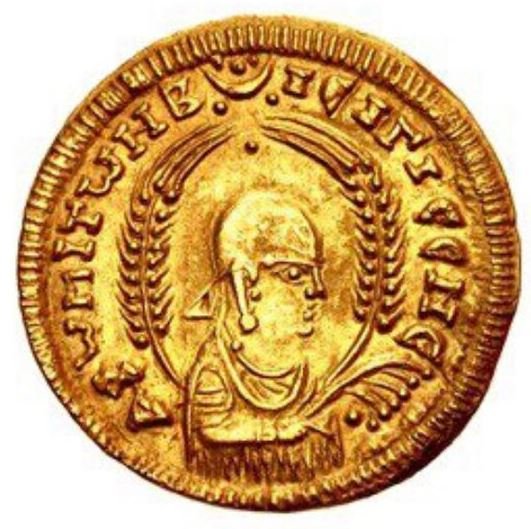
Coinage of King Ezana.
What led to Aksum’s decline?
Aksum’s decline was caused by factors including the rise of Islamic powers in the Red Sea, trade isolation, environmental degradation, and internal challenges. The kingdom fell into obscurity by the 10th century.
What was Aksum’s relationship with neighboring regions?
Aksum extended its influence into South Arabia, notably Yemen, where it intervened to protect Christians. Its strategic location enabled robust trade networks with the Mediterranean, Africa, and India.
What is the legacy of Aksum?
The cultural and religious traditions of Aksum heavily influenced the Ethiopian and Eritrean civilizations that followed, including the Zagwe and Solomonic dynasties. Its architectural styles and religious institutions remain significant.





