How did Hastein and his Viking raiders mistake the city of Luna for Rome?
Hastein was a formidable 9th-century Viking chieftain known for his extensive and daring raids across Europe, from the Frankish Empire to the Mediterranean. Renowned for his strategic cunning and deceptive tactics, he orchestrated one of the most audacious Viking expeditions, misleading defenders and sacking numerous cities under the guise of deceit.
In an intriguing episode from Viking history, Hastein and his raiders famously mistook the city of Luna for Rome during their Mediterranean expedition. This blunder, steeped in daring strategy and deception, highlights the challenges Vikings faced in unfamiliar territories.
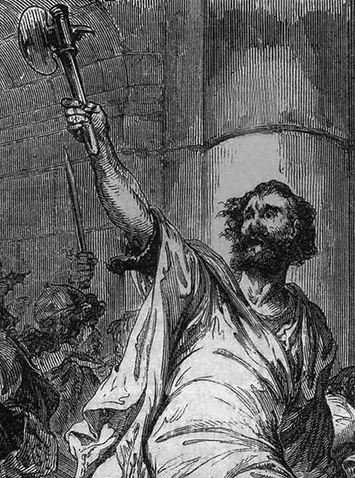
Hastein was a notorious Viking chieftain from the late 9th century known for his extensive raiding throughout Europe, particularly in the Frankish Empire and the Mediterranean. Image: An illustration of Hastein in Luna.
Here’s an exploration of how geographical and cultural misunderstandings led to this significant historical error:
During 859-862, Hastein and Björn Ironside embarked on an ambitious Viking expedition that marked a significant chapter in Norse maritime history. Commanding a fleet of 62 ships, they set sail from the Loire with the intent to raid various regions across the Mediterranean. Their journey, however, began with formidable challenges.
Initially, the raiders faced setbacks when they encountered the Asturians and later the forces of the Umayyad Emirate of Córdoba at Niebla in 859, where Hastein suffered defeats. Undeterred, they soon found success, sacking Algeciras, where they burned the mosque, signaling a shift in their fortunes.
The Vikings’ campaign of destruction continued at Mazimma in the Idrisid Caliphate on North Africa’s coast, followed by extensive raids into the territory of the Umayyad Caliphate, including attacks on Orihuela, the Balearic Islands, and Roussillon. They even occupied Nekor for eight days, showcasing their raiding prowess.
With winter approaching, Hastein and Björn chose to station at Camargue island at the Rhone’s mouth. The respite was brief; they resumed their onslaught by ravaging Narbonne, Nîmes, Arles, and as far north as Valence.
The ambitious Vikings then set their sights on Italy—mistaking the city of Luna for Rome, Hastein devised a cunning plan. Feigning death, he was carried to the city gates, claiming a last wish to convert to Christianity. Inside, he was taken to the church to receive the sacraments.
In a dramatic turn, Hastein sprang from his stretcher, initiating a brutal sack of Luna. Variations of the story include Hastein feigning death more convincingly, leading to 50 Vikings in robes entering the city under the guise of mourning, where they then unleashed a surprise attack.
The raiders continued their destructive path, sacking Pisa and raiding Fiesole by navigating the River Arno. There are suggestions they may have even reached the territories of the Byzantine Empire in the eastern Mediterranean.
The return journey was perilous; Hastein stopped in North Africa, where he acquired slaves, known as ‘blámenn’, to sell in Ireland. Despite losing a significant portion of their fleet to a storm and further losses near Medina-Sidonia, the survivors managed to raid Pamplona before finally returning to the Loire with 20 ships.
This expedition not only highlighted the Vikings’ maritime capabilities and strategic ingenuity but also showcased the far-reaching impact of Norse raiders in medieval Europe. The blend of audacious naval maneuvers, tactical deception, and the sheer breadth of their raiding geography underscore the Vikings’ role in shaping medieval history.
Frequently asked questions about Viking raider Hastein
These questions help illuminate the life and legend of Hastein, providing insight into his strategic mind and the era he influenced:
What is Hastein famous for?
Hastein is most famous for his cunning raid on the city of Luna, which he mistakenly thought was Rome, and for leading a significant Viking fleet through the Mediterranean.
Did Hastein really trick the inhabitants of Luna?
According to legend, Hastein feigned his own death to gain access to Luna, claiming he wanted a Christian burial. This ruse led to the sacking of the city once the gates were opened, though the historical accuracy of this tale is debated.
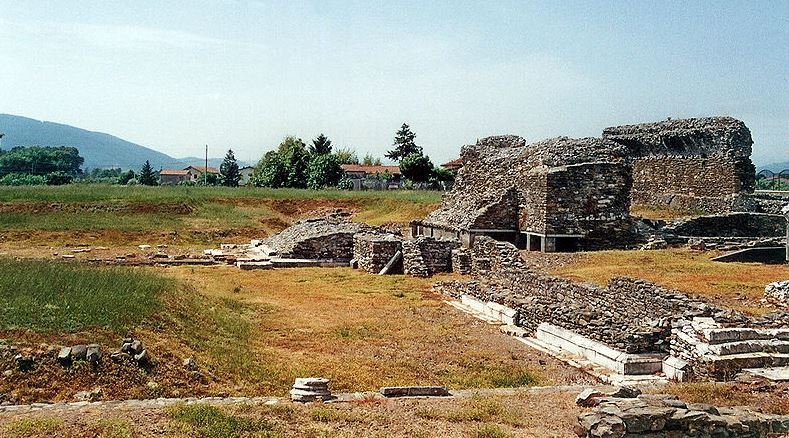
Luni, formerly known as Ortonovo until April 2017, is a municipality in La Spezia, Liguria, Italy. Originally founded as Luna by the Romans, it is the namesake for the Lunigiana region, spanning Liguria and northern Tuscany. Image: Ruins of the temple of Luna.
How did Hastein mistake Luna for Rome?
The exact reasons are unclear, but it likely involved a combination of poor geographical knowledge and ambitious misinformation among his crew. The desire to attack what they thought was the heart of Christendom could have fueled their mistaken identification.
Where did Hastein conduct most of his raids?
Hastein conducted raids across a broad area, including the coasts of the Frankish Empire, the Iberian Peninsula, and into the Mediterranean, affecting places as far as Italy and North Africa.
How did Hastein die?
Historical records do not provide specific details about Hastein’s death, including when or how it occurred, leaving it largely a mystery.