How East Liverpool, Ohio became the Pottery Capital of the World
East Liverpool, Ohio, often referred to as the “Pottery Capital of the World,” boasts a rich history that stretches back to the 19th century. This small city, nestled along the Ohio River, became a significant player in the American pottery industry due to a combination of geographical luck, entrepreneurial spirit, and technological innovation.
In this exploration, World History Edu will trace East Liverpool’s rise to prominence, the factors contributing to its industry dominance, and the legacy it has left on the pottery world.
Geographical and Natural Resources
East Liverpool’s story begins with its prime location and the abundant natural resources it offered. Situated along the Ohio River, the city had access to a vast transportation network that was crucial for distributing products across the United States. More importantly, the area was rich in high-quality clay, which is an essential raw material for pottery. This clay was not only abundant but also possessed properties that made it highly suitable for producing durable and attractive pottery.
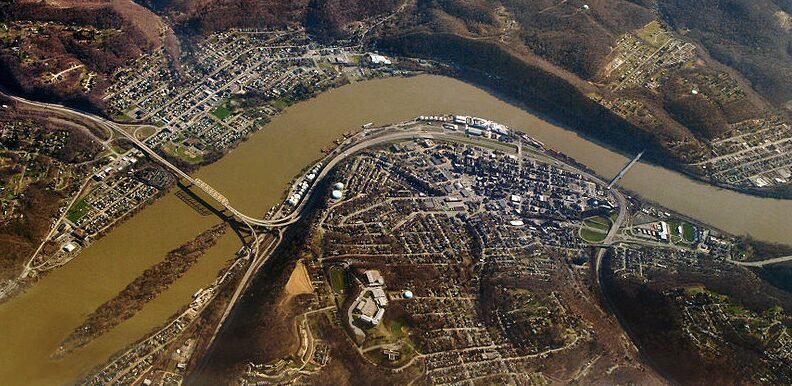
Image: Aerial view of East Liverpool, Ohio
Founding and Early Years
The foundation of East Liverpool’s pottery industry was laid in 1839 when James Bennett, an immigrant potter from Staffordshire, England, arrived and established the first pottery. Bennett brought with him the skills and techniques from the heart of the British pottery industry, adapting them to the resources and market conditions of his new home. His success attracted other potters, and soon, the city saw a burgeoning number of potteries springing up.
Growth and Expansion
By the latter half of the 19th century, East Liverpool had become a hub for pottery manufacturing. Several factors contributed to this rapid expansion. Firstly, the American market was growing due to population expansion and urbanization, leading to increased demand for pottery products, ranging from utilitarian crockery to decorative items. Secondly, East Liverpool’s entrepreneurs were quick to adopt new technologies, including the use of jigger machines, which mechanized the process of shaping clay, thus increasing production rates and lowering costs.
The local workforce also adapted quickly to the demands of the industry. Generations of families became skilled laborers, decorators, and kiln operators, creating a community deeply entrenched in the pottery trade. This specialization further enhanced the quality and efficiency of production.

East Liverpool’s journey from a burgeoning pottery town to being declared the “Pottery Capital of the World” is a testament to the resilience, innovation, and skill of its workforce and the strategic use of its natural and geographical advantages. Image: Museum of Ceramics, which initially served as the Post Office building for East Liverpool. This building houses various collection of ceramic artworks created in East Liverpool.
Industry Peak and Innovations
The early 20th century marked the peak of East Liverpool’s dominance in pottery production. At this time, the city was home to nearly half of the total pottery operations in the United States. Companies like Homer Laughlin China Company, which later created the iconic Fiesta ware, began to make a mark not just nationally but internationally.
East Liverpool potters were also pioneers in adopting lead-free glazes, responding to health concerns associated with lead-based products. This innovation not only improved safety standards but also appealed to changing market preferences, where consumer health consciousness was beginning to take shape.
Community and Culture
The pottery industry significantly shaped the social and cultural landscape of East Liverpool. The city thrived with a sense of community and pride derived from its industrial identity. Potteries were often family-owned, and business successes were community successes. The city celebrated its heritage through events and museums, notably the Museum of Ceramics, which documents the city’s illustrious history in pottery.
Decline and Legacy
However, like many industrial cities, East Liverpool faced significant challenges in the mid to late 20th century. The rise of cheaper foreign imports, coupled with the decline of manufacturing in the United States, hit the pottery industry hard. Many companies closed or moved operations overseas. Despite this decline, East Liverpool’s legacy as a pottery capital remains significant. The city laid foundational techniques and standards that influenced pottery manufacturing worldwide.
Frequently Asked Questions
What event in 1879 significantly boosted East Liverpool, Ohio’s reputation in the pottery industry?
The publication of an article in the “East Liverpool Tribune” on March 22, 1879, proclaimed the city as the “Pottery Capital of the World.”
Who was James Bennett and what was his role in the development of the pottery industry in East Liverpool?
James Bennett was an immigrant potter from North Staffordshire, England, who established the first pottery in East Liverpool in 1839, thereby initiating the growth of the pottery industry in the area.
How did the 1842 coal miners’ dispute in North Staffordshire, England, impact the pottery industry in East Liverpool?
The dispute, which led to colliers being locked out of the pits amid wage reductions, crippled pottery businesses in England that depended on coal. This situation fueled emigration to East Liverpool, where there was a demand for skilled pottery workers.
What were some of the key products and innovations developed by the potteries in East Liverpool during its industrial peak?
The potteries in East Liverpool were known for creating products such as Rockingham ware, characterized by its ornate earthenware forms and thick brown glaze, and “yellow wares.” They also produced whitewares using higher-quality clays imported from Pennsylvania and New Jersey.

East Liverpool’s location along the Ohio River was strategic for the transportation of goods to major markets along the East Coast and the Great Lakes, enhancing its production and distribution capabilities. Image: A picture of the Ohio River.
What led to the decline of the pottery industry in East Liverpool around 1900?
The decline was influenced by various economic pressures and evolving market conditions that affected the demand and sustainability of local pottery production.
Which major pottery firms from East Liverpool have persisted into modern times, and what is their significance?
Firms like the Homer Laughlin China Co. and the Hall China Co. continue to operate, maintaining the traditional craftsmanship that characterized the industry’s peak. These companies help preserve the region’s legacy as a former pottery powerhouse.
How did the evolution of marks and branding in East Liverpool’s pottery industry reflect a growing confidence in American craftsmanship?
Initially, potteries in East Liverpool imitated British marks to capitalize on the reputation of English pottery. Over time, as confidence in American craftsmanship grew, distinct marks such as the American Eagle began to appear, establishing a unique identity for the region’s products.