Hoysala architecture, one of the defining styles of temple building in southern India, flourished under the Hoysala Empire (10th–14th centuries CE). Originating in the modern-day state of Karnataka, this architectural style represents a unique synthesis of indigenous South Indian traditions and innovative artistic approaches. Its hallmark features include intricate stone carvings, star-shaped ground plans, and attention to detail in sculpture and ornamentation.
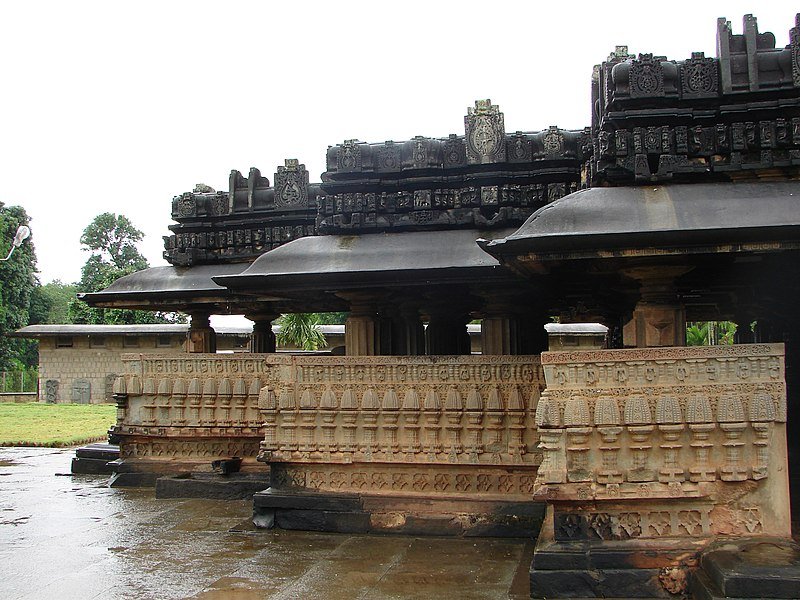
The staggered square plan mantapa at the Kedareshvara Temple in Balligavi features a distinctive architectural design with multiple square sections arranged in a step-like formation.
Historical Background
The Hoysalas, initially vassals of the Western Chalukyas, rose to prominence as an independent dynasty around the 11th century. Their reign coincided with a period of significant political, cultural, and religious evolution in southern India. Hoysala rulers were ardent patrons of the arts, especially temple construction, which served both religious and political purposes. Temples were not just places of worship but also symbols of royal authority and expressions of devotion.
The Hoysala era, spanning the 11th to 14th centuries CE, is considered the golden age of artistic and architectural excellence in Karnataka, India.
King Vishnuvardhana (reigned 1108–1152 CE) is often credited with initiating the architectural legacy of the Hoysalas. His conversion from Jainism to Vaishnavism further expanded the temple-building activities to include both Hindu and Jain monuments. However, subsequent rulers such as Narasimha I, Veera Ballala II, and others continued to embellish and expand this tradition.
Defining Characteristics
Material: Chloritic Schist (Soapstone)
The Hoysalas primarily used soapstone, a soft, easily workable material that hardened upon exposure to air. This material allowed sculptors to carve intricate details and ornate designs. Despite its softness, soapstone lent itself to enduring structural integrity.
Star-Shaped and Multi-Angular Plans
A hallmark of Hoysala temples is the stellate or star-shaped plan. The use of jagged, zigzagging outlines for the temple base created multiple projections and recesses, which enhanced the interplay of light and shadow. These projections provided ample space for sculptural embellishments.
Platform Design (Jagati)
Most Hoysala temples are built on an elevated platform known as a jagati, which serves both practical and aesthetic purposes. The platform allows devotees to circumambulate the temple, a ritual known as pradakshina, without stepping into the sanctum. This feature also imparts grandeur to the structure.
Ornate Decoration
Every surface of a Hoysala temple, from its walls to its ceilings, is richly adorned with sculptures and carvings. These include depictions of deities, mythological scenes, floral motifs, and intricate geometric patterns. The walls are divided into horizontal bands, each illustrating a specific theme or narrative.
Multiple Shrines (Trikuta and Ekakuta Layouts)
Hoysala temples often feature multiple shrines (trikuta—three shrines, or ekakuta—single shrine) dedicated to different deities. These shrines are housed in a main hall, with each sanctum crowned by a shikhara (superstructure).
Shikharas (Superstructures)
The shikharas of Hoysala temples are distinctive for their modest height and intricate detailing. Unlike the towering vimanas of Dravidian architecture, Hoysala shikharas are compact, reflecting an emphasis on proportionality and intricacy.
Intricate Pillars and Ceilings
The interior of Hoysala temples features lathe-turned, bell-shaped pillars with polished surfaces. These pillars support elaborately carved ceilings adorned with floral and geometric motifs.
Structural Components
The garbhagriha houses the main deity of the temple. It is often square-shaped and relatively plain compared to the rest of the temple. A narrow passage connects it to the main hall.
The mandapa serves as a space for congregational worship and ritual activities. It is highly ornamented, with intricately carved pillars and open spaces to accommodate devotees.
The sukhanasi acts as an antechamber to the garbhagriha and is an extension of the shikhara. It often features an ornate depiction of the temple’s presiding deity.
The navaranga is a transitional space leading to the sanctum, characterized by its ornate pillars and artistic carvings. It often functions as a platform for cultural and religious performances.
The jagati platform allows devotees to circumambulate the temple in a ritual manner, enhancing their devotional experience.
Sculptural Elements
Hoysala sculptures are celebrated for their precision, detail, and thematic richness. The following are key sculptural elements:
Hoysala temples prominently feature sculptures of Hindu gods and goddesses, often portrayed in dynamic poses. Mythological scenes from epics like the Ramayana and Mahabharata are intricately depicted on the walls and friezes.
Apart from religious themes, Hoysala sculptures include depictions of dancers, musicians, animals, and everyday life. These secular elements reflect the cultural vibrancy of the Hoysala period.
In keeping with the traditions of Indian temple architecture, Hoysala temples also feature erotic sculptures, symbolizing fertility and the unity of divine and human realms.
Ornate archways often frame the entrances to temples, featuring carvings of mythical creatures like the makara (a composite animal) and floral motifs.
Hoysala temples display a high level of iconographic consistency, adhering to the rules prescribed in ancient texts like the Shilpashastra.
Famous Temples
Chennakesava Temple, Belur
Built in 1117 CE by King Vishnuvardhana to commemorate his victory over the Cholas, the Chennakesava Temple is dedicated to Lord Vishnu. The temple features exquisite sculptures, including scenes from Hindu epics and intricately carved panels depicting celestial beings.
Hoysaleswara Temple, Halebidu
Dedicated to Lord Shiva, this 12th-century temple is a masterpiece of Hoysala architecture. The temple’s exterior walls are adorned with intricately detailed sculptures depicting deities, mythical creatures, and episodes from the Ramayana and Mahabharata.
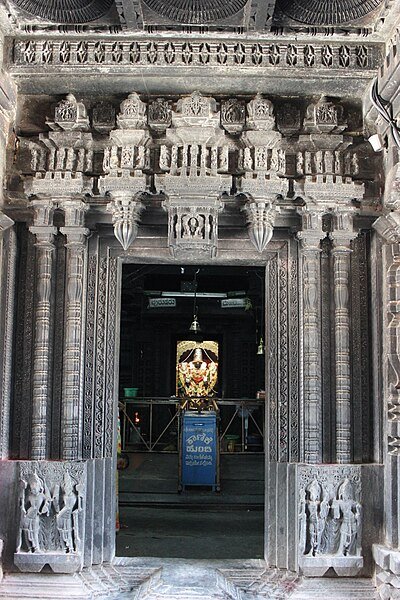
The ornate lintel and door jamb relief at the entrance to the inner mantapa of the Harihareshwara Temple in Harihar showcase intricate carvings.
Keshava Temple, Somanathapura
Constructed in 1268 CE by a Hoysala general, the Keshava Temple is a trikuta (three-shrined) temple dedicated to Lord Vishnu. Its star-shaped plan, intricate carvings, and symmetry make it a fine example of Hoysala craftsmanship.
Basaralu Mallikarjuna Temple
This lesser-known gem is dedicated to Lord Shiva and features a stellate layout, exquisite wall carvings, and decorative friezes.
Lakshmi Narasimha Temple, Nuggehalli
Built in the 13th century, this temple is another example of a trikuta design, known for its finely carved images of Vishnu and his avatars.
Influences and Innovations
As former vassals of the Western Chalukyas, the Hoysalas inherited several architectural elements from their predecessors, including the stepped pyramidal shikhara and lathe-turned pillars.
Elements of Dravidian architecture, such as temple towers and enclosed courtyards, influenced Hoysala designs to some extent.
The Hoysalas introduced several unique elements, including the star-shaped plan, intricate wall reliefs, and the use of soapstone. Their emphasis on sculpture over structure represents a departure from earlier traditions.
Hoysala temples are often smaller than their Chola or Chalukya counterparts but compensate for their size with unmatched intricacy and attention to detail.
Religious and Cultural Context
The Hoysala period was marked by religious pluralism. While Hinduism dominated, Jainism and Buddhism also flourished under Hoysala patronage. Jain temples like the Parsvanatha Basadi in Halebidu reflect similar architectural principles, demonstrating the inclusivity of Hoysala art.
The temples also served as centers for education, art, and community gatherings. Dance, music, and religious festivals often revolved around these monumental structures, enhancing their role in society.
Decline and Legacy
The decline of the Hoysala Empire in the 14th century, due to invasions by the Delhi Sultanate and internal political instability, marked the end of their architectural tradition. However, their temples have endured as cultural and historical treasures.
Hoysala architecture influenced later styles in southern India, including Vijayanagara and Nayaka traditions. The intricate carving techniques, artistic vision, and synthesis of cultural motifs remain an inspiration for modern architects and sculptors.
Preservation Efforts
Many Hoysala temples are recognized as heritage sites, with efforts underway to preserve their intricate carvings and structural integrity. The Archaeological Survey of India (ASI) has been instrumental in restoring and maintaining these monuments. In 2022, the Hoysala temples of Belur, Halebidu, and Somanathapura were proposed for UNESCO World Heritage status, reflecting their global significance.
Questions and answers
Where was the Hoysala Empire primarily rooted?
The Hoysala Empire was primarily rooted in the Hassan district of Karnataka.
What motivated the Hoysalas to excel in architecture?
The Hoysalas sought to outshine the Western Chalukyan Empire, which motivated them to achieve extraordinary feats in temple architecture.
What is the historical origin of the Hoysalas?
The Hoysalas began as chieftains in the Western Ghats and eventually rose to prominence as feudatories under the Western Chalukyas.
What significant event marked the reign of King Vishnuvardhana?
King Vishnuvardhana’s victory over the Cholas in 1116 CE marked a significant event during his reign, leading to the construction of the Chennakesava Temple at Belur in 1117 CE.
Where did the Hoysalas move their capital during Vishnuvardhana’s reign?
The Hoysalas moved their capital to Halebidu during King Vishnuvardhana’s reign.
Who established the Hoysalas as an independent power, and when?
Veera Ballala II established the Hoysalas as an independent power during his reign from 1173 to 1220 CE.
What led to the decline of the Hoysala Empire?
Repeated invasions by the Delhi and Madurai Sultanates led to the decline of the Hoysala Empire, culminating in the death of Veera Ballala III in 1343 CE.
What influences shaped Hoysala architecture?
Hoysala architecture was influenced by earlier dynasties like the Nolambas and Western Gangas, as well as the Western Chalukyan tradition.
What material was primarily used in Hoysala temple construction?
Soapstone was primarily used in Hoysala temple construction, enabling intricate carvings and detailed iconography.
What is the Chennakesava Temple known for?
The Chennakesava Temple, built in 1117 CE, is known for its stellate layout, jagati platform, 60-bay hall, and exquisitely carved bracket figures (madanikas).
What distinguishes the Hoysaleshwara and Shantaleshwara Temples in Halebidu?
The Hoysaleshwara and Shantaleshwara Temples in Halebidu are dvikuta (two-shrine) temples with detailed friezes depicting stories from the Ramayana, Mahabharata, and Bhagavata Purana.
What is unique about the Kedareshwara Temple?
The Kedareshwara Temple in Halebidu is a trikuta (three-shrine) temple with a stellate layout and sculptures of deities like Bhairava and Vishnu.
What is the significance of the Kalyani Tank in Hulikere?
The Kalyani Tank in Hulikere, built during Narasimha I’s reign, features 27 miniature shrines and remains a testament to Hoysala engineering.
What are the Jain temples at Bastihalli known for?
The Jain temples at Bastihalli, dedicated to Adinatha, Parsvanatha, and Shantinatha, reflect Hoysala design principles and serve Jain communities.