Independence of Guinea-Bissau: History and Major Facts
The independence of Guinea-Bissau is a story of a long, determined struggle by the people of the small West African country against Portuguese colonial rule. The battle for independence, which culminated in 1974, is marked by intense armed conflict, international support for the liberation movement, and internal resilience despite political and economic challenges. The African Party for the Independence of Guinea and Cape Verde (PAIGC) played a central role in this independence effort, transforming itself into one of the most successful anti-colonial movements in Africa.
In this comprehensive explanation, African historians at WHE delve into the historical background of Guinea-Bissau, the liberation struggle, and the key events and facts surrounding the country’s fight for and eventual attainment of independence.
Historical Background
Before colonization, the region that is now Guinea-Bissau was part of the Kaabu Empire, which itself was a part of the broader Mali Empire. The Kaabu Empire was a significant political entity that controlled much of the interior of what is now Guinea-Bissau and parts of present-day Senegal. However, the coastal areas were inhabited by diverse ethnic groups with distinct languages and cultures.
Portuguese explorers arrived on the coast of Guinea-Bissau in the 15th century as part of the broader wave of European exploration in Africa. Portuguese Guinea became a formal part of the Portuguese Empire by the early 16th century, though Portugal’s control over the interior regions remained weak for centuries. During this period, the Portuguese engaged in the transatlantic slave trade, and Guinea-Bissau became a source of slaves who were exported to the Americas, particularly through the Cape Verde islands.
By the 19th century, Portugal began to consolidate its control over Guinea-Bissau as European powers scrambled to carve out colonies in Africa. However, even into the early 20th century, Portuguese authority in Guinea-Bissau was tenuous at best. It wasn’t until the pacification campaigns of the early 20th century that the Portuguese established full control over the territory, often with violent force. The conquest of the Bijagós Islands in 1936 marked the final consolidation of Portuguese power in the region.
Formation of the PAIGC and the Early Struggle
In the 1950s, a wave of anti-colonial sentiment spread across Africa, inspiring many colonized peoples to seek independence. In Guinea-Bissau, the fight for freedom was largely spearheaded by the PAIGC (African Party for the Independence of Guinea and Cape Verde), formed in 1956 by Amílcar Cabral, a revolutionary thinker and leader. Cabral, a trained agronomist, was one of the most influential figures in the anti-colonial movement across Africa.
Unlike many African independence movements, which focused on urban political mobilization, the PAIGC organized rural peasants and guerrilla fighters, building a strong base among the population. The PAIGC’s initial strategy involved political education, grassroots organization, and the creation of “liberated zones” in the countryside, where Portuguese authority was absent. These zones served as bases for the PAIGC’s activities and as safe havens for guerrilla fighters.
Cabral’s vision for independence included not only Guinea-Bissau but also Cape Verde, which had close historical, cultural, and political ties to Guinea-Bissau. The PAIGC aimed for the joint independence of both territories, creating a unified state. Throughout the late 1950s and early 1960s, the PAIGC grew in influence, becoming one of the most formidable independence movements in Africa.
The Guinea-Bissau War of Independence (1963-1974)
The Guinea-Bissau War of Independence officially began in 1963 as part of a broader movement of decolonization sweeping across Africa. Portugal, under the authoritarian rule of António de Oliveira Salazar and later Marcelo Caetano, clung to its African colonies, refusing to grant them independence. The war in Guinea-Bissau was one of several Portuguese colonial wars, with similar conflicts raging in Angola and Mozambique.
The PAIGC, under the leadership of Amílcar Cabral, adopted a guerrilla warfare strategy. Their forces were trained and equipped by international supporters, including the Soviet Union, Cuba, China, and several Eastern Bloc countries. Cuban forces were particularly instrumental in providing military training and medical aid to the PAIGC. The guerrilla fighters targeted Portuguese military outposts, supply lines, and infrastructure, significantly weakening the Portuguese presence in the countryside.
Despite having the upper hand in urban areas, Portuguese forces struggled to defeat the PAIGC in rural areas, where the movement established “liberated zones” that the Portuguese were unable to retake. The PAIGC’s resilience and growing international support enabled them to consolidate their control over much of the territory.
The war had a profound impact on Portugal, which was already facing increasing opposition to its colonial policies at home. The war drained Portugal’s resources, costing the regime heavily in both men and materials. The conflict in Guinea-Bissau, Angola, and Mozambique contributed to growing dissatisfaction with the Salazarist regime in Portugal.
Assassination of Amílcar Cabral
In January 1973, tragedy struck the independence movement when Amílcar Cabral was assassinated in Conakry, Guinea, by elements within his own party. Cabral’s assassination was a major blow to the PAIGC, as he had been a unifying figure and a strategic leader. His assassination is believed to have been orchestrated with the support of Portuguese agents, though the exact details remain unclear.
Despite the loss of Cabral, the PAIGC continued its military and political struggle under the leadership of Luís Cabral, Amílcar’s half-brother. By the time of Amílcar Cabral’s death, the PAIGC controlled much of the countryside, and the Portuguese forces were largely confined to fortified cities and military bases. The war had reached a stalemate, with the Portuguese unable to reclaim the liberated zones and the PAIGC unable to fully expel the Portuguese from urban centers.
Declaration of Independence (1973) and International Recognition
In September 1973, the PAIGC-controlled People’s National Assembly unilaterally declared the independence of Guinea-Bissau, establishing the Republic of Guinea-Bissau. Although Portugal did not recognize the declaration, the new republic quickly gained recognition from a number of countries, particularly from socialist and communist states such as the Soviet Union, Cuba, and other members of the Eastern Bloc.
This declaration of independence gave the PAIGC significant international legitimacy. Meanwhile, within Guinea-Bissau, the PAIGC continued to consolidate its hold over the liberated zones, effectively governing large parts of the country.
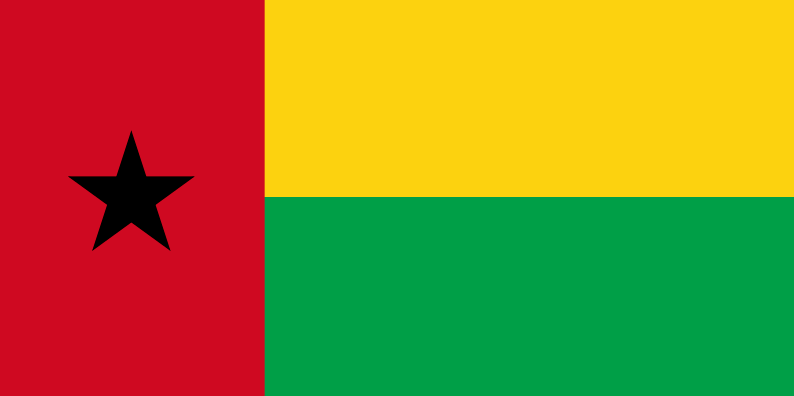
Guinea-Bissau declared its independence in 1973, and Portugal officially recognized it in 1974 after the Carnation Revolution. The independence movement was led by Amílcar Cabral and the African Party for the Independence of Guinea and Cape Verde (PAIGC). Image: Flag of Guinea-Bissau.
The Carnation Revolution and Independence
The final blow to Portuguese colonial rule came from within Portugal itself. In April 1974, a group of left-leaning Portuguese military officers, frustrated with the regime’s insistence on continuing the costly and unpopular colonial wars, launched the Carnation Revolution. This bloodless coup overthrew the Estado Novo regime, ending nearly five decades of authoritarian rule in Portugal.
The new Portuguese government, led by the Armed Forces Movement (MFA), was eager to end the colonial wars and quickly initiated negotiations with liberation movements across its African colonies. In September 1974, Portugal formally recognized the independence of Guinea-Bissau, making it the first of Portugal’s African colonies to gain independence through armed struggle.
Following Guinea-Bissau’s independence, Cape Verde also achieved independence in 1975, although the two nations would later separate politically, with Cape Verde establishing its own government.
Post-Independence Guinea-Bissau
Independence brought an end to Portuguese rule, but it also introduced a new era of political and economic challenges for Guinea-Bissau. Luís Cabral became the first president of the newly independent nation, but the country faced significant difficulties. The war had devastated Guinea-Bissau’s economy and infrastructure, and rebuilding the country would prove to be an enormous task.
Tensions between Guinea-Bissau and Cape Verde also began to surface, particularly after the 1980 coup led by João Bernardo Vieira, commonly known as Nino Vieira. Vieira overthrew Luís Cabral, accusing him of mismanagement and abuse of power. The coup ended the political and military unity between Guinea-Bissau and Cape Verde, as Cape Verde established its own ruling party, the PAICV (African Party for the Independence of Cape Verde), and distanced itself from Guinea-Bissau.
Guinea-Bissau’s political landscape became increasingly unstable in the decades following independence, with Vieira remaining a dominant figure in the country’s politics. Vieira’s rule was characterized by authoritarianism, political instability, and economic difficulties, compounded by coups and civil conflict.
The Legacy of the Independence Struggle
The Guinea-Bissau War of Independence left an indelible mark on the country’s history and identity. Amílcar Cabral remains a celebrated national hero, remembered for his vision of independence and his efforts to mobilize the rural population. His ideas on nationalism, social justice, and self-determination continue to influence political thought in Guinea-Bissau and across Africa.
The PAIGC’s success in gaining independence through armed struggle made it a model for other liberation movements in Africa. It demonstrated the potential of guerrilla warfare as a strategy against colonial powers and highlighted the importance of international solidarity in anti-colonial movements. Guinea-Bissau’s independence struggle also played a role in the eventual collapse of Portuguese colonialism across Africa, leading to the independence of Angola, Mozambique, and Cape Verde.
Conclusion
The history of Guinea-Bissau’s independence is one of resilience, struggle, and international solidarity. The country’s path to freedom was shaped by the vision of leaders like Amílcar Cabral and the dedication of the PAIGC, whose ability to mobilize and organize the rural population set it apart from many other African independence movements.
While independence brought new challenges, the successful liberation of Guinea-Bissau stands as a testament to the power of collective action and the will to determine one’s own future
Questions and Answers about Guinea-Bissau
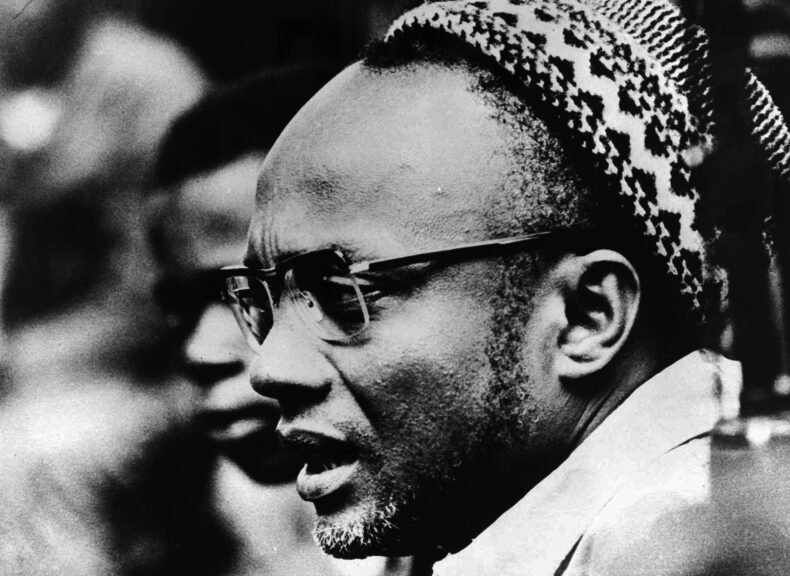
Guinea-Bissau was historically part of the Kingdom of Kaabu, a vassal of the Mali Empire. Portuguese influence in the region began in the 16th century, but it wasn’t until the 20th century that the Portuguese solidified their control through pacification campaigns. Image: Amílcar Cabral (1924 – 1973).
What is the ethnic composition of Guinea-Bissau?
Guinea-Bissau is ethnically diverse, with various groups having distinct languages, customs, and social structures. Major ethnic groups include the Fula and Mandinka (primarily Muslims in the north and northeast), the Balanta and Papel (in the southern coastal areas), and the Manjaco and Mancanha (in the central and northern coastal regions).
When did the Portuguese first explore the area of Guinea-Bissau?
The Portuguese first explored the area in the 15th century, with Portuguese Guinea being claimed in 1446. However, significant trading posts were not established until later, and Portuguese control remained limited until the 19th century.
What role did Guinea-Bissau play in the Atlantic slave trade?
The Portuguese, in cooperation with local tribes, participated in the Atlantic slave trade, exporting large numbers of Africans to the Americas, primarily through the Cape Verde Islands. The town of Cacheu became a major center of the slave trade.
How did Portuguese control in Guinea-Bissau evolve over time?
Portuguese control over Guinea-Bissau remained weak until the early 20th century when pacification campaigns solidified their rule. By 1936, the Portuguese fully controlled both the mainland and the Bissagos Islands.
What sparked the movement for independence in Guinea-Bissau?
The independence movement began in 1956, when Amílcar Cabral and Raphael Barbosa organized the African Party for the Independence of Guinea and Cape Verde (PAIGC). The PAIGC launched an armed rebellion in 1961, gaining control of most of the country by 1968.
Who were the key leaders in Guinea-Bissau and Cape Verde after independence?
Luís de Almeida Cabral became the first president of Guinea-Bissau, while Aristides Pereira became the first president of Cape Verde when it gained independence in 1975. João Bernardo Vieira (Nino Vieira) became the commander in chief of Guinea-Bissau’s armed forces.
When did Guinea-Bissau declare its independence, and when did Portugal officially recognize it?
Guinea-Bissau declared its independence on September 24, 1973, and Portugal officially recognized the independence on September 10, 1974, following the Carnation Revolution in Portugal.
Why was the capital’s name, Bissau, added to the country’s official name?
Guinea-Bissau is located in West Africa, bordered by Senegal to the north and Guinea to the southeast. It covers an area of 36,125 square kilometers (13,948 square miles).
The capital’s name, Bissau, was added to the country’s official name to distinguish it from neighboring Guinea, which was formerly known as French Guinea.
Who became the first President of Guinea-Bissau?
Luis Cabral, the half-brother of Amílcar Cabral, became the first President of Guinea-Bissau after the country’s independence.
What political events led to instability in Guinea-Bissau after independence?
In 1980, Luis Cabral was overthrown in a coup led by João Bernardo “Nino” Vieira. The country experienced several coup attempts in the 1980s and 1990s. In 1998, an army uprising triggered a civil war, resulting in the ousting of Vieira in 1999.
How has Guinea-Bissau’s political landscape evolved in the 21st century?
Guinea-Bissau’s political landscape has been marked by coups and instability. João Bernardo Vieira returned to power in 2005 but was assassinated in 2009. Since then, the country has experienced ongoing political challenges, though elections have been held, and some efforts toward stabilization have been made.
Guinea-Bissau continues to face challenges such as political instability, corruption, economic inequality, and the growing influence of international drug trade networks. Despite holding elections that have been judged free and fair, long-term stability remains elusive.
What are the official and national languages of Guinea-Bissau?
The official language of Guinea-Bissau is Portuguese, though only about 2% of the population speaks it as a first language. The national language is Guinea-Bissau Creole, a Portuguese-based creole, which serves as a unifying language. Approximately 54% of the population speaks Creole as their first language.
What are the main religions practiced in Guinea-Bissau?
Guinea-Bissau is religiously diverse, with followers of Islam, Christianity, and traditional African religions. Islam is the most widely practiced religion, particularly among the Fula and Mandinka ethnic groups.
What is the primary export of Guinea-Bissau, and what are some of the economic challenges it faces?
Cashew nuts are Guinea-Bissau’s most important export. The country faces economic challenges such as widespread poverty, political instability, weak infrastructure, and limited industrialization.





