Italian Baroque Painter and Architect Giovanni Paolo Panini
Giovanni Paolo Panini, commonly known as Gian Paolo Panini or Pannini (17 June 1691 – 21 October 1765), was a distinguished Italian Baroque painter and architect celebrated for his intricate vedute, or detailed cityscapes, particularly of Rome. His artistic endeavors not only captured the magnificence of Roman antiquities but also significantly influenced the evolution of landscape painting and architectural representation across Europe.
Early Life and Training
Panini was born in Piacenza, Italy, where he embarked on his artistic journey under the guidance of Giuseppe Natali and Andrea Galluzzi. His foundational skills in painting and design were further enriched through his training with Francesco Galli-Bibiena, a renowned stage designer. This diverse mentorship provided Panini with a robust understanding of perspective and architectural elements, laying the groundwork for his multifaceted career in both painting and architecture.
Relocation to Rome and Advanced Education
In 1711, seeking broader horizons and greater opportunities, Panini moved to Rome, the epicenter of artistic innovation and cultural patronage during the Baroque period.
In Rome, he refined his drawing skills under the mentorship of Benedetto Luti, a respected painter known for his vibrant and detailed works. The dynamic art scene of Rome, coupled with the support of numerous patrons, offered Panini ample opportunities to develop and showcase his talents, solidifying his reputation as a skilled artist and architect.
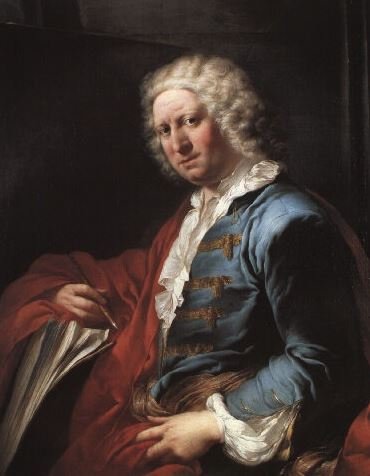
Image: Louis Gabriel Blanchet’s painting of Panini.
Personal Life
In 1724, Panini married Miss Gossert, the sister-in-law of Wengkels, the director of the French Academy in Rome. This union not only enhanced his social connections but also facilitated his integration into influential artistic circles.
Together, Panini and Miss Gossert had two sons: Giuseppe Pannini (1720-1812), who pursued a career in architecture, and Francesco Panini (1745-1812), who followed in his father’s footsteps as a painter. This familial legacy underscored the enduring influence of Panini’s artistic lineage.
Career in Rome
Panini swiftly established himself in Rome as a proficient decorator of palatial residences. His notable projects included the Villa Patrizi (1719–1725), Palazzo de Carolis (1720), and the Seminario Romano (1721–1722). These works demonstrated his ability to seamlessly blend artistic beauty with architectural functionality, earning him esteemed recognition among Rome’s elite patrons.
In 1719, Panini’s contributions were formally acknowledged with his admission to the Congregazione dei Virtuosi al Pantheon, an esteemed association of artists and intellectuals dedicated to promoting the arts.
Teaching and Influence
Beyond his accomplishments as an artist, Panini was a highly influential educator. He held teaching positions at the Accademia di San Luca and the Académie de France in Rome, where he played a pivotal role in shaping the next generation of artists. Among his notable students was Jean-Honoré Fragonard, a leading figure of the Rococo movement.
Panini’s instruction emphasized the principles of perspective and optics, fundamental elements in creating his renowned vedute. His expertise in these areas inspired the development of the “Panini Projection,” a technique essential for rendering panoramic views, bridging the gap between artistic representation and technical precision in both art and cartography.
Major Commissions and Works
One of Panini’s most celebrated works is his detailed view of the interior of the Pantheon, commissioned by Francesco Algarotti. This piece exemplifies Panini’s meticulous attention to architectural detail and his ability to capture the grandeur of Rome’s ancient structures.
Additionally, his vedute—paintings of picture galleries showcasing Rome’s landmarks—became highly sought after by visitors seeking “postcards” of their travels. Panini’s paintings often featured ruins and classical architecture with fanciful and unreal embellishments, characteristic of the capriccio style. This approach mirrored the works of Marco Ricci, blending realistic elements with imaginative details to create captivating and idealized scenes.
Panini’s ability to infuse his works with both historical accuracy and creative flair set him apart from his contemporaries, making his vedute not only artistic masterpieces but also valuable historical records of Rome’s architectural heritage.

Image: Panini’s “Apollo and Mars”
Contributions to Architecture
In addition to his painting, Panini made significant contributions to architecture, particularly in designing elaborate interiors that harmonized with existing architectural frameworks. His role as a decorator extended to enhancing the aesthetic appeal of buildings through sophisticated artistic elements. Panini’s architectural works were noted for their elegance and integration of artistic motifs, which complemented the structural design and elevated the overall grandeur of the edifices he worked on.
Patronage and International Recognition
Panini’s reputation extended well beyond Italy, attracting the attention of European monarchs and influential patrons. Commissioned by Filippo Juvarra, he decorated the Lacquer Room of the Royal Palace of La Granja de San Ildefonso in Spain, showcasing his ability to adapt his style to different cultural contexts.
King Carlos IV, before ascending to the throne, purchased several of Panini’s works, which are now preserved in prestigious institutions such as the Prado Museum and various royal palaces. This international patronage underscored the widespread appreciation and demand for Panini’s artistic contributions, cementing his status as a prominent figure in European art.

Later Career and Leadership
In 1754, Panini achieved a significant milestone in his academic career by serving as the prince (director) of the Accademia di San Luca. In this leadership role, he influenced the direction of artistic education and maintained high standards within the institution. His tenure as director solidified his status as a leading figure in Rome’s artistic community, allowing him to shape the artistic discourse and mentor emerging talents.
Legacy and Influence
Panini’s influence extended through his students and the broader art world. His studio was home to Hubert Robert and his son Francesco Panini, both of whom carried forward his artistic legacy. Panini’s style also influenced other vedutisti, such as Antonio Joli and Charles-Louis Clérisseau, who further popularized detailed cityscapes.
Moreover, his work inspired prominent landscape painters like Canaletto and Bernardo Bellotto, who capitalized on the growing market for painted views of Italian landscapes. British landscape artists, including Marlow, Skelton, and Wright of Derby, also drew inspiration from Panini’s capricci, adopting his imaginative embellishments in their own works.
Academic and Technical Contributions
Beyond his artistic endeavors, Panini was a professor of perspective and optics at the French Academy of Rome. His teachings in these disciplines were instrumental in advancing the technical aspects of art, particularly in creating realistic and immersive cityscapes. The “Panini Projection,” inspired by his masterful use of perspective, remains a vital tool in rendering panoramic views, bridging the gap between artistic representation and technical precision.
Panini’s academic contributions ensured that his knowledge and techniques were disseminated widely, influencing both his contemporaries and future generations of artists and architects.
Preservation and Collections
Panini’s works are held in the permanent collections of numerous prestigious museums worldwide, ensuring his enduring legacy. Notable institutions housing his paintings include the Prado Museum, the Louvre, the Brooklyn Museum, the Saint Louis Art Museum, the Museo Nazionale di Capodimonte, the Museo Thyssen-Bornemisza, the Staatliche Museen, the Palazzo del Quirinale.
This widespread distribution across major art institutions underscores Panini’s significant impact on art history and his enduring appeal to audiences worldwide.
Legacy and Historical Impact
Panini’s legacy is characterized by his ability to blend artistic beauty with architectural precision, creating works that are both visually stunning and technically accomplished. His vedute captured the essence of Rome’s architectural splendor, providing detailed and imaginative portrayals that served both artistic and documentary purposes. These paintings offered viewers a glimpse into the grandeur of Rome’s ancient and contemporary structures, making them invaluable records of the city’s architectural heritage.
His capriccio style, which combined realistic architectural elements with imaginative and fanciful details, influenced subsequent generations of artists and helped shape the genre of landscape painting. By infusing his works with mythological and artistic motifs, Panini elevated the vedute from mere cityscapes to sophisticated artistic statements that reflected both historical reverence and creative innovation.
Final Years and Death
Giovanni Paolo Panini continued to work and influence the art world until his death in Rome on 21 October 1765.
His contributions as a painter, architect, and educator left an indelible mark on the Renaissance art landscape.
Panini’s ability to navigate and excel in multiple artistic disciplines exemplifies the versatility and depth of Baroque artists, who often engaged in various forms of creative expression.
Frequently Asked Questions about Giovanni Paolo Panini

When and where was Giovanni Paolo Panini born?
Giovanni Paolo Panini was born on 17 June 1691 in Piacenza, Italy.
Under whom did Panini receive his initial artistic training in Piacenza?
In Piacenza, Panini trained under Giuseppe Natali, Andrea Galluzzi, and Francesco Galli-Bibiena.
When did Panini move to Rome, and with whom did he study drawing there?
Panini relocated to Rome in 1711, where he studied drawing with Benedetto Luti.
Who did Panini marry in 1724, and who were their notable children?
In 1724, Panini married Miss Gossert, sister-in-law of Wengkels. They had two sons: Giuseppe Pannini, an architect, and Francesco Panini, a painter.
What were some of Panini’s notable projects as a palace decorator in Rome?
The Italian artist decorated the Villa Patrizi (1719–1725), Palazzo de Carolis (1720), and the Seminario Romano (1721–1722).
Which esteemed association did Panini join in 1719, recognizing his contributions?
In 1719, Panini was admitted to the Congregazione dei Virtuosi al Pantheon.
Which famous Rococo artist was among Panini’s students at the Académie de France in Rome?
Jean-Honoré Fragonard was one of Panini’s notable students.
What is one of Panini’s most celebrated paintings, and who commissioned it?
One of Panini’s most celebrated works is his view of the interior of the Pantheon, commissioned by Francesco Algarotti.

Filippo Juvarra commissioned Panini to decorate the Lacquer Room of the Royal Palace of La Granja de San Ildefonso in Spain. King Carlos IV purchased several of his works, now preserved in the Prado Museum and various royal palaces. Image: Portrait of Juvarra. Artwork by Agostino Masucci.
What role did Panini hold at the Accademia di San Luca in 1754, and how did it impact his legacy?
In 1754, Panini served as the prince (director) of the Accademia di San Luca, influencing artistic education and solidifying his status as a leading figure in Rome’s artistic community.





