J.P. Morgan: History, Achievements and Facts
Criticisms
In the years that followed the 1907 economic crisis, Morgan came on the receiving end for being too powerful in the U.S. financial markets. A good number of progressive politicians on Capitol Hill, journalists and Wall Street critics accused Morgan of taking advantage of the crisis to enrich himself and his associates.
The criticisms were so palpable that the U.S. Congress invited him in 1912 to testify before a congressional committee. Morgan, along with many of his associates on Wall Street, was accused of scheming and taking advantage of the U.S. financial and banking industries. The “money trust” investigation, led by U.S. Representative Arsene Pujo of Louisiana, did some damage to J.P. Morgan’s reputation.
Following the hearings, the congressional committee deemed it prudent to establish the Federal Reserve System in 1913. Recommendations from the committee also allowed for the passage of the Clayton Antitrust Act of 1914. All those measures were intended to prevent extremely powerful private financiers on Wall Street from unethically manipulating the U.S. markets to their advantage.
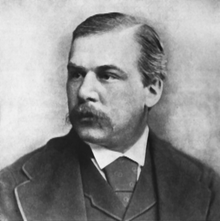
All though conservative politicians and businessmen praised J.P. Morgan for the role he played in ending the Panic of 1907, there were some liberals that saw Morgan as capitalizing on the crisis to increase his wealth. | Image: J. P. Morgan in his earlier years
Antitrust suits and trustbursting from Progressives in Washington D.C.
He reached a deal with railroad executive James J. Hill and financier E.H. Harriman to consolidate three very major railways in the Midwest – the Great Northern Railway, the Northern Pacific Railway, and the Chicago, Burlington and Quincy Railroad.
Worried that the consolidation went against anti-trust laws, U.S. President Theodore Roosevelt tasked the Department of Justice to break up Morgan’s Midwest consolidations. In 1904, the U.S. Supreme Court ruled that the Northern Security Company inhibited free competition, hence it was dissolved.