Lateran Treaty: History and Major Facts about the Treaty that Established an Independent Vatican City
The Lateran Treaty of 1929 stands as a pivotal agreement in modern history, marking the resolution of a long-standing dispute known as the “Roman Question” between the Holy See and the Kingdom of Italy. This treaty, along with the associated pacts, established the Vatican City as an independent sovereign state and defined the relationship between the Catholic Church and the Italian state.
Historians at WHE make sense of the significance of the Lateran Treaty by exploring the background leading to the treaty, the key elements of the agreements, and their lasting impact on both Italy and the global Catholic Church.
History of the Catholic Church: How and When Did Catholicism Begin?
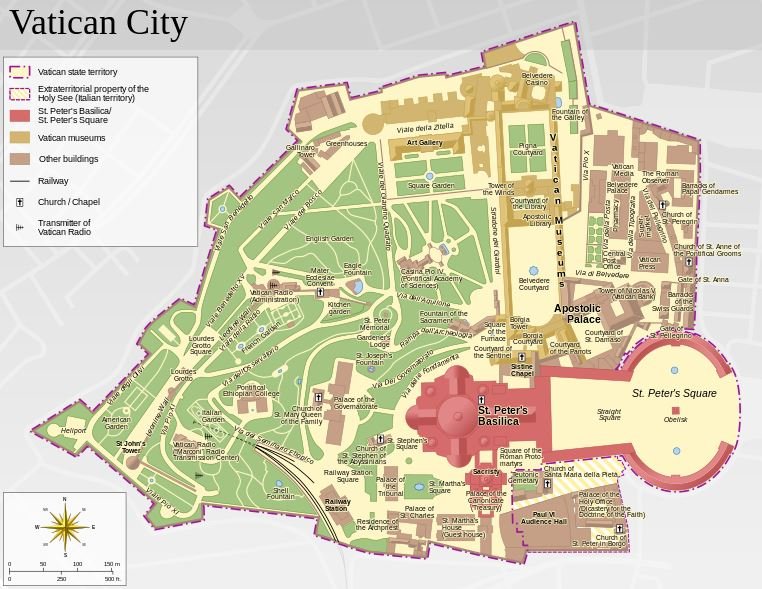
The Lateran Treaty laid the groundwork for a distinct and mutually beneficial relationship between Italy and the Vatican, balancing religious and political interests. It marked a turning point in Church-state relations, bringing stability to both entities.
Background: The Roman Question and the Loss of Papal States
In the mid-19th century, Italy underwent a series of unification efforts that resulted in the annexation of various independent states, including those governed by the papacy. Prior to unification, the Papal States had been a significant temporal power, encompassing large areas of central Italy under the control of the pope.
However, the Risorgimento—the movement for Italian unification—sought to consolidate these fragmented territories into a single nation-state.
By 1870, the Kingdom of Italy, under King Victor Emmanuel II, had captured Rome and absorbed it into the new unified Italy, effectively ending the pope’s temporal authority. This annexation included Latium and Rome, which became the nation’s capital.
In response, Pope Pius IX and his successors refused to recognize the legitimacy of the Italian state’s control over Rome, declaring themselves “prisoners in the Vatican” and withdrawing from public engagements outside the Vatican’s walls. The “Roman Question” thus referred to the conflict over the pope’s sovereignty and the status of Rome.
The Italian government, in an effort to resolve this impasse, enacted the Law of Guarantees in 1871, which offered the pope the use of certain properties and an annual income but denied him sovereign control. This compromise was rejected by the papacy, which sought clear political and spiritual independence. For nearly six decades, the issue remained unresolved, creating tension between the Holy See and Italy.
The Path to Resolution: Negotiations for the Lateran Treaty
In the 1920s, political shifts within Italy opened the door for negotiations. Benito Mussolini, who became Prime Minister of Italy in 1922 and led the Fascist regime, saw an opportunity to resolve the Roman Question in a way that would bolster his government’s legitimacy.
Then-head of the Catholic Church Pope Pius XI, seeking an end to the isolation of the papacy, was also open to dialogue. Both parties stood to benefit—the Holy See would regain a measure of political independence and recognition, while Mussolini’s government would gain the support of the Catholic Church and its significant influence.
Formal negotiations began in 1926, involving Mussolini and Cardinal Secretary of State Pietro Gasparri, representing Pope Pius XI. These discussions culminated in the signing of the Lateran Treaty on February 11, 1929, at the Lateran Palace, which symbolized the new relationship between the Church and the Italian state. The Italian parliament ratified the agreements on June 7, 1929.
Components of the Lateran Treaty
The Lateran Treaty is often considered part of the Lateran Pacts, which comprise three main components:
- The Treaty of Conciliation: This 27-article treaty formally established Vatican City as an independent sovereign state under the authority of the Holy See. It ensured that the pope would have full sovereign jurisdiction within Vatican City and pledged that the pope would remain neutral in international conflicts unless specifically requested to mediate. The treaty defined the territory of Vatican City, which included key religious and administrative buildings such as St. Peter’s Basilica and the Apostolic Palace.
- The Financial Convention: As an annex to the Treaty of Conciliation, this three-article financial agreement provided the Holy See with compensation for the loss of the Papal States. The settlement included a lump sum payment of 750 million lire and the issuance of government bonds worth 1 billion lire. While the amount was less than the original 1871 offer, it symbolized the resolution of the longstanding financial claims.
- The Concordat: The 45-article concordat defined the relationship between the Catholic Church and the Italian state. It confirmed Catholicism as the official state religion and outlined the Church’s privileges within Italy, including control over religious education in schools, recognition of church marriages, and certain exemptions for clergy. This component reinforced the Church’s significant influence on Italian society and politics.
Symbolic and Practical Outcomes
The Lateran Treaty brought symbolic closure to the Roman Question, ending the pope’s self-imposed status as a “prisoner in the Vatican.” It also represented the beginning of a new era of cooperation between the Holy See and the Italian state. To commemorate this resolution, Mussolini initiated the construction of the Via della Conciliazione (“Road of the Conciliation”), a grand avenue linking St. Peter’s Basilica to central Rome, symbolizing the newfound unity between the Vatican and Italy.

The Vatican and Italian delegations gathered shortly before signing the treaty.
Post-1946 Developments and Changes
After World War II, the Lateran Treaty’s provisions were reaffirmed in the 1948 Constitution of the Italian Republic, ensuring that the relationship between the state and the Catholic Church remained legally protected. However, societal and political shifts in the ensuing decades led to calls for revision. In 1984, significant changes were made to the concordat through negotiations between the Italian government, then led by Prime Minister Bettino Craxi, and the Holy See.
These revisions included the removal of Catholicism as the sole state religion and adjustments to public funding for the Church. The otto per mille system was introduced, allowing taxpayers to allocate a portion of their income tax to support the Catholic Church or other religious groups. This change modernized the Church’s relationship with the state and opened the door for other religious entities to receive financial support.
Challenges and Controversies
The Lateran Treaty did not come without challenges. In 1938, Italy’s racial laws, which prohibited marriages between Jews and non-Jews, conflicted with the concordat’s provision that church marriages be recognized as valid by the state. The Vatican viewed these laws as a violation of the agreements. More recently, in 2008, the Vatican announced it would no longer automatically adopt Italian laws, citing moral and ethical concerns highlighted by cases such as the Eluana Englaro right-to-life case.
Legacy and Significance
The Lateran Treaty holds a prominent place in history as a resolution to a conflict that had shaped Italian and papal relations for decades. By establishing Vatican City as an independent state, the treaty ensured that the Holy See retained spiritual and temporal authority free from external political control. The agreement laid the foundation for the Vatican’s modern role as a religious, diplomatic, and cultural entity with global influence.
In Italy, the treaty cemented the integration of Rome as the national capital and underscored the state’s acknowledgment of the Catholic Church’s role in national life. The treaty’s affirmation of Vatican sovereignty and the concordat’s provisions influenced Italian society for much of the 20th century, reflecting the intertwined nature of religion and politics.
The Lateran Treaty’s impact extended beyond Italy, serving as a model for other nations navigating Church-state relations. The 1984 revisions modernized the treaty’s framework, aligning it with contemporary values and ensuring the Vatican’s role as a sovereign state in the global arena. Today, the treaty remains a cornerstone of Vatican City’s existence and a significant chapter in the history of Church-state relations.
Frequently Asked Questions
What historical events led to the Lateran Pacts?
The unification of Italy in the mid-19th century resulted in the annexation of the Papal States, culminating in 1870 with Rome’s incorporation into the Kingdom of Italy. This left the pope without temporal power and led to strained relations between the Papacy and the Italian government.
What was the “Roman Question”?
The “Roman Question” referred to the dispute between the Italian government and the papacy over the pope’s sovereignty and the status of Rome following the annexation of the Papal States.
Who were the main figures involved in negotiating the Lateran Pacts?
Italian Prime Minister Benito Mussolini represented the Kingdom of Italy, while Cardinal Secretary of State Pietro Gasparri represented Pope Pius XI during the negotiations.

Image: Benito Mussolini
What were the main components of the Lateran Pacts?
The Lateran Pacts included:
- The Treaty of Conciliation – Established Vatican City as an independent sovereign state.
- The Financial Convention – Provided financial compensation to the Holy See for the loss of the Papal States.
- The Concordat – Regulated Church-state relations and affirmed Catholicism as the state religion of Italy.
What did the Treaty of Conciliation accomplish?
The Treaty of Conciliation created the independent state of Vatican City and granted full sovereignty to the Holy See. It also ensured the pope’s neutrality in international conflicts unless mediation was specifically requested.
What was the significance of the Financial Convention?
The Financial Convention settled financial claims from the loss of the Papal States in 1870 by providing compensation to the Holy See, although the amount was less than what had been initially offered in 1871.
What did the Concordat regulate?
The Concordat outlined Church-state relations, establishing public funding for the Catholic Church and reinforcing its role in Italian society. It also confirmed Catholicism as the sole state religion at the time.
How did Mussolini commemorate the signing of the Lateran Pacts?
Mussolini commissioned the Via della Conciliazione, a road connecting Vatican City to the center of Rome, symbolizing the restored relationship between the Church and the Italian state.
What happened to the Lateran Pacts after World War II?
The Lateran Pacts were integrated into the 1948 Italian Constitution, solidifying the legal basis for Church-state relations.
What changes were made to the Lateran Pacts in 1984?
In 1984, revisions to the concordat removed Catholicism’s status as the sole state religion and introduced the otto per mille tax, allowing multiple religious groups to receive state support.
What challenges did the Lateran Pacts face?
In 1938, Italy’s racial laws, which prohibited marriages between Jews and non-Jews, violated the concordat’s provision that Catholic Church marriages be recognized as valid. The Vatican viewed this as a breach of the agreement.
Who were the Catholic priests that were legally married before becoming pope?





