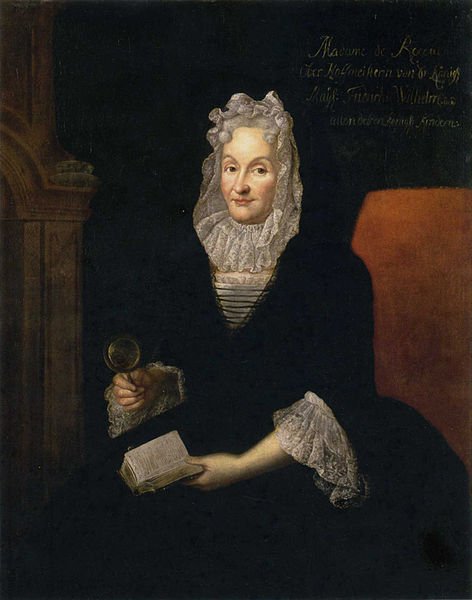
Marthe de Roucoulle
Marthe de Roucoulle (1659–1741) was an influential French Huguenot educator and social figure who played a pivotal role in shaping the early lives of two of Prussia’s most important monarchs: Frederick William I and Frederick the Great. Her journey from a refugee fleeing religious persecution to a respected figure in the Prussian court exemplifies resilience, cultural integration, and the impact of education in 18th-century Europe.
Early Life and Huguenot Refugee
Marthe de Roucoulle was born in Normandy, France, into a family described as “of gentle blood” but not wealthy. As a Protestant, she belonged to the French Huguenot community, which faced severe persecution following the 1685 revocation of the Edict of Nantes. This act by Louis XIV made Protestantism illegal in France, forcing many Huguenots to flee to more tolerant regions. Marthe, then a young widow known as Marthe de Montbail, sought refuge in Prussia alongside her mother-in-law and daughter.
Prussia, under the leadership of Frederick William, Elector of Brandenburg, had become a sanctuary for Huguenots due to the Elector’s Edict of Potsdam, which invited them to settle and contribute to the economy. Marthe’s arrival in Prussia marked the beginning of her transformation from a destitute exile to an esteemed governess. She was welcomed at the Prussian court by the future Queen Sophie Charlotte, who recognized her intelligence, polished manners, and potential as a tutor.
Governess to Frederick William I
In 1692, Marthe de Roucoulle was appointed as the governess to the young Frederick William, the future “Soldier King” of Prussia. Her role as his tutor was highly influential during his formative years. Although Marthe never mastered the German language fully, her strong French accent left an imprint on the young prince’s speech and vocabulary.
During this period, it was common for Huguenots to integrate into Prussian society by serving in influential roles. Marthe later married another French Huguenot, Roucoulle, an officer in the Prussian army. This marriage further solidified her position within the Huguenot community and the Prussian court. Her work as a governess laid the groundwork for the disciplined and reformist character that Frederick William I would later display during his reign.
Governess to Frederick the Great
In 1712, after the birth of Frederick the Great, Marthe was invited back to court by her former charge, now King Frederick William I, to serve as governess to the newborn crown prince. Although the title of “head governess” formally belonged to Frau von Kamecke, Marthe de Roucoulle undertook the primary responsibilities of raising and educating Frederick. Known as a “sous gouvernante,” she managed a team of nurses and sub-governesses, many of whom were also French Huguenots.
Frederick developed a close relationship with Marthe, affectionately calling her “Chère Maman.” Her nurturing approach and attention to his education provided him with a sense of stability during his early years. Under her guidance, Frederick was exposed to French culture and values, which would profoundly shape his worldview and intellectual pursuits later in life. In 1714, her responsibilities expanded to include the education of the royal princesses, further solidifying her role as a trusted educator in the Prussian royal family.
Role in Court Society
Beyond her duties as a governess, Marthe de Roucoulle became an integral part of the Prussian court’s social life. After retiring from her position as Frederick’s governess when he turned seven, she continued her role with the royal princesses, including Louisa Ulrika of Prussia, who would later become Queen of Sweden. Marthe’s daughter, Marthe de Montbail, was also appointed to a prominent court position as hofmeisterin in 1734, reflecting the family’s elevated status.
Marthe was known for hosting a weekly salon, known as the “Roucoulles Soirée.” These gatherings served as a meeting point for members of the Prussian nobility and the French Huguenot community. The salon provided a platform for cultural exchange, intellectual discussions, and social networking, helping to integrate Huguenot refugees into Prussian society. It also demonstrated Marthe’s influence as a salonnaire, a role traditionally associated with fostering intellectual and cultural growth.
Later Years and Relationship with Frederick the Great
Marthe maintained a warm relationship with Frederick the Great throughout her life. Even after his ascension to the throne, Frederick treated her with respect and gratitude for her role in his upbringing. He made a point of visiting her salon weekly whenever he was in Berlin, where he displayed courteous and respectful behavior.
Frederick’s appreciation for Marthe extended beyond personal interactions. He granted her daughter a pension, ensuring the family’s financial stability. These gestures reflected Frederick’s acknowledgment of her contributions to his early education and the cultural enrichment she provided to the court.
Legacy in Memoirs and Historical Accounts
Marthe de Roucoulle’s life and career were documented in the memoirs of Princess Wilhelmina, Frederick the Great’s sister. Wilhelmina’s writings describe Marthe’s dedication, her warm relationship with the young Frederick, and her role in the Prussian royal household. These accounts highlight her influence as both an educator and a cultural mediator between the French Huguenot community and the Prussian court.
Contributions to Prussian Society
Marthe’s contributions extended beyond her immediate role as a governess. As a Huguenot refugee, she embodied the values of resilience, adaptability, and cultural integration that defined the Huguenot community’s experience in Prussia. Her salons bridged the gap between the French and Prussian elites, fostering a sense of unity and mutual respect. Moreover, her influence on Frederick the Great and the royal family had lasting implications for Prussian history, particularly in the promotion of education, discipline, and cultural refinement.
Frequently Asked Questions
What was Marthe de Roucoulle’s background?
She was a French Huguenot from Normandy, of gentle but modest origins, who fled to Prussia after the revocation of the Edict of Nantes.
Why was she appointed governess to Frederick William I?
Queen Sophie Charlotte appreciated her intelligence, manners, and background, deeming her suitable to educate the young prince.
How did her French origin influence Frederick William I?
Her limited German skills led Frederick William I to adopt a style of speech influenced by French, blending the two languages.
What role did Marthe de Roucoulle play in Frederick the Great’s early life?
She served as his primary governess until age seven, earning his affection as “Chère Maman” and overseeing his care alongside other French Huguenots.
Did she have any role in educating the royal princesses?
Yes, she became governess to the royal princesses, including Louisa Ulrika, who later became Queen of Sweden.
What was her social influence in Prussia?
She hosted the “Roucoulles Soirée,” a weekly salon where Prussian nobility and the French Huguenot community mingled, enhancing cultural and social ties.
How did Frederick the Great treat her later in life?
He showed her respect and gratitude, attended her salon weekly when in Berlin, and provided financial support for her and her daughter.
How is Marthe de Roucoulle remembered?
She is noted in Princess Wilhelmina’s memoirs as a respected educator and a key figure in Frederick the Great’s early life and later social circles.





