Menes of Pella, the son of Dionysius, was a prominent Greek officer during the campaigns of Alexander the Great. His role in Alexander’s army evolved significantly over time, showcasing his strategic importance in managing territories and military operations during one of history’s most significant conquests.
Rise to Prominence: Appointment as a Somatophylax
After the Battle of Issus in 333 BC, a pivotal confrontation between Alexander and the Persian King Darius III, Menes gained recognition for his service. Following the battle, Alexander appointed him as one of his somatophylakes (royal bodyguards), replacing Balacrus, who was promoted to satrap (governor) of Cilicia. This role as a somatophylax placed Menes among the king’s inner circle of trusted companions, highlighting his loyalty and capability. The somatophylakes were not merely bodyguards; they were close advisors and leaders who played crucial roles in both administrative and military affairs.
Governance of Syria, Phoenicia, and Cilicia
In 331 BC, after Alexander’s capture of Susa, an important Persian city, Menes was entrusted with a critical administrative role. Alexander appointed him as governor of Syria, Phoenicia, and Cilicia, regions along the eastern Mediterranean coast that were vital for maintaining control over newly conquered territories. Menes’s responsibilities extended beyond governance; he was tasked with overseeing the regions’ existing administration, ensuring stability, and integrating them into Alexander’s growing empire.
Alexander also gave Menes control of 3,000 talents, a massive sum of money. Part of this fund was designated to support Antipater, the regent of Macedonia, in his conflict with the Lacedaemonians (Spartans). This demonstrates how Alexander strategically utilized his trusted officers to manage both the empire’s vast resources and military campaigns occurring in different parts of his realm.
Collaboration with Apollodorus of Amphipolis
Menes’s appointment as governor was not a solitary role. Alexander paired him with Apollodorus of Amphipolis, who shared administrative duties. This collaboration suggests that Alexander preferred a system of checks and balances, ensuring that no single individual held excessive power over critical regions. Apollodorus’s involvement likely complemented Menes’s governance, enabling efficient management of the territories and coordination of resources.
Issuance of Coinage
During his tenure, Menes issued coinage, a critical aspect of consolidating authority in newly conquered territories. Coins bearing the initial “M” are attributed to his administration. This act not only reinforced Alexander’s control but also served as a symbol of economic and political stability in the regions under Menes’s governance. Coinage played a significant role in ancient administrations, as it facilitated trade and helped integrate local economies into the broader empire.
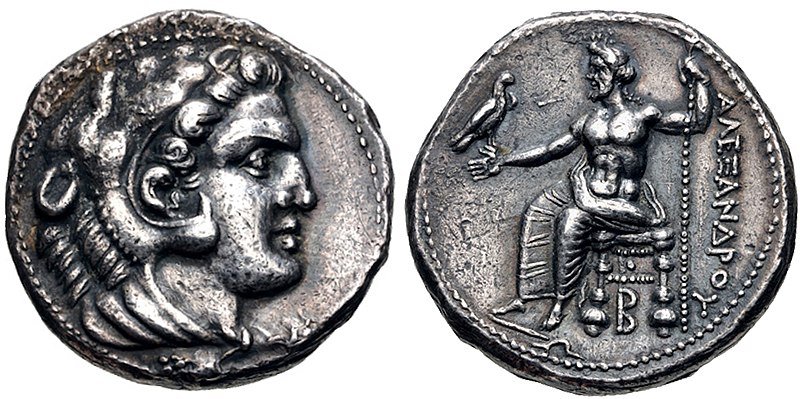
Alexander the Great’s coinage issued during Balakros or Menes’ governance, around 333–327 BCE.
A Temporary Role in a Fluid Empire
While Menes’s exact tenure as governor is unclear, his position appears to have been temporary. His primary responsibility was likely to stabilize and manage the western territories while Alexander continued his campaigns deeper into the Persian Empire. The lack of records about his successor suggests that Menes’s governance might have been a short-term solution, addressing immediate administrative and logistical needs in these regions. His departure or the circumstances surrounding the end of his governorship remain undocumented.
READ MORE: Why did Alexander the Great’s successors fight over his body?
Frequently Asked Questions
When did Menes become a somatophylax?
He was appointed after the Battle of Issus (333 BC), replacing Balacrus, who was promoted to satrap of Cilicia.
What was Menes’ role after the occupation of Susa?
In 331 BC, Alexander appointed him to govern Syria, Phoenicia, and Cilicia. He was also tasked with managing 3000 talents, part of which was sent to Antipater for his war against the Lacedaemonians.
Who assisted Menes in his command?
Apollodorus of Amphipolis was assigned to share his responsibilities.
What was Menes’ role in administration and coinage?
As a hyparch, he oversaw the administration in his regions and issued coinage, often marked with the initial “M.”
Was Menes’ position permanent?
His role may have been temporary, managing territories in the west while Alexander campaigned further east. His successor is not documented.





