10 Most Trusted Generals of Alexander the Great
Alexander the Great, one of history’s most renowned military leaders, forged an empire that stretched from Greece to Egypt and into northwest India. Central to his unprecedented success were his trusted generals, often referred to as the Diadochi (successors). These men not only commanded his vast armies with skill and loyalty but also played pivotal roles in maintaining and expanding his empire during and after his conquests.
In the article below, World History Edu delves into the lives, contributions, and legacies of Alexander’s most trusted generals, highlighting their indispensable roles in shaping one of the ancient world’s greatest empires.
READ MORE: Most Famous Rulers of Macedon and their Accomplishments

Alexander III of Macedon, commonly known as Alexander the Great, ascended to the Macedonian throne in 336 BC after the assassination of his father, King Philip II. Image: Alexander the Great
Ptolemy I Soter
Ptolemy I Soter, born around 367 BC in Macedonia, was one of Alexander’s most trusted generals and close confidants. A childhood friend of Alexander, Ptolemy served as his cavalry commander and was present during many of Alexander’s key battles, including the Battle of Issus and the Siege of Tyre. His loyalty and competence earned him Alexander’s unwavering trust.
Ptolemy played a crucial role in Alexander’s campaigns across Asia. Notably, he was entrusted with the crucial task of securing Egypt early in the campaign, ensuring a stable and resource-rich base for Alexander’s operations. Ptolemy also participated in the planning and execution of naval operations, showcasing his versatility and strategic insight.
Following Alexander’s death in 323 BC, his empire was left without a clear successor, leading to the Wars of the Diadochi. Ptolemy I proved adept at navigating the ensuing power struggles. He secured Egypt by eliminating rivals and consolidating his power, founding the Ptolemaic Dynasty, which would rule Egypt for nearly three centuries until the death of Cleopatra VII in 30 BC. Under his leadership, Alexandria flourished as a center of Greek culture, learning, and trade, and the Ptolemaic Kingdom became one of the most enduring Hellenistic states.

Many of Alexander the Great’s generals were former companions of his father, Philip II. The generals (i.e. the Diadochi) were instrumental in executing his military strategies and maintaining the cohesion of his diverse and expansive army. Image: Ptolemy I Soter
Seleucus I Nicator
Seleucus I Nicator, born around 358 BC in Macedonia, was another of Alexander’s esteemed generals. A talented cavalry commander, Seleucus distinguished himself in numerous battles, earning Alexander’s respect and trust. His close association with Alexander included sharing in the governance of newly conquered territories, particularly in the eastern regions.
Seleucus played a vital role in the eastern campaigns, contributing significantly to Alexander’s conquests in Persia and beyond. His administrative skills were instrumental in managing the vast and culturally diverse territories Alexander conquered. Seleucus’s ability to govern effectively helped maintain stability in these regions, showcasing his dual prowess as both a military leader and an administrator.
After Alexander’s demise, Seleucus initially served as the regent for Alexander’s half-brother, Philip Arrhidaeus, and later for Alexander’s son, Alexander IV. However, conflicts with other Diadochi ensued.
In 312 BC, Seleucus was appointed satrap of Babylon, a position that positioned him to assert control over a significant portion of Alexander’s empire. Through strategic marriages, alliances, and military campaigns, Seleucus expanded his territory, eventually founding the Seleucid Empire. This empire became one of the major Hellenistic states, enduring until the rise of the Roman Empire.

Image: Statue of Seleucus.
Antipater
Antipater, born around 397 BC in Macedonia, was a seasoned military commander and a key figure in Macedonian politics. A loyal supporter of Philip II, he continued to serve Philip’s son, Alexander, after Philip’s assassination. Antipater was appointed as regent of Macedonia and Greece during Alexander’s prolonged campaigns in Asia, demonstrating his trustworthiness and administrative capabilities.
While Antipater remained in Macedonia to oversee the homeland, he played a supportive role in ensuring the stability and security of Greece and the Macedonian heartland. His governance allowed Alexander to focus on his eastern campaigns without worrying about rebellions or external threats from Greece. Antipater’s strategic management of Macedonia’s resources and military contingents was crucial in sustaining Alexander’s army.
Following Alexander’s death, Antipater assumed a leading role in the Wars of the Diadochi, aiming to preserve the unity of the empire under the Argead dynasty. As regent, he sought to maintain stability and prevent fragmentation. However, his policies often clashed with those of other powerful generals like Perdiccas and Ptolemy. Antipater’s refusal to recognize Perdiccas as the sole regent led to further conflicts. Ultimately, Antipater secured his position through diplomatic and military means, maintaining control over Macedonia and parts of Greece until his death in 319 BC. His legacy was continued by his son, Cassander, who played a significant role in the subsequent power struggles.
Lysimachus
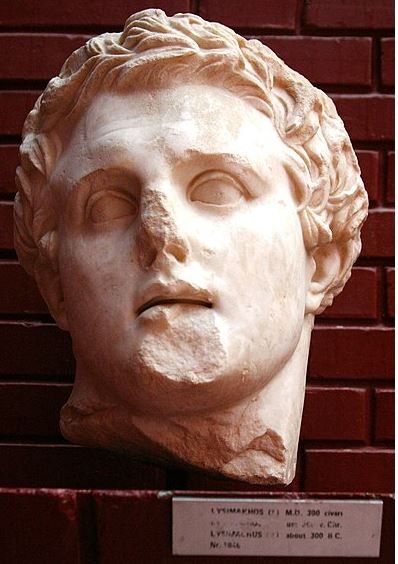
Image: bust of Lysimachus, located at the Ephesus Archaeological Museum in Turkey.
Lysimachus, born around 360 BC in Thrace, was one of Alexander’s capable generals. A former satrap of Thrace, Lysimachus demonstrated military prowess and loyalty to Alexander during the eastern campaigns. His effective leadership in various battles, including the Battle of Gaugamela, established him as a trusted commander.
Lysimachus contributed significantly to Alexander’s conquests in Persia and India. As a commander, he managed cavalry units and participated in key strategic operations that were essential to Alexander’s victories. Lysimachus’s ability to adapt to different combat scenarios and his understanding of both Macedonian and local tactics made him an invaluable asset to Alexander’s army.
Following Alexander’s death, Lysimachus initially served as a satrap under the regency of Perdiccas. However, power struggles soon ensued among the Diadochi. Lysimachus allied with Antigonus Monophthalmus and Ptolemy against Perdiccas but eventually broke away to assert his independence. By 306 BC, he controlled Thrace and much of Asia Minor after defeating his rivals. Lysimachus expanded his territories through military campaigns and diplomatic maneuvers, maintaining his power until his death in 281 BC. His reign in Thrace and Asia Minor was marked by efforts to stabilize and develop these regions, although his empire was eventually absorbed by other Hellenistic states.
Perdiccas
Perdiccas, born around 375 BC in Macedonia, was a prominent general and a close companion of Alexander the Great. Serving as a high-ranking officer in Alexander’s army, Perdiccas played key roles in various military campaigns, including the conquest of Persia and the siege of Tyre. His close proximity to Alexander and his involvement in strategic planning made him one of the most trusted members of Alexander’s inner circle.
As one of Alexander’s top commanders, Perdiccas was instrumental in organizing and leading troops during critical battles. His administrative skills were also vital in managing the newly conquered territories, ensuring the smooth functioning of the empire’s governance structures. Perdiccas’s ability to balance military and administrative responsibilities earned him Alexander’s trust and reliance.
Upon Alexander’s death in 323 BC, Perdiccas was appointed as the regent for the empire’s youngest and most vulnerable heirs, Philip Arrhidaeus and Alexander IV. This position placed him at the center of power struggles among the Diadochi. Perdiccas sought to maintain the unity of the empire and prevent its fragmentation. However, his policies and centralization efforts faced opposition from other generals who sought greater autonomy.
The conflict culminated in the assassination of Perdiccas in 321 BC, orchestrated by Antipater and other discontented generals. His death marked a significant turning point in the Wars of the Diadochi, leading to further fragmentation and the eventual establishment of separate Hellenistic kingdoms.
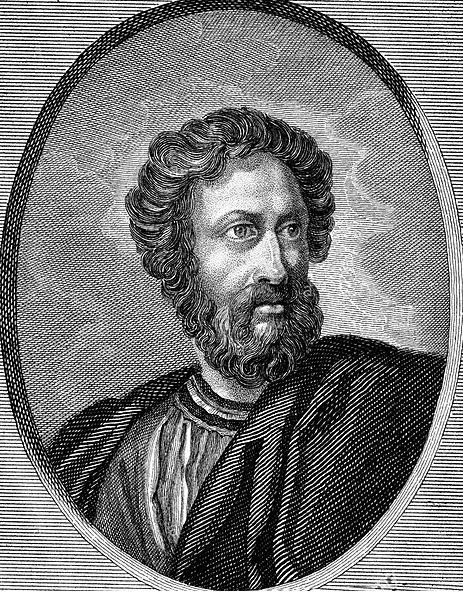
Image: An engraving of Perdiccas.
Craterus
Craterus, born around 370 BC in Macedonia, was one of Alexander’s most esteemed and capable generals. Renowned for his bravery, strategic mind, and leadership qualities, Craterus was a key figure in Alexander’s army. He commanded significant military units and was entrusted with important tasks during Alexander’s campaigns.

Craterus played a crucial role in several of Alexander’s key battles, including the Battle of Issus and the Battle of Gaugamela. His leadership and tactical expertise were instrumental in securing victories and maintaining the cohesion of the Macedonian army. Craterus was also involved in the administration of newly conquered territories, contributing to the stability and governance of the empire.
Craterus’ ability to lead large contingents of troops and maintain discipline was crucial in the success of Alexander’s campaigns.
Following Alexander’s death, Craterus emerged as a potential unifier among the Diadochi. Recognizing the threat posed by other ambitious generals, Craterus sought to consolidate power and prevent the empire’s fragmentation. He formed alliances with other influential generals and advocated for a unified Macedonian state. However, his efforts were
undermined by the competing ambitions of figures like Antipater and Ptolemy. Craterus’s growing influence alarmed Antipater, leading to his assassination in 322 BC. His death removed a key figure who might have otherwise played a significant role in maintaining the cohesion of Alexander’s empire, accelerating the fragmentation into separate Hellenistic states.

Leonnatus
Leonnatus, born around 375 BC in Macedonia, was another of Alexander the Great’s trusted generals. Known for his valor and loyalty, Leonnatus served as one of Alexander’s cavalry commanders. His dedication and effectiveness in battle earned him a place among Alexander’s inner circle of generals.
Leonnatus participated in numerous key battles, including the Battle of Issus and the Siege of Tyre. His leadership in cavalry units was vital in executing flanking maneuvers and delivering decisive charges that often turned the tide of battles in Alexander’s favor. Leonnatus was also involved in the administration and governance of conquered territories, contributing to the overall stability of the empire.
Following Alexander’s death, Leonnatus became a prominent player in the Wars of the Diadochi. He supported Perdiccas’s regency but later allied himself with Antigonus Monophthalmus and Demetrius, seeking to expand his own power base. Leonnatus’s ambitions led him to seize control of regions in Asia Minor and Thrace. His military prowess and strategic alliances allowed him to establish significant territories under his control.
However, Leonnatus’s rise was cut short when he was killed in 322 BC during the early conflicts of the Wars of the Diadochi. His death removed a capable and ambitious general from the power struggle, further contributing to the eventual division of Alexander’s empire among his successors.
Peithon
Peithon, born around 367 BC in Macedonia, was one of Alexander the Great’s loyal generals and a prominent military commander. Serving as a satrap in various regions, including Media and Parthia, Peithon played a significant role in managing and expanding the empire’s eastern territories. His administrative capabilities and military leadership earned him Alexander’s trust and reliance.
Peithon participated in Alexander’s eastern campaigns, overseeing the administration of conquered lands and ensuring the loyalty of local populations. His role as a satrap involved both military and administrative duties, allowing him to maintain stability in the regions under his control. Peithon’s effective governance helped secure the eastern frontiers of Alexander’s empire, contributing to its overall stability and expansion.
After Alexander’s death, Peithon became a significant figure in the power struggles that ensued. As regent in Media, he initially supported Perdiccas’s regency for Alexander’s heirs. However, his ambitions and desire for greater power led him to challenge the authority of Perdiccas. Peithon’s conflicts with other Diadochi, including Ptolemy and Antipater, resulted in his participation in various military campaigns aimed at expanding his influence.
Peithon ultimately aligned himself with the forces opposing Perdiccas, contributing to the fracturing of Alexander’s empire. However, his ambitions were curtailed by the rise of other powerful generals, leading to his eventual downfall. Peithon’s attempts to assert control over Media and other regions were thwarted by his rivals, leading to his diminished influence in the later stages of the Wars of the Diadochi.
Philotas
Philotas, born around 375 BC in Macedonia, was the son of Parmenion, one of Alexander the Great’s most trusted and senior generals. Growing up in a military environment, Philotas was groomed for leadership and quickly rose through the ranks due to his competence and potential. As a member of Parmenion’s family, Philotas enjoyed a close and influential relationship with Alexander.
Philotas served as one of Alexander’s key commanders, leading elite cavalry units in numerous battles. His leadership and tactical acumen were evident in his performance during significant engagements, where his cavalry played crucial roles in executing flanking maneuvers and rapid assaults that often secured victory. Philotas’s military prowess made him a respected and trusted general within Alexander’s army.
Despite his competence and loyalty, Philotas’s career was abruptly derailed due to a conspiracy led by his father, Parmenion. In 330 BC, during the preparations for the Siege of the Sogdian Rock, Philotas was accused of conspiring against Alexander. The allegations suggested that Philotas had been involved in a plot to assassinate Alexander and replace him with Parmenion. Whether these accusations were true or politically motivated remains a subject of historical debate.
Alexander chose to act decisively against the perceived threat, ordering the execution of Philotas and subsequently Parmenion. This purge underscored the fragility of trust within Alexander’s inner circle and highlighted the intense pressures and dangers of maintaining loyalty in a rapidly expanding empire. Philotas’s fall from grace serves as a cautionary tale about the complexities of power dynamics and loyalty in ancient military hierarchies.
Hephaestion
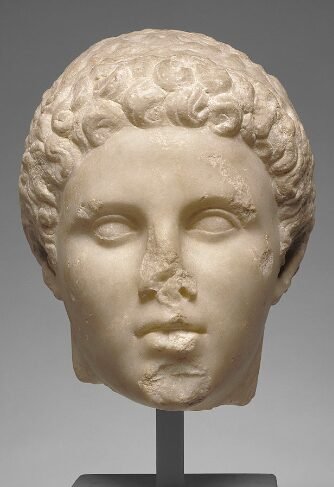
Image: Head of Hephaestion
Hephaestion, born around 356 BC in Macedonia, was not only one of Alexander the Great’s most trusted generals but also his closest personal friend and confidant. Their bond was profound, often likened to that of divine pairs in ancient Greek culture. Hephaestion’s influence on Alexander extended beyond military matters, encompassing personal and diplomatic spheres.
Hephaestion served as one of Alexander’s chief commanders, playing pivotal roles in key battles such as the Battle of Issus and the Battle of Gaugamela. His leadership in the Companion Cavalry and his ability to inspire troops contributed significantly to the success of Alexander’s military endeavors. Hephaestion was also entrusted with important diplomatic missions, negotiating alliances and managing relations with conquered territories, further demonstrating his multifaceted capabilities.
Hephaestion’s untimely death in 324 BC had a profound impact on Alexander. Grieving deeply, Alexander honored Hephaestion by founding a city in his memory and ensuring his deification, a rare honor that underscored their close relationship. Hephaestion’s legacy endured through the loyalty and dedication of those who knew him, influencing the post-Alexander power struggles and serving as a symbol of personal loyalty and friendship in ancient Macedonian culture.
Conclusion
Alexander the Great’s empire was not merely a testament to his individual brilliance but also to the collective efforts and loyalty of his most trusted generals. Figures like Ptolemy I Soter, Seleucus I Nicator, Antipater, Lysimachus, Perdiccas, Craterus, Leonnatus, Peithon, Philotas, and Hephaestion were instrumental in executing Alexander’s military strategies, managing the empire’s vast and diverse territories, and maintaining the cohesion of the Macedonian army. Their contributions were pivotal in both the expansion of the empire during Alexander’s lifetime and the subsequent establishment of the Hellenistic states that shaped the ancient world for centuries to come.
These generals, each with their unique strengths and ambitions, navigated the complex and often perilous landscape of power dynamics in the aftermath of Alexander’s death. Their legacies, whether through the establishment of enduring dynasties like the Ptolemies and Seleucids or through their individual achievements in military and administrative domains, underscore their significance in the annals of history. Alexander’s trusted generals were not only his military backbone but also the architects of the enduring Hellenistic civilization that influenced subsequent generations and cultures across the Mediterranean and Near East.
Did you know…?
By the age of 30, Alexander the Great had created one of the largest empires in history through a series of military campaigns that demonstrated unparalleled strategic genius and relentless ambition.
READ MORE: Life, Reign and Accomplishments of Philip II of Macedon





