Most Famous Ancient Egyptian Cosmetic Palettes
Ancient Egypt, with its illustrious history and profound cultural achievements, has left behind a treasure trove of artifacts that continue to captivate historians, archaeologists, and enthusiasts alike. Among these artifacts, predynastic cosmetic palettes hold a unique place, offering invaluable insights into the early artistic expressions, societal structures, and religious beliefs of one of the world’s most enduring civilizations.
These palettes, initially functional tools for personal adornment, evolved into elaborate works of art that reflect the complexity and sophistication of predynastic Egyptian society.
Below, World History Edu delves into the most famous ancient Egyptian predynastic cosmetic palettes, examining their origins, artistic features, cultural significance, and enduring legacy.
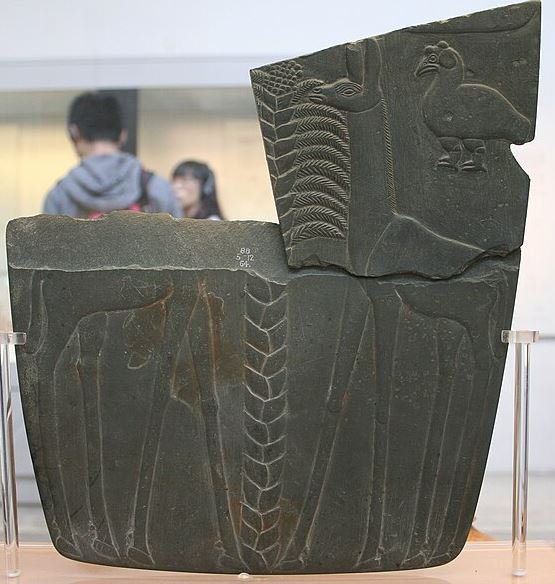
Cosmetic palettes in predynastic Egypt were primarily utilitarian objects used for grinding and applying cosmetics, particularly malachite and galena, which were essential for eye makeup and other forms of personal adornment. Image: The reverse of the Battlefield Palette.
The Narmer Palette

Image: A view of the front (left) and back of the Narmer Palette.
The Narmer Palette is arguably the most iconic and significant of all predynastic Egyptian cosmetic palettes. Discovered in Hierakonpolis, a major political and religious center of Upper Egypt, the palette dates back to approximately 3100 BCE. It is housed in the Egyptian Museum in Cairo and is often considered a key artifact in understanding the unification of Egypt.
The Narmer Palette is a large, intricately carved slab of siltstone, measuring approximately 63 cm (25 inches) in length and 42 cm (16.5 inches) in width. The palette features a series of elaborate reliefs on both its obverse and reverse sides. The obverse depicts King Narmer, likely the ruler who unified Upper and Lower Egypt, wearing the White Crown of Upper Egypt on one side of his head and the Red Crown of Lower Egypt on the other. This dual headdress symbolizes the unification of the two regions.
The palette is adorned with a variety of symbolic motifs. On the obverse, Narmer is shown in a triumphant posture, holding a mace in his right hand and a folded cloth in his left, possibly signifying authority and control. Surrounding him are depictions of defeated enemies, emphasizing his power and the consolidation of his rule. The reverse side features a serekh (a royal crest) containing the name of Narmer, flanked by two serpopards—mythical creatures that intertwine their necks, symbolizing the harmonious unification of Egypt.
The Narmer Palette is not merely an artistic masterpiece but also a political statement. It is considered one of the earliest historical records, providing evidence of the centralization of power and the establishment of the pharaonic state. The iconography on the palette conveys themes of divine kingship, military prowess, and the legitimization of Narmer’s rule. Additionally, the palette’s elaborate design marks a transition from purely functional objects to ceremonial and commemorative artifacts.

The Four Dogs Palette
The Four Dogs Palette is another prominent example of predynastic Egyptian cosmetic palettes, renowned for its detailed depiction of wildlife. Currently housed in the Louvre Museum in Paris, this palette dates back to the late predynastic period, around 3200 BCE.
Crafted from siltstone, the Four Dogs Palette features four intricately carved African wild dogs positioned on either side of a central figure. These animals are depicted in a naturalistic manner, showcasing the artist’s keen observation and appreciation of the region’s biodiversity. The central area of the palette is relatively flat, likely used for grinding cosmetics, while the surrounding imagery serves decorative and symbolic purposes.
The craftsmanship of the Four Dogs Palette is notable for its attention to anatomical detail and dynamic posture of the animals. Each dog is carved with distinct features, including elongated limbs and expressive faces, capturing their agility and social nature. The palette’s design incorporates elements of symmetry and balance, with the dogs mirroring each other across the central axis.
The presence of wild animals on the palette indicates the importance of nature in ancient Egyptian society. Animals were often associated with deities, representing various aspects of life and the natural world. The depiction of dogs, which were valued for their companionship and hunting abilities, may symbolize loyalty, protection, and the domestication of animals. Additionally, the artistic representation reflects the Egyptians’ deep connection with their environment and their ability to incorporate natural motifs into their daily artifacts.

The Bull Palette

Image: Bull Palette
The Bull Palette, currently housed at the Musée du Louvre in Paris, is distinguished by its powerful imagery depicting a bull in a dominant stance. Originating from the late predynastic period, around 3200 BCE, this palette is a testament to the symbolic use of animal imagery in ancient Egyptian art.
This siltstone palette features a large bull positioned at the top of the slab, with both its obverse and reverse sides showing the bull trampling a man. The bull is rendered with muscular detail, emphasizing its strength and authority. Below the bull, abstract lines and shapes suggest the continuation of the central grinding surface, while the lower part of the palette may have been used for cosmetic preparation.
The Bull Palette is characterized by its robust and dynamic depiction of the animal. The bull’s imposing presence and the repetitive imagery of trampling signify its role as a symbol of power and dominance. The detailed carving captures the texture of the bull’s hide and the tension in its muscles, showcasing the artist’s skill in rendering lifelike forms. The overall composition is both dramatic and symbolic, serving as a visual assertion of authority.
In ancient Egyptian symbolism, the bull often represented fertility, strength, and virility. The act of trampling a man may signify the subjugation of enemies or the assertion of the ruler’s dominance over chaos and disorder. This palette likely served as a political statement, reinforcing the pharaoh’s divine right to rule and his ability to maintain order in society. The imagery aligns with broader themes of kingship and the embodiment of divine power in the ruling class.

The Hunters Palette
The Hunters Palette is another significant cosmetic palette, notable for its depiction of hunting scenes. This palette is divided between the British Museum in London and the Louvre Museum, reflecting its widespread recognition and importance.
The Hunters Palette typically features multiple figures engaged in hunting activities, such as chasing or capturing prey. These scenes are meticulously carved into the siltstone, with figures often shown in dynamic poses that convey movement and action. The central area remains functional for grinding cosmetics, while the surrounding imagery serves to enhance the palette’s decorative appeal.
The palette’s hunting scenes are rendered with attention to detail, capturing the intensity and coordination required in hunting. Figures are depicted with elongated limbs and expressive gestures, suggesting a narrative of pursuit and capture. The composition often incorporates elements of landscape, including stylized vegetation and terrain, providing context for the hunting activities. The use of repetitive motifs and patterns adds rhythm and harmony to the overall design.
Hunting was a vital activity in ancient Egyptian society, both as a means of sustenance and as a demonstration of skill and bravery. The depiction of hunting scenes on cosmetic palettes reflects the societal importance placed on these activities. Additionally, hunting imagery may symbolize the pharaoh’s role as a provider and protector, capable of ensuring the community’s well-being through successful hunts. The palette thus serves as a microcosm of societal values, emphasizing the virtues of strength, coordination, and resourcefulness.
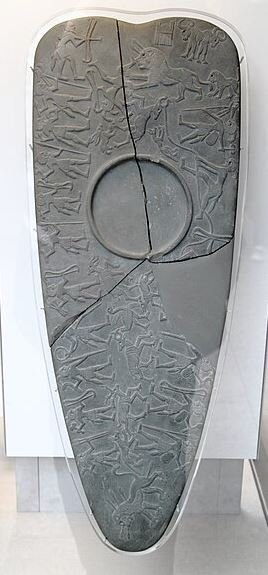
Image: The Hunters Palette, located at the British Museum in London.
The Battlefield Palette
The Battlefield Palette is a striking example of the martial themes prevalent in some ancient Egyptian cosmetic palettes. With representations of conflict and warfare, this palette is housed in both the British Museum and the Ashmolean Museum, highlighting its significance in the study of ancient Egyptian military culture.
This siltstone palette features scenes of battle, with figures engaged in combat, depicted with weapons such as spears, shields, and bows. The chaotic nature of battle is captured through dynamic poses and the overlapping of figures, creating a sense of movement and tension. The central grinding area remains functional, while the surrounding imagery serves to narrate the story of conflict.
The Battlefield Palette employs a combination of detailed carving and symbolic representation to convey the intensity of combat. Figures are portrayed with exaggerated gestures and expressions, emphasizing the drama and chaos of battle. The use of perspective and scale varies, with some figures larger than others, possibly indicating status or role within the conflict. The overall composition is both vivid and chaotic, reflecting the tumultuous nature of warfare.
The depiction of battle scenes on cosmetic palettes suggests that warfare was a significant aspect of predynastic Egyptian society. These palettes may have served as commemorative objects, celebrating military victories or honoring fallen warriors. The imagery reinforces the idea of the pharaoh or ruling elite as formidable leaders capable of defending and expanding their territory. Additionally, the Battlefield Palette may have had ceremonial purposes, possibly used in rituals related to warfare or victory.

Image: Front side of the Battlefield Palette.
The Libyan Palette
The Libyan Palette is distinguished by its unique artistic style and regional influences, reflecting the diversity of cultural interactions in ancient Egypt. It is currently housed in the Egyptian Museum in Cairo and represents the blending of indigenous and foreign elements in predynastic art.
This palette features a distinctive design that sets it apart from other Egyptian palettes. The carving incorporates motifs and styles that suggest influence from neighboring regions, possibly indicating interactions with Libyan tribes or other foreign entities. The central grinding area is adorned with intricate patterns and symbolic imagery, while the edges may display decorative elements inspired by regional artistic traditions.
The Libyan Palette showcases a fusion of artistic styles, blending traditional Egyptian motifs with elements characteristic of Libyan or other non-Egyptian art forms. This may include the use of different animal representations, geometric patterns, or stylistic variations in human figures. The craftsmanship reflects a high level of skill, with attention to detail and a harmonious integration of diverse artistic influences.
The Libyan Palette embodies the cultural exchanges that occurred between ancient Egypt and its neighboring regions. Its hybrid artistic style suggests periods of trade, migration, or diplomatic relations that facilitated the sharing of artistic techniques and symbolic motifs. This palette serves as evidence of the interconnectedness of ancient civilizations and the permeability of cultural boundaries in predynastic Egypt.
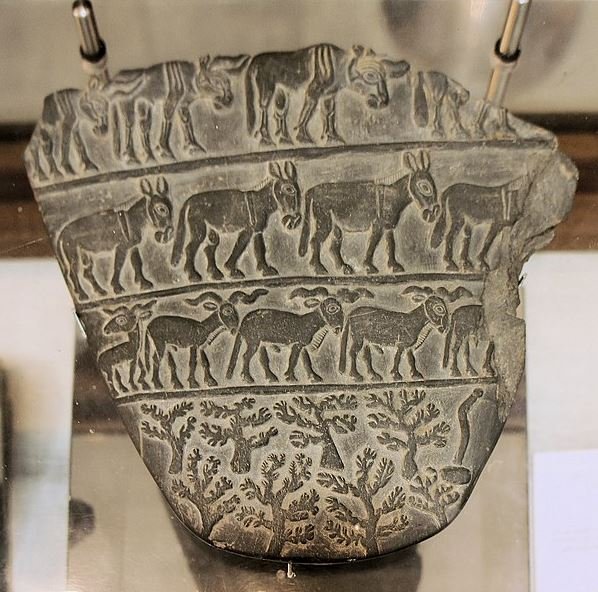
Image: Front view of the Libyan Palette.
The Nile Tortoise Palette
The Nile Tortoise Palette is celebrated for its zoomorphic design, representing a Nile tortoise—a creature significant in ancient Egyptian symbolism. This palette is another testament to the Egyptians’ ability to incorporate natural motifs into their artistic creations.
Carved from siltstone, the Nile Tortoise Palette features the likeness of a tortoise, meticulously depicted in profile or three-quarter view. The tortoise’s shell and limbs are rendered with detailed patterns, capturing the texture and form of the animal. The central grinding area is often situated beneath the tortoise, integrating functionality with artistic expression.
The zoomorphic design of the Nile Tortoise Palette exemplifies the Egyptians’ skill in animal representation. The tortoise is portrayed with anatomical accuracy, including the intricate shell patterns and the sturdy limbs necessary for its habitat. The composition may include additional decorative elements, such as hieroglyphic symbols or abstract motifs, enhancing the palette’s visual appeal.
In ancient Egyptian symbolism, the tortoise was associated with creation and rebirth. The creature’s ability to withdraw into its shell may have been seen as a metaphor for protection and regeneration. By featuring the tortoise on cosmetic palettes, the Egyptians may have imbued these objects with symbolic meanings related to fertility, longevity, and the cyclical nature of life.

Frequently Asked Questions

The majority of predynastic palettes from ancient Egypt were crafted from siltstone, a durable and workable material sourced predominantly from the Wadi Hammamat quarries. Image: A view of the back of the Libyan Palette.
What were the original purposes of cosmetic palettes in predynastic Egypt?
Originally, cosmetic palettes in predynastic Egypt served practical purposes related to personal adornment. They were primarily used for grinding and applying various ingredients used in facial and body cosmetics.
How did the function of cosmetic palettes evolve over time in ancient Egypt?
Over time, cosmetic palettes transitioned from utilitarian tools to objects of commemoration, decoration, and possibly ceremonial use. This evolution indicates a shift in their societal significance from everyday use to more symbolic and ornamental roles.
What material were most cosmetic palettes made from, and where was this material sourced?
Most cosmetic palettes were crafted from siltstone, a material sourced almost exclusively from the quarries in the Wadi Hammamat region. This choice of material reflects both resource availability and a standardized production approach.
Why is the prominence of siltstone significant in the creation of cosmetic palettes?
The prominence of siltstone underscores the importance of durability and workability in the creation of these artifacts. Siltstone’s properties made it an ideal material for crafting both functional and decorative palettes.
Which archaeological site is renowned for yielding a substantial number of cosmetic palettes, and why is this site significant?
A substantial number of cosmetic palettes have been unearthed in Hierakonpolis, a key center of power in pre-dynastic Upper Egypt. Hierakonpolis was significant due to its political and cultural prominence, serving as a hub where these artifacts were frequently deposited.
What change occurred regarding cosmetic palettes after the unification of Egypt?
After the unification of Egypt, the inclusion of cosmetic palettes in tomb assemblages declined. This indicates a change in burial practices and possibly a shift in the symbolic meanings attached to these objects.
What are the three notable decorative cosmetic palettes?
Three notable decorative cosmetic palettes are:
- The Nile Tortoise Palette
- The Narmer Palette
- The Four Dogs Palette

What common features do zoomorphic cosmetic palettes possess, and what was their likely purpose?
Zoomorphic cosmetic palettes often feature shapes resembling animals such as turtles and fish. The fish-shaped palettes typically have a central hole, likely intended for suspension, indicating their use as display items rather than merely functional tools.
Besides Egypt, in which other regions have similar stone palettes been discovered, and what does this suggest?
Similar stone palettes have been discovered in regions like Canaan, Bactria, and Gandhara. This suggests cultural exchanges or parallel developments in cosmetic practices across the Near East.
How did the design of cosmetic palettes change from the Badarian Period through the Naqada periods?
During the Badarian Period and Naqada I, palettes were typically plain with simple rhomboidal or rectangular shapes and minimal decoration. In the Naqada II period, there was a shift towards zoomorphic designs, emphasizing symbolism and visual appeal over functionality. By the Naqada III period, elite palettes showcased elaborate artistic features, while non-elite individuals often reverted to more straightforward, undecorated forms.
What does the evolution of cosmetic palettes from functional to symbolic objects indicate about ancient Egyptian society?
The evolution of cosmetic palettes from functional tools to symbolic and ceremonial objects reflects broader cultural and social transformations in predynastic and early dynastic Egypt. It highlights the increasing complexity of artistic expression and the growing importance of symbolism and status in society.
What is the significance of the Four Dogs Palette?
The Four Dogs Palette, exhibited in the Louvre, illustrates African wild dogs, giraffes, and other quadrupeds. It highlights the biodiversity of the region and the artistic representation of animals in ancient Egypt, providing insights into the society’s appreciation of nature and wildlife.
What is depicted on the Bull Palette, and what might this symbolize?
The Bull Palette, displayed at the Musée du Louvre, depicts a bull trampling a man on both the obverse and reverse sides. This imagery likely symbolizes power and dominance, reflecting the societal values and possibly the authority of the ruling class.
Why might decorated cosmetic palettes have been included in tomb assemblages during the predynastic period?
Decorated cosmetic palettes may have been included in tomb assemblages as symbols of status, personal adornment, or as offerings for the afterlife. Their intricate designs and symbolic motifs suggest they held significant cultural and possibly religious importance.





