Buddhist grottoes are some of the most significant cultural and religious treasures in China, reflecting the evolution of Buddhist art, architecture, and religious practices over centuries. These grottoes, also known as cave temples, were initially influenced by Indian rock-cut architecture and later developed unique Chinese characteristics. They serve as repositories of Buddhist scriptures, murals, statues, and carvings that depict the spiritual and artistic exchanges between India, Central Asia, and China.
Below, World History Edu explores the most famous Buddhist grottoes and caves in China, their historical significance, and their unique artistic contributions.
Mogao Caves (Dunhuang, Gansu Province)
The Mogao Caves, also called the Thousand Buddha Grottoes, are located near Dunhuang in Gansu Province and are considered the most extensive and significant Buddhist cave complex in China. The caves were first constructed in 366 AD during the Sixteen Kingdoms period and continued to be expanded until the Yuan Dynasty (1271–1368). Their location on the Silk Road made them a melting pot of Buddhist, Persian, Indian, and Chinese artistic influences.
The Mogao Caves house 492 well-preserved caves, with over 45,000 square meters of murals and more than 2,100 painted sculptures. Some of the most remarkable artworks include Cave 130, which contains a 26-meter-high seated Maitreya Buddha, and Cave 148, home to a 14.4-meter-long reclining Buddha. The caves also feature calligraphy, textiles, and manuscripts, the most famous being the Dunhuang Manuscripts, discovered in Cave 17, also known as the “Library Cave.”
In 1987, Mogao Caves were inscribed as a UNESCO World Heritage Site. Today, visitors can explore both the physical site and its digital museum, which provides a virtual experience of the caves’ intricate murals and sculptures.
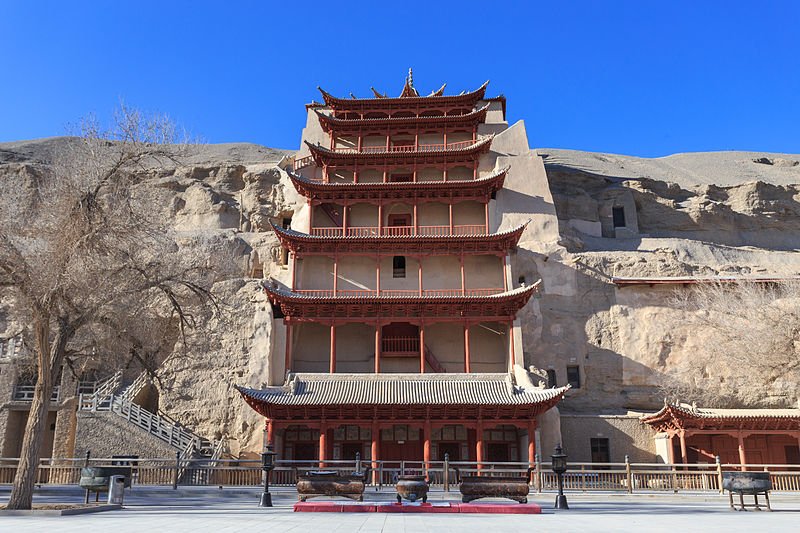
Mogao Caves’ Cave 96
Yungang Grottoes (Datong, Shanxi Province)
The Yungang Grottoes, located near Datong in Shanxi Province, are among China’s earliest Buddhist cave complexes. Construction began in 460 AD during the Northern Wei Dynasty, under Emperor Wencheng’s patronage. The grottoes were heavily influenced by Indian Gandhara and Central Asian artistic styles, which were later adapted into a distinct Chinese Buddhist aesthetic.
Yungang consists of 53 major caves and 252 smaller niches, containing over 50,000 Buddhist statues. The most notable among them is Cave 5, which houses a 17-meter-tall seated Buddha, and Cave 6, featuring a complex stupa-pillar structure with relief carvings narrating Buddha’s life. Cave 20, known as the White Buddha Cave, holds a 13.7-meter-high meditative Buddha, exemplifying Northern Wei artistry.
Recognized as a UNESCO World Heritage Site in 2001, Yungang Grottoes remain a major tourist attraction. Conservation efforts focus on reducing air pollution and weathering damage caused by Datong’s industrial activities.
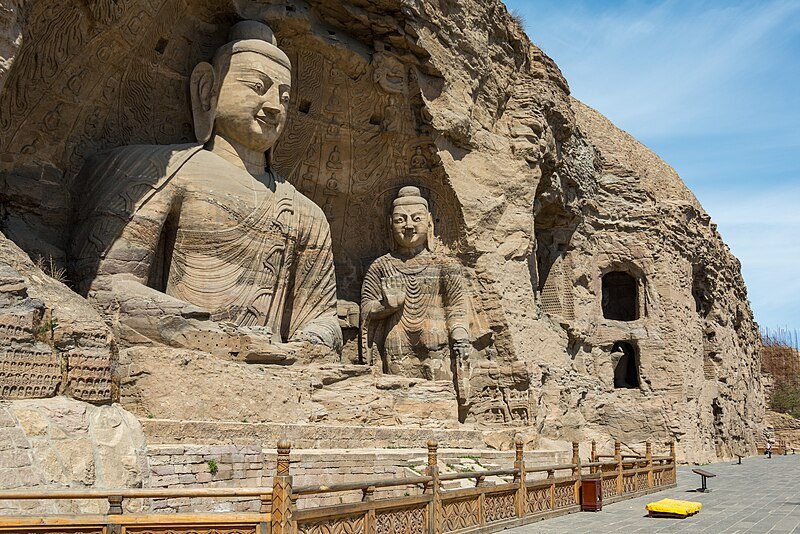
Yungang Grottoes in Datong
READ MORE: 10 Greatest Emperors of China
Longmen Grottoes (Luoyang, Henan Province)
The Longmen Grottoes, located 12 km south of Luoyang, Henan Province, were first carved around 492 AD when the Northern Wei Dynasty moved its capital from Datong to Luoyang. The site flourished under subsequent dynasties, especially during the Tang Dynasty (618–907 AD), when many of its most magnificent statues were created.
Longmen Grottoes feature over 95,000 Buddhist statues, 60 stupas, and 2,800 inscriptions carved into limestone cliffs. The most famous artwork is the Fengxian Temple, where a 17.14-meter-high Vairocana Buddha is flanked by celestial beings and guardian deities. Other notable caves include Guyang Cave, Binyang Cave, and Lianhua Cave, which showcase intricate carvings and artistic innovations of the Northern Wei and Tang periods.
Declared a UNESCO World Heritage Site in 2000, Longmen Grottoes attract visitors worldwide. Preservation efforts include controlling water damage, rock erosion, and air pollution from nearby urban development.
Maijishan Grottoes (Tianshui, Gansu Province)
The Maijishan Grottoes, carved into a sheer cliff in Tianshui, Gansu Province, were first constructed during the Later Qin Dynasty (384–417 AD) and expanded over multiple dynasties, including the Northern Wei, Sui, and Tang periods. The site is unique for its cliffside architecture, connected by wooden plank walkways.
The grottoes contain 194 caves with over 7,200 clay and stone sculptures, and 1,300 square meters of murals. Unlike other grottoes, Maijishan is renowned for its delicate clay sculptures, some depicting elegant, slender figures with expressive facial features. The most impressive include Grotto 44, Grotto 121, and the Nirvana Cave.
Listed as part of the Silk Road UNESCO Heritage Site, conservation efforts focus on stabilizing the cliff face and reinforcing pathways for safe exploration.
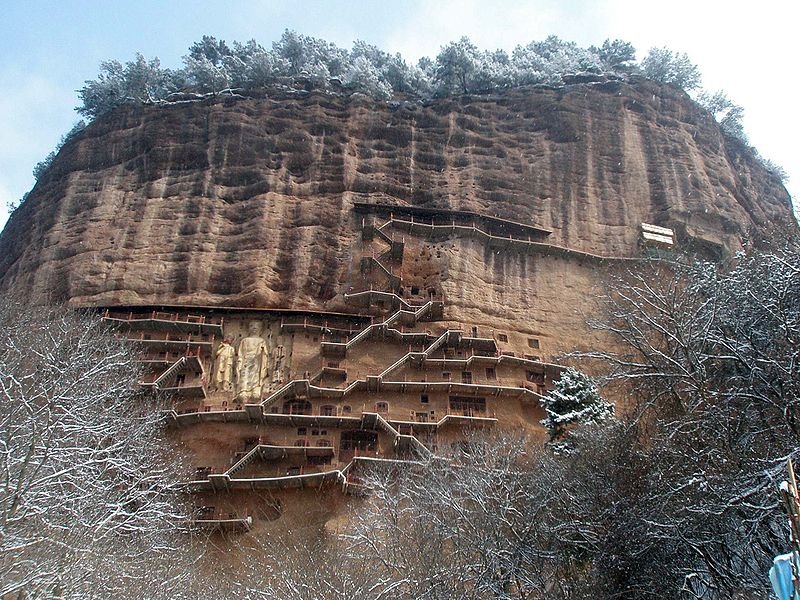
Maijishan Hill Caves: A View of Grottoes and Stairways
Dazu Rock Carvings (Chongqing)
Unlike earlier grottoes, the Dazu Rock Carvings, located in Chongqing, were created between the 9th and 13th centuries (Tang and Song Dynasties). The carvings represent a shift from purely Buddhist themes to a blend of Buddhist, Taoist, and Confucian influences.
Dazu features over 9,500 carvings, the most famous being the Thousand-Hand Bodhisattva, a 7.7-meter-tall sculpture with 1,007 hands, and the Life Cycle of Reincarnation panel, illustrating Buddhist teachings on karma and rebirth.
Recognized as a UNESCO World Heritage Site in 1999, Dazu remains a well-preserved example of medieval Chinese religious art.
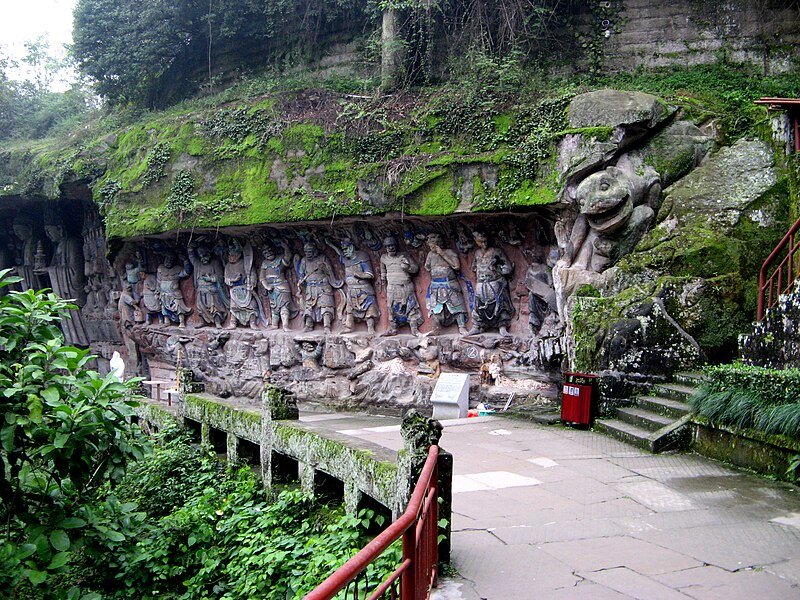
Dazu Rock Carvings (Mount Baoding)
Kizil Caves (Xinjiang)
The Kizil Caves, located in Xinjiang, are the earliest major Buddhist cave complex in China, dating from the 3rd to 8th centuries AD. They were built under the Tocharian Kingdom of Kucha and show strong Indo-Iranian artistic influences.
Kizil contains 236 caves, with many murals featuring Indian and Persian artistic elements. The site is notable for its central pillar caves and depictions of Jataka tales (stories of Buddha’s past lives).
Due to their remote location, preservation efforts focus on preventing further erosion and damage from natural elements.
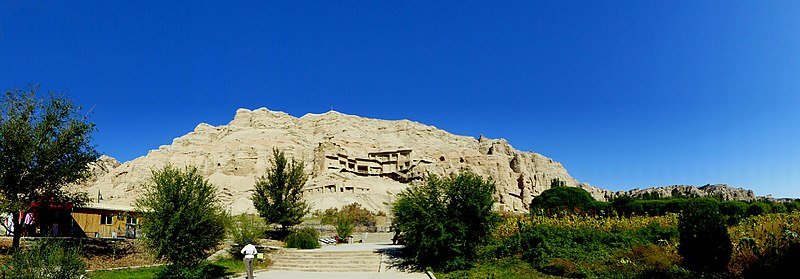
Kizil Caves on the Tarim Basin’s Edge, Northwestern China
Bezeklik Caves (Turpan, Xinjiang)
Bezeklik Caves, carved between the 5th and 14th centuries, were part of the Uyghur Buddhist tradition before the region converted to Islam.
These caves contain murals depicting multicultural influences, with figures resembling Turks, Indians, and Europeans.
Many murals were damaged in the 20th century, but restoration efforts are ongoing to protect the surviving artwork.
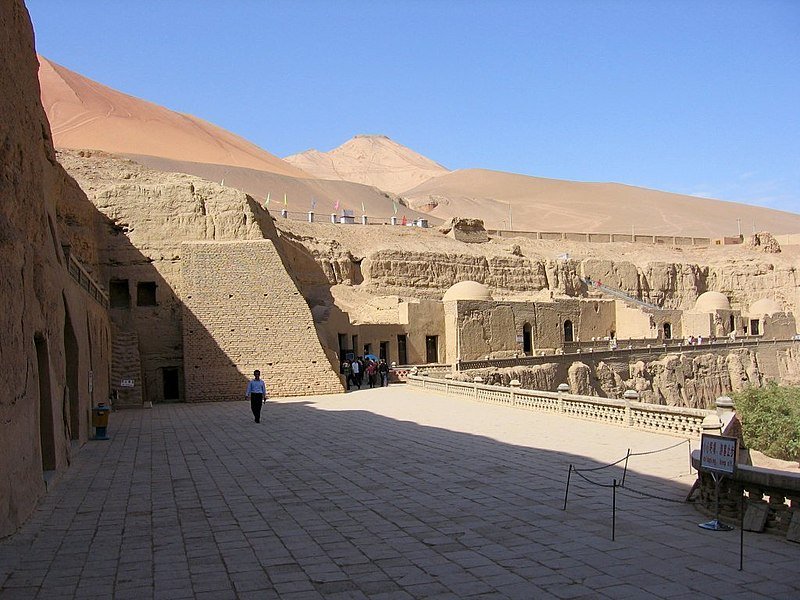
Bezeklik Caves
China’s Buddhist grottoes represent centuries of religious devotion, artistic evolution, and cultural exchange.
Frequently Asked Questions
What are Buddhist grottoes in China?
Buddhist grottoes in China are rock-cut cave temples, originally an Indian tradition, which became prominent from the 3rd century onward, flourishing between the 5th and 13th centuries.
Which is the earliest Buddhist cave complex in China?
The Kizil Caves in Xinjiang, dating back to the 3rd century, are considered the earliest major Buddhist cave complex in China.
Where are China’s major Buddhist grottoes located?
Most grottoes are found in Xinjiang, Gansu, the Yellow River region, and the Yangtze River region, with some in South China.
What makes the Mogao Caves special?
Mogao Caves, built over 1,650 years, house 45,000 square meters of murals and over 2,100 painted sculptures, making them the largest repository of Buddhist art.
What are notable caves in the Mogao complex?
Cave 130 features a 26-meter Maitreya Buddha, Cave 148 houses a 14.4-meter reclining Buddha, and Cave 61 is famous for grand murals.
What is unique about the Yungang Grottoes?
Yungang, built in the 5th–6th centuries, blends Indian, Central Asian, and Chinese styles, with 252 niches and 51,000 statues.
Which caves are significant in Yungang?
Cave 5 features a 17-meter seated Buddha, Cave 6 narrates Buddha’s life, and Cave 20 showcases a 13.7-meter meditative Buddha.
Why are the Longmen Grottoes famous?
Longmen houses 100,000 Buddhist stone statues, notably the Vairocana Buddha from the Tang Dynasty, and reflects refined Chinese Buddhist art.
What distinguishes Maijishan Grottoes?
Maijishan is renowned for over 7,200 clay sculptures, suspended on a cliff, blending Northern Wei, Sui, and Tang artistic styles.
What are the Dazu Rock Carvings known for?
Located in Chongqing, they feature over 9,500 carvings from the 9th–13th centuries, blending Buddhist, Taoist, and Confucian influences.
What is special about the Kizil Caves?
As China’s oldest Buddhist cave complex, Kizil contains over 230 caves with murals reflecting Indo-Iranian influences.
What is the significance of the Bezeklik Caves?
Located in Xinjiang, Bezeklik Caves feature murals depicting multicultural Buddhist influences, including Turks, Indians, and Europeans.
How can visitors access these grottoes?
Most sites are accessible by bus, taxi, or guided tours, with special caves requiring advance reservations or additional fees.
As conservation efforts continue, these grottoes remain invaluable to history, art, and religious studies, preserving China’s spiritual and artistic legacy for future generations.





