Pharaoh Mentuhotep IV
Pharaoh Mentuhotep IV was the final ruler of the 11th Dynasty during Egypt’s Middle Kingdom. His reign is estimated to have lasted approximately seven years, and it marked the end of an era fraught with political uncertainty and limited documentation. While his rule is omitted from significant records such as the Abydos King List, archaeological evidence provides key insights into his life, family, and contributions to Egyptian governance and resource management.

Nebtawyre Mentuhotep IV’s reign represents a transitional phase in ancient Egypt’s history, marked by limited documentation, political ambiguity, and the end of the 11th Dynasty. Image: Mentuhotep IV (right) gives offerings to the ancient Egyptian god Min. From Wadi Hammamat
READ MORE: 9 Famous Middle Kingdom Pharaohs
Family and Lineage
Mentuhotep IV’s parentage remains uncertain. Scholars generally consider him to be the son and successor of Mentuhotep III, though some suggest he might have been a son of Mentuhotep II, making him a sibling or half-sibling of Mentuhotep III. His mother, Imi, is identified in Wadi Hammamat inscriptions as “King’s Mother.” However, the absence of other royal titles like “King’s Wife” or “King’s Daughter” has led to speculation that she might have been a concubine in the royal court.
The ambiguity surrounding his lineage, coupled with his exclusion from major king lists, suggests potential issues in the royal succession. This period of instability may have contributed to Mentuhotep IV’s limited legacy and the eventual rise of a new dynasty.
Early Reign and Challenges
Mentuhotep IV ascended the throne during a turbulent time. Political fragmentation and uncertainty plagued the transition from his predecessor’s rule. His omission from the Abydos King List implies that his reign was either contested or deliberately excluded by later rulers seeking to establish continuity and legitimacy for the 12th Dynasty. Despite these challenges, Mentuhotep IV managed to organize his administration and conduct significant state projects, as evidenced by inscriptions found in Wadi Hammamat and other locations.
Inscriptions and Evidence of Reign
Although Mentuhotep IV’s reign is poorly documented, several inscriptions provide valuable information about his rule. These inscriptions are found in key sites such as Wadi Hammamat, Ain Sukhna, and Wadi el-Hudi. They describe large-scale expeditions and highlight his administrative efforts to secure vital resources for the kingdom.
The inscriptions at Wadi Hammamat detail expeditions to quarry stone for royal monuments. One significant record mentions his vizier, Amenemhat, who later became Pharaoh Amenemhat I, the founder of the 12th Dynasty. These texts highlight the workforce’s size, logistics, and the importance of the region in supporting royal construction projects.
While his achievements were overshadowed by his successor’s accomplishments, Mentuhotep IV’s contributions to Egypt’s resource management and administration cannot be ignored.
At Ain Sukhna, inscriptions describe expeditions to the Sinai Peninsula to mine turquoise and copper. Similarly, Wadi el-Hudi inscriptions document efforts to acquire precious stones, emphasizing Egypt’s reliance on resource extraction for economic and religious purposes.
Major Accomplishments
Mentuhotep IV’s reign is marked by his ability to maintain stability and oversee large-scale resource procurement projects, even amid political uncertainty. These achievements reflect his administrative competence and the strategic importance of expeditions during his rule.
The large expeditions organized during his reign demonstrate Egypt’s effective use of manpower and infrastructure to extract resources from distant regions. These included turquoise, copper, and high-quality stone for construction and religious offerings.
The evidence of Mentuhotep IV’s expeditions and the role of his vizier Amenemhat provide a glimpse into the complexities of his rule and the eventual establishment of the 12th Dynasty, a new era in Middle Kingdom governance.
The inscriptions at Wadi Hammamat highlight his efforts to secure stone for royal monuments, suggesting that construction and state-sponsored projects continued during his reign despite broader instability. The scale and organization of these expeditions illustrate the enduring strength of Egypt’s centralized administration.
Role of Vizier Amenemhat
Mentuhotep IV’s vizier, Amenemhat, played a prominent role in his administration and expeditions. As the leader of quarrying missions in Wadi Hammamat, Amenemhat demonstrated exceptional organizational skills, which likely contributed to his later rise as Pharaoh Amenemhat I. This transition suggests a strong connection between Mentuhotep IV’s reign and the founding of the 12th Dynasty.
Some Egyptologists speculate that Amenemhat may have usurped the throne, although there is no concrete evidence to confirm this. It is equally possible that Mentuhotep IV died without an heir, leaving Amenemhat as the most suitable successor.

Mentuhotep IV’s connection to Amenemhat I underscores the importance of his reign in shaping the future of Egyptian governance. Image: Relief of Pharaoh Amenemhat I from his pyramid complex at El-Lisht
End of Reign
The circumstances surrounding Mentuhotep IV’s death and the end of his reign remain a mystery. Neither his burial site nor his mummy has been discovered, leaving questions about his fate unanswered. The absence of direct evidence of a violent overthrow or succession crisis has led to speculation that his reign ended peacefully, potentially with the transition of power to Amenemhat I.
Legacy and Historical Impact
Mentuhotep IV’s exclusion from king lists and limited documentation has marginalized his historical significance. However, his reign served as a crucial bridge between the 11th and 12th Dynasties. The resource expeditions and administrative continuity during his rule provided the foundation for the prosperity and political stability of the Middle Kingdom under the 12th Dynasty.
Frequently Asked Questions
Who was Nebtawyre Mentuhotep IV?
He was the last ruler of the 11th Dynasty in Egypt’s Middle Kingdom, reigning for approximately seven years during a time of political uncertainty.
Why is his reign significant?
Mentuhotep IV’s reign is omitted from the Abydos King List, and his rule is poorly documented, suggesting succession crises and potential political instability.
Who were his possible parents?
He may have been the son of Mentuhotep III or Mentuhotep II. His mother, Imi, held the title “King’s Mother” but lacked other royal titles, leading to speculation about her status as a concubine.
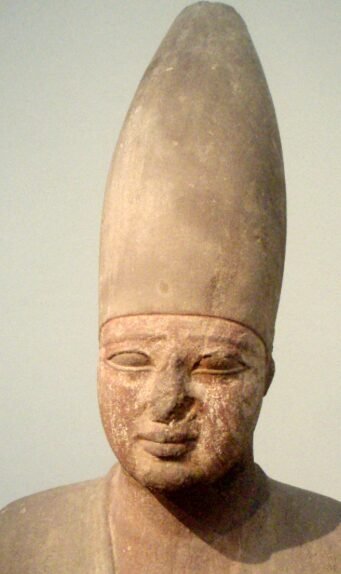
Osiride statue of Pharaoh Mentuhotep III, 11th Dynasty, displayed at Boston’s Museum of Fine Arts.
What evidence attests to his reign?
Inscriptions from Wadi Hammamat, Ain Sukhna, and Wadi el-Hudi document expeditions and administrative activities during his rule.
What was the purpose of his expeditions?
He organized large-scale expeditions to acquire valuable resources like turquoise, copper, and stone for royal and economic purposes.
What role did Wadi Hammamat play during his reign?
Wadi Hammamat inscriptions detail quarrying expeditions and record the involvement of his vizier, Amenemhat, who later became the founder of the 12th Dynasty.
What is known about his legacy?
His reign ended the 11th Dynasty, and his disappearance is unexplained. There is no evidence of his burial or mummy, leaving his fate unclear.
What connection does he have to Amenemhat I?
Amenemhat I, initially his vizier, succeeded him, possibly through usurpation or as a designated successor, marking the transition to the 12th Dynasty.





