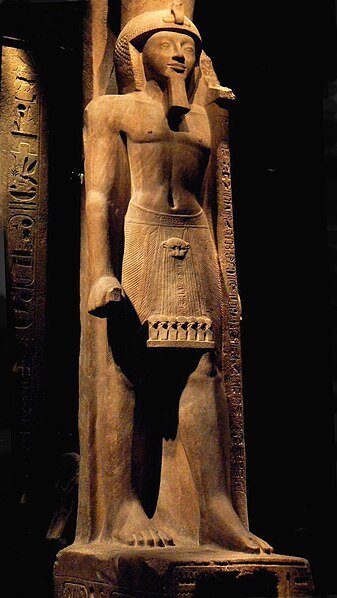
Seti II, fifth pharaoh of Egypt’s Nineteenth Dynasty (1203–1197 BC), reigned during a time of political turmoil.
Seti II (also known as Sethos II) reigned as the fifth pharaoh of Egypt’s Nineteenth Dynasty from approximately 1203 BC to 1197 BC. His throne name, Userkheperure Setepenre, translates to “Powerful are the manifestations of Re, the chosen one of Re.” The son of Merneptah and Isetnofret II, Seti II’s reign occurred during a tumultuous period marked by political intrigue and rivalries.
Dynastic Turmoil and Rivalries
Seti II’s reign was fraught with challenges, notably a power struggle with Amenmesse, a rival king who likely claimed a familial connection. Amenmesse controlled Thebes and Nubia in Upper Egypt during Seti II’s third and fourth regnal years. Evidence supporting this rivalry includes:
- Vandalism of KV15: Seti II’s tomb in Thebes was deliberately defaced, with royal names erased, during Amenmesse’s control.
- Amenmesse’s Short Reign in Upper Egypt: German scholar Wolfgang Helck identified Amenmesse’s activity primarily in Upper Egypt through Year 3 and 4 ostracas, with Seti II absent from records during this time.
- Neferhotep’s Death: According to Papyrus Salt 124, Amenmesse’s agents ordered the killing of Neferhotep, a key foreman at Deir el-Medina, providing evidence of conflict.
Amenmesse seized control of Upper Egypt and Nubia during his brief reign, vandalizing Seti II’s tomb. However, Seti II eventually reclaimed power, launching a campaign of damnatio memoriae to erase Amenmesse’s legacy. His agents defaced Amenmesse’s inscriptions and targeted key supporters like Khaemter, a viceroy of Kush.

Reign and Achievements
Seti II’s contributions to Egyptian architecture included:
- Valley of the Kings Tombs: He oversaw the construction of KV13, KV14, and KV15 for himself, his queen Twosret, and his chancellor Bay.
- Temple of Karnak: Seti II built a small temple and erected an obelisk in front of the complex, emphasizing his devotion to Amun and the Theban Triad.
- Mining at Timna Valley: He expanded copper mining operations in Edom and established a temple dedicated to Hathor, which was later linked to Midianite worship.
One of Seti II’s notable administrative decisions was elevating Chancellor Bay, a Syrian by descent, to high office. This marked a departure from tradition, as Bay lacked familial ties to the royal lineage.
Seti II ruled for nearly six years, although his tomb was unfinished at the time of his death. His successor, Siptah, buried him in KV15.
Wives and Family
Seti II’s wives played crucial roles in his reign and its aftermath:
- Twosret: Initially a senior queen, she later became regent for Siptah and eventually ruled as pharaoh herself.
- Takhat: Likely the mother of Amenmesse, she held the title of “King’s Daughter,” suggesting a link to Ramesses II or Merneptah.
Funerary objects bearing the name “Tiaa” were once believed to connect her to Seti II as Siptah’s mother. However, these items likely originated from KV32, the tomb of a different queen.
Cultural Legacy
Two significant papyri from Seti II’s reign include:
- The Tale of Two Brothers: A story highlighting familial discord, possibly a political allegory for Seti II and Amenmesse’s rivalry.
- The Trial of Paneb: A document detailing accusations of theft and corruption against Paneb, a foreman who allegedly desecrated Seti II’s tomb.
Damnatio Memoriae
Seti II’s efforts to erase Amenmesse’s memory extended to defacing inscriptions, statues, and monuments associated with his rival.
Seti II’s Death and Burial
An ostraca from Deir el-Medina indicates that Seti II’s death was announced on Year 6, I Peret 19. Scholars estimate his actual death occurred slightly earlier, around I Peret 2, allowing time for the news to reach Thebes.
Seti II was interred in KV15 during Year 1, III Peret day 11 of Siptah’s reign. His tomb, though incomplete at the time of his death, remains a significant archaeological site.
Seti II’s Mummy
Seti II’s mummy was discovered and later transferred to the National Museum of Egyptian Civilization as part of the Pharaohs’ Golden Parade in 2021, alongside other royal mummies.
Frequently Asked Questions about Pharaoh Seti II

What challenges did Seti II face during his reign?
Seti II’s rule was marked by dynastic strife and rivalry, particularly with Amenmesse, who seized control over Upper Egypt and Nubia. Amenmesse vandalized Seti II’s tomb and controlled Thebes during Seti’s third and fourth regnal years. Seti II eventually defeated Amenmesse, launching a damnatio memoriae campaign to erase his rival’s legacy.
What evidence suggests Seti II and Amenmesse were contemporaries?
Seti II’s tomb in Thebes was vandalized during Amenmesse’s reign, and documents from Deir el-Medina show overlaps in their rule. Key figures like Neferhotep, mentioned during Seti II’s reign, were involved in events linked to Amenmesse, indicating their parallel reigns.
Who were Seti II’s wives?
Seti II married Twosret, who later ruled as Pharaoh, and Takhat, possibly Amenmesse’s mother. A prior belief linked Tiaa, mother of Siptah, to Seti II, but evidence suggests she belonged to an earlier era.





