Plague of Cyprian, 250-270 CE: How many people died, and what was its impact on Rome?
The Plague of Cyprian (c. 250–270 CE) was a devastating pandemic that struck the Roman Empire during a period of political and military crisis. Named after St. Cyprian, the bishop of Carthage who documented its effects, the plague significantly weakened Rome’s economy, military, and society. The exact nature of the disease remains uncertain, though modern scholars speculate that it could have been smallpox, a filovirus (like Ebola), or an early strain of measles. Its impact, coupled with external pressures, contributed to the broader decline of the Roman Empire in the 3rd century.

Relic of Saint Cyprian, bishop of Carthage . He is known for recording accounts of the plague in his writings.
Historical Context
The plague emerged during the height of the Crisis of the Third Century (235–284 CE), a period marked by:
- Frequent civil wars and the rapid turnover of emperors.
- Economic instability due to debasement of currency.
- Barbarian invasions on Rome’s frontiers.
- Religious persecution (especially of Christians under Emperor Decius and later Valerian).
- Internal revolts across the empire.
As Rome struggled with these crises, the sudden outbreak of a deadly plague further destabilized an already fragile society.

Origins and Spread
The exact origins of the Plague of Cyprian remain unclear, but most historians suggest it originated in Egypt or Ethiopia before spreading through the empire’s trade routes. The plague quickly devastated urban centers, reaching Rome, Carthage, Alexandria, and beyond.
Contemporary accounts describe the plague as highly contagious, affecting people of all social classes, from emperors to commoners. It struck soldiers in the legions, reducing the empire’s ability to defend its borders.
How and Why did Carthage Fall? – The Destruction of Rome’s Fiercest Rival
Symptoms and Mortality Rate of the Plague of Cyprian
Eyewitness descriptions, particularly from St. Cyprian, suggest that the disease was highly virulent, causing:
- Severe diarrhea
- Fever
- Vomiting
- Throat ulcers
- Eye infections
- Gangrene in the limbs
- Body weakness and fatigue
Some accounts suggest that those infected often died within days, though some survived and developed immunity. Scholars debate whether this was smallpox, Ebola-like hemorrhagic fever, or another viral disease.
The mortality rate is unknown, but some estimates suggest thousands died daily in Rome alone. Modern historians believe that over half the population of some urban centers may have perished.
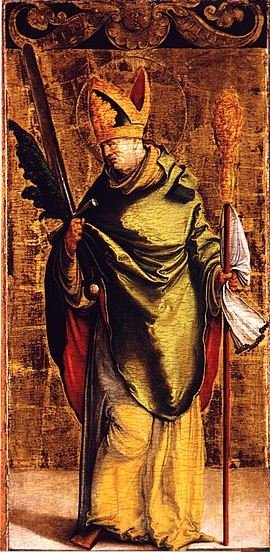
A 16th-century artwork depicting Cyprian.
Impact on the Roman Empire
The plague decimated legions, making it harder to defend Rome’s frontiers. With fewer troops available, Rome faced increasing pressure from Gothic invasions in the Balkans and Persian advances in the East. Some historians argue that the weakened military emboldened barbarians and internal usurpers, accelerating the crisis.
Furthermore, the plague caused the labor force in the empire to drastically reduce, leading to food shortages. Inflation soared as production declined. The shortage of tax-paying citizens weakened imperial revenues.
Pagan Romans saw the Plague of Cyprian as divine punishment, a common belief in pre-Christian societies that associated disease with supernatural causes.
The plague devastated cities, with people abandoning homes and families. And as misery enveloped those cities, Christianity gained influence. Christian communities were seen as more compassionate in caring for the sick. The Roman elite and pagan priesthood struggled to provide answers, leading many to turn toward Christianity.
Emperors like Decius (r. 249–251 CE) and Gallienus (r. 253–268 CE) faced immense difficulties ruling amidst the chaos. The plague, combined with external threats, forced Rome into a more regionalized, decentralized administration.
Religious and Cultural Responses
St. Cyprian’s writings describe the plague not as divine punishment, but as a test of faith. He encouraged Christians to help the sick, contrasting their actions with the pagan Roman elite, many of whom fled cities. This response helped boost Christian conversions, as they offered charity and a sense of community.
Pagan Romans, on the other hand, saw the plague as a punishment from the gods. Some blamed Christians, leading to increased persecution under Decius and Valerian.
Comparison to Other Ancient Plagues
- Antonine Plague (c. 165–180 CE): Likely smallpox, this earlier pandemic severely affected the Roman Empire under Marcus Aurelius.
- Justinianic Plague (c. 541–542 CE): A later pandemic (caused by Yersinia pestis) that contributed to the weakening of the Byzantine Empire.
- Black Death (c. 1347–1351 CE): A far more catastrophic pandemic that wiped out nearly one-third of Europe’s population.
While not as destructive as the Black Death, the Plague of Cyprian profoundly altered the Roman world (particularly, the Western Roman Empire), hastening its decline.
The Roman legions suffered massive losses, weakening defenses and making the empire more vulnerable to external invasions.
Galen: The Greek physician who extensively studied the Antonine Plague
Did you know…?
- Italian archaeologists excavated the Funerary Complex of Harwa at Luxor, Egypt, where they found bodies covered in lime and burned remains, indicating attempts to contain a contagious disease.
- Attempts to extract DNA from the remains were unsuccessful due to Egypt’s climate, which destroys DNA, preventing definitive identification of the disease.
Aftermath and Long-Term Effects
By the early 270s CE, the plague began to subside. However, its consequences lingered.
The Roman Empire was permanently weakened, paving the way for Diocletian’s reforms (284–305 CE). Christianity continued to grow, becoming the dominant religion under Constantine the Great (r. 306–337 CE). The crisis reshaped Roman urban life, with many cities shrinking in population and influence.
Ultimately, the Plague of Cyprian was a pivotal event in Roman history, accelerating the empire’s decline while boosting the rise of Christianity.
What was the Tetrarchy and why was it established by Emperor Diocletian?
Questions and answers about the Plague of Cyprian
How many people did the Plague of Cyprian kill at its peak?
At its height, the plague reportedly killed up to 5,000 people per day in Rome.
What factors contributed to the spread of the Plague of Cyprian?
The plague spread rapidly due to ongoing warfare, including Germanic invasions in Gaul and Parthian attacks in Mesopotamia, as well as environmental crises such as droughts, floods, and famine.
READ MORE: Greatest Kings of the Parthian Empire and their Accomplishments
Who was St. Cyprian, and why is the plague named after him?
St. Cyprian was the bishop of Carthage (200–258 CE) who documented the effects of the plague in his work De Mortalitate (“On Mortality”), making his observations a primary source for understanding the epidemic.
What symptoms did victims of the plague experience?
Victims suffered from severe diarrhea, uncontrollable vomiting, high fever, deafness, blindness, leg paralysis, swollen throats, and blood-filled eyes. Many died quickly.
How did Christians respond to the plague?
Christians viewed the plague as a test of faith and actively cared for the sick and buried the dead, which strengthened their communities and led to increased conversions.
What modern diseases have scholars linked to the Plague of Cyprian?
Scholars have proposed various diseases, including bubonic plague, typhus, cholera, smallpox, measles, and anthrax, though the lack of buboes suggests it was not bubonic plague. Some suggest it may have been a viral hemorrhagic fever like Ebola.
What were the economic consequences of the plague?
The outbreak led to widespread fear and migration, as rural populations fled to cities, abandoning farmland. The deaths of farmers and the collapse of agriculture resulted in food shortages and land reverting to swampland.
What political effects did the plague have on the Roman Empire?
The plague caused political instability by killing two emperors, Hostilian in 251 CE and Claudius II Gothicus in 270 CE, leading to power struggles and weakened leadership.
How did the Christian Church benefit from the plague?
Unlike pagan leaders, who lacked explanations or solutions, Christians actively provided care for the sick and buried the dead, which strengthened their influence and led to more conversions.





