Ptolemy VIII Physcon
Ptolemy VIII Euergetes II Tryphon was a complex ruler whose reign was characterized by ambition, strategic alliances, and brutal power struggles.
As the younger son of Ptolemy V, his journey to power was fraught with conflict, both familial and military. His attempts to balance Hellenistic and Egyptian traditions, coupled with his diplomatic and military maneuvers, played a crucial role in shaping the trajectory of the Ptolemaic dynasty.
Despite the eventual decline of the dynasty, Ptolemy VIII’s reign exemplifies the intricate interplay of power, culture, and diplomacy in the Hellenistic period, leaving an indelible mark on the history of ancient Egypt.
In the article below, World History Edu delves into the life, reign and major accomplishments of this Ptolemaic dynasty ruler.

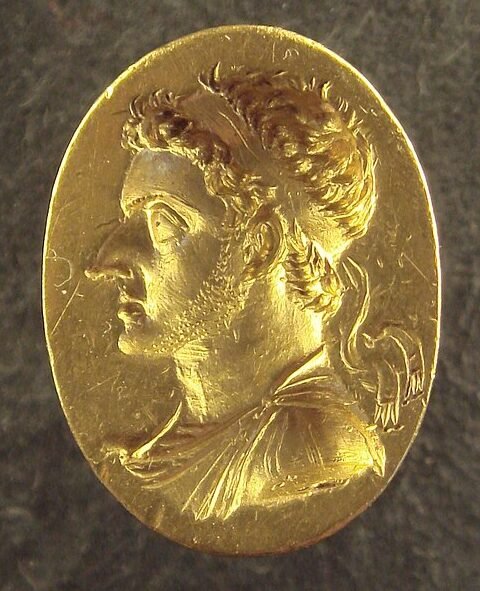
A unique 138/137 BC didrachm features Ptolemy VIII’s portrait, unlike others showing his ancestor Ptolemy I.
Early Life and Family Background
Ptolemy VIII Euergetes II Tryphon, born around 184 BC, was a significant figure in the Ptolemaic dynasty of Egypt. He was the younger son of Ptolemy V Epiphanes and Queen Cleopatra I Syra, born into a period marked by intense political and military strife.

Tetradrachm of Ptolemy V Epiphanes issued c. 200 BC
His father, Ptolemy V, reigned from 204 to 180 BC, a time overshadowed by the Fifth Syrian War (204–198 BC). This conflict saw the Ptolemaic Kingdom of Egypt engaged in a fierce struggle against Antiochus III the Great, the formidable ruler of the Seleucid Empire, which controlled vast regions of the Near East and Asia Minor.

Depiction based on a relief of Cleopatra I Syra
The Fifth Syrian War and Its Aftermath
During the Fifth Syrian War, Antiochus III achieved a decisive victory over the Ptolemaic forces, effectively annexing Coele-Syria and Judaea into his expanding empire. This defeat significantly diminished Egypt’s standing, relegating it to a subordinate position within the Hellenistic world.

One of the most successful Seleucid rulers was Antiochus III the Great, who reigned from 223-187 BC. Image: Roman bust of Seleucid ruler Antiochus III, 100 BC-50 BC, Thorvaldsens Museum, Copenhagen, Denmark
To solidify peace and secure a political alliance, a treaty was negotiated in 194 BC, leading to the marriage of Ptolemy V to Cleopatra I Syra, Antiochus III’s daughter. This union was intended to stabilize relations between the two powerful kingdoms and reinforce the Seleucid influence within Egypt.
Family and Succession
From this marriage, Ptolemy VIII was born around 184 BC, following his elder brother Ptolemy VI Philometor, born in 186 BC, and their sister Cleopatra II.
As the youngest child, Ptolemy VIII was initially not the primary heir; Ptolemy VI was designated as the crown prince from birth. However, the tumultuous political environment would soon alter the dynamics of succession within the Ptolemaic dynasty.

Cleopatra II Philometor Soteira
Regency and Early Political Struggles
The death of Ptolemy V in September 180 BC, at the age of 30, thrust the young Ptolemy VI, then only six years old, into the role of king. Given his youth, actual power was vested in regents—first Cleopatra I Syra, who served from 180 to approximately 178/177 BC, followed by Eulaeus and Lenaeus from 178/177 to 170 BC. These regents aligned with the faction advocating for peace and economic recovery, opposing the warhawks who desired renewed military campaigns to restore Egypt’s prestige.
Ptolemy VI Philometor
Rise of the Warhawk Faction and Ptolemy VIII’s Ascension
The ongoing power struggles within the Ptolemaic court created an environment ripe for conflict. The warhawk faction, dissatisfied with the regents’ pacifist policies, began to support Ptolemy VIII as a potential leader who could champion their militaristic ambitions. The assassination of Seleucus IV, Antiochus III’s successor, in 175 BC further destabilized the region, empowering the warhawks to push for renewed hostilities against the Seleucid Empire.
In October 170 BC, at around sixteen years old, Ptolemy VIII was elevated to co-regent status alongside his brother Ptolemy VI and sister Cleopatra II. This incorporation into the dynastic cult as one of the Theoi Philomētores (“Mother-loving Gods”) was a strategic move aimed at unifying the court ahead of impending conflict. Ptolemy VI was declared an adult, marking the end of the regency, although real power remained with Eulaeus and Lenaeus.
The Sixth Syrian War and Temporary Power Shift
Shortly after his elevation, the Sixth Syrian War erupted in early 169 BC. Ptolemy VIII likely stayed in Alexandria while the Ptolemaic army attempted to invade Palestine from Pelusium. However, the expedition was disastrously intercepted by Antiochus IV’s forces in the Sinai, resulting in a significant defeat for Egypt. As Antiochus IV advanced, Ptolemy VI attempted to negotiate a peace treaty, which essentially reduced Egypt to a Seleucid client state.
News of this unfavorable agreement incited riots in Alexandria, leading influential generals Comanus and Cineas to reject the treaty and depose Ptolemy VI in favor of Ptolemy VIII as the sole king. Despite Antiochus IV’s subsequent siege of Alexandria, he could not capture the city before withdrawing due to the onset of winter, leaving Ptolemy VI as a puppet ruler in Memphis with a Seleucid garrison in Pelusium.
Reconciliation and Continued Strife
Within two months, Ptolemy VIII and Cleopatra II reconciled with Ptolemy VI, restoring him to power as co-regent. The failed Sixth Syrian War had severely damaged Egypt’s prestige and deepened the rift between the brothers.
In 165 BC, an internal coup led by Dionysius Petosarapis, a native Egyptian courtier, attempted to seize control by accusing Ptolemy VI of conspiring against Ptolemy VIII. However, Ptolemy VI managed to quash the rebellion, solidifying his authority and temporarily mending the strained relations between the brothers.
Ousting and Roman Intervention
In late 164 BC, Ptolemy VIII, then about twenty years old, successfully ousted Ptolemy VI and Cleopatra II from power, becoming the sole ruler of the Ptolemaic Empire. His rule, however, was marked by tyranny and the ruthless elimination of opposition, facilitated by his minister Timotheus. This oppressive governance led to widespread discontent, culminating in a rebellion in Alexandria in 163 BC, which forced Ptolemy VIII to flee and temporarily recall Ptolemy VI.
Exile in Cyrenaica and Roman Relations
Following his second expulsion, Ptolemy VIII was granted control of Cyrenaica by Rome, marking the beginning of his reign in this region from 163 to 145 BC. His time in Cyrene was characterized by close relations with Rome, seeking their support to reclaim Egypt.
Ptolemy VIII made multiple attempts to seize Cyprus, a territory promised to him by the Romans, but faced fierce resistance from his brother Ptolemy VI and eventually had to abandon his efforts due to logistical challenges and Cypriot resistance.
Return to Egypt and Marriage to Cleopatra II
After the death of Ptolemy VI in 145 BC, Ptolemy VIII returned to Egypt as co-ruler, marrying his sister Cleopatra II. This union aimed to consolidate his power and stabilize the kingdom.
However, his subsequent marriage to Cleopatra III, his niece, sparked further conflict. This marriage violated traditional norms and incited Cleopatra II, leading to a civil war from 132/1 to 127/6 BC. During this period, Cleopatra II controlled Alexandria with the support of the Greek population, while Ptolemy VIII and Cleopatra III governed the rest of Egypt with the backing of native Egyptians.

The civil war from 132/1 to 127/6 BC saw Cleopatra II controlling Alexandria with the support of the Greek populace, while Ptolemy VIII and Cleopatra III governed most of Egypt with backing from the native Egyptian population. This conflict resulted in native Egyptians being appointed to high governmental positions for the first time. Ptolemy VIII ultimately emerged victorious. Image: Wall relief of Cleopatra III, Cleopatra II and Ptolemy VIII before Egyptian god Horus
Civil War and Consolidation of Power
The civil war was a brutal conflict that saw the Ptolemaic Kingdom divided between the factions supporting Cleopatra II and those backing Ptolemy VIII and Cleopatra III. The conflict culminated in Ptolemy VIII’s victory, enabling him to rule alongside both Cleopatra II and Cleopatra III until his death in 116 BC. This period marked significant shifts in power dynamics, with native Egyptians gaining more prominent roles in the administration, reflecting Ptolemy VIII’s broader strategy to integrate and appease the native population.
Relations with Numidia and Diplomatic Maneuvers
Ptolemy VIII maintained a strategic alliance with Numidia, particularly with King Massinissa. This relationship was exemplified by the dedication of a bust to Massinissa’s son, Mastanabal, highlighting the diplomatic and cultural exchanges between the two kingdoms. These alliances were crucial for Ptolemy VIII’s efforts to stabilize his rule and counterbalance Seleucid influence in the region.
Construction Projects and Cultural Patronage
As king of Cyrene, Ptolemy VIII engaged in extensive construction projects, aiming to showcase the Hellenistic virtues of luxury and grandeur. He assumed the role of the priest of Apollo, hosting sumptuous feasts and undertaking significant building endeavors in the city. A large tomb west of Ptolemais was likely intended as his final resting place, symbolizing his commitment to both religious and cultural patronage.
The Dynastic Cult and Religious Integration
Ptolemaic Egypt was characterized by a dynastic cult that integrated Greek and Egyptian religious practices. Ptolemy VIII played a pivotal role in this synthesis by being incorporated into the dynastic cult alongside his sister Cleopatra II and wife Cleopatra III. They were honored as “Theoi Euergetai” (“Benefactor Gods”), reinforcing their divine status and legitimizing their rule. The establishment of new priesthoods, such as the ‘Hieros Polos of Isis, Great Mother of the Gods,’ underscored Ptolemy VIII’s efforts to strengthen the religious foundation of his reign.
Alexandrian Scholarship and Intellectual Decline
Despite his engagement with Greek scholarship, including writing studies on Homer and compiling Hypomnemata (notes and collections of stories), Ptolemy VIII’s reign saw a decline in Alexandria’s status as an intellectual center.
His violent purges, particularly the massacres in 145 BC and 126 BC, resulted in the deaths and exile of prominent intellectuals like Aristarchus of Samothrace and Apollodorus of Athens. These actions severely disrupted the scholarly community, diminishing Alexandria’s reputation as a beacon of learning.

Depiction of Ptolemy VIII being crowned by Nekhbet and Wadjet, personifications of Upper and Lower Egypt, in the Temple of Horus at Edfu
Indian Ocean Trade and Economic Expansion
Under Ptolemy VIII’s rule, the Ptolemaic Kingdom expanded its trade networks into the Indian Ocean. The discovery of the monsoon wind patterns by Eudoxus of Cyzicus around 118–116 BC enabled direct seaborne trade with India, bypassing intermediaries. This development marked the beginning of the Indian Ocean trade, significantly enhancing the economic prosperity of Ptolemaic Egypt and integrating it into a broader Eurasian economic system.
Final Years and Legacy
Ptolemy VIII died on June 28, 116 BC, leaving the throne to his eldest surviving son, Ptolemy IX, alongside Cleopatra II and Cleopatra III. His reign was marked by relentless power struggles, both internal and external, which ultimately weakened the Ptolemaic dynasty. Despite his ruthless methods and the decline in Alexandria’s intellectual prominence, Ptolemy VIII’s efforts to integrate Greek and Egyptian cultures and expand economic ties left a lasting impact on the Ptolemaic Kingdom.

Ptolemy IX Soter succeeded his father, Ptolemy VIII Physcon
Frequently Asked Questions

Ptolemy VIII Euergetes II Tryphon (c. 184 BC – June 28, 116 BC) was a prominent ruler of the Ptolemaic dynasty in Egypt. He was nicknamed Physcon, which means “Fatty.” After seizing sole power in 164 BC, Ptolemy VIII seems to have assumed the new epithet Euergetēs (“Benefactor God”)
Who were the parents of Ptolemy VIII?
Ptolemy VIII was the younger son of King Ptolemy V and Queen Cleopatra I.
What marked the early reign of Ptolemy VIII in terms of his relationship with his siblings?
Ptolemy VIII’s early reign was marked by intense political and military struggles with his older siblings, Ptolemy VI and Cleopatra II.
How did Ptolemy VIII become the sole monarch of Egypt in 164 BC, and what happened shortly after?
In 164 BC, Ptolemy VIII successfully expelled his brother Ptolemy VI, assuming full control over the Ptolemaic Empire. However, his reign was soon challenged, and in 163 BC, he was expelled again, leading to Roman intervention and his control over Cyrene.
What significant actions did Ptolemy VIII take after returning to Egypt following Ptolemy VI’s death in 145 BC?
After Ptolemy VI’s death in 145 BC, Ptolemy VIII returned to Egypt as co-ruler and married his sister Cleopatra II. He also married his niece Cleopatra III, promoted her to co-regent, and harshly treated his opponents, which led to a civil war.

A stele honoring Ptolemy VIII’s reign and support for Egyptian gods, inscribed in hieroglyphs and Greek.
How do ancient Greek sources portray Ptolemy VIII, and how do modern historians describe him?
Ancient Greek sources portray Ptolemy VIII negatively, depicting him as cruel, overweight, and morally degenerate, especially compared to the more favorably viewed Ptolemy VI. Some historians, including modern historian Günther Hölbl, have described him as one of the most brutal and shrewdest rulers of the Hellenistic Age. This description highlights his ruthless political maneuvers and strategic acumen.
What were the outcomes of Ptolemy VIII’s attempts to seize Cyprus, and how was he involved with Roman promises?
After being granted control of Cyrene by the Romans, Ptolemy VIII repeatedly attempted to capture Cyprus, a territory also promised to him by the Romans, from his brother Ptolemy VI. These attempts were part of his broader efforts to consolidate power and expand his influence within the Ptolemaic Empire.





