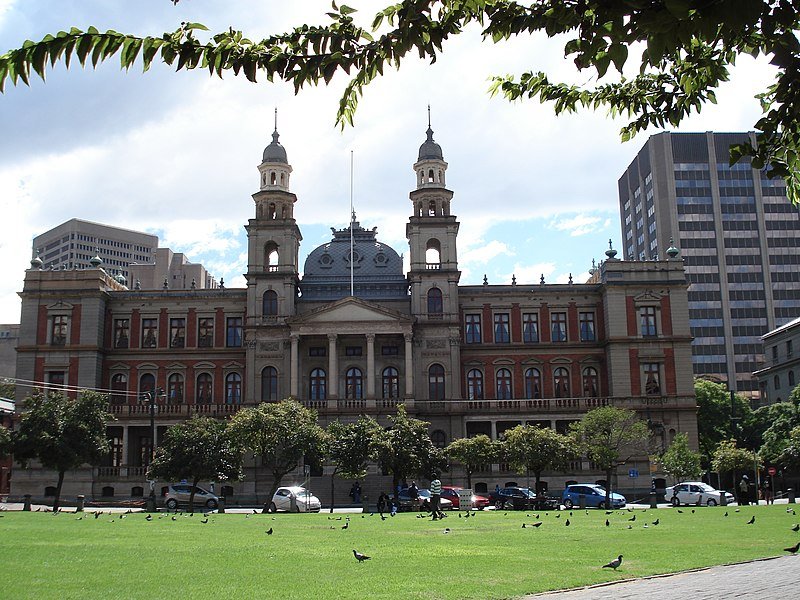
The Pretoria Palace of Justice, where the Rivonia Trial took place.
The Rivonia Trial was a landmark event in South African history, shaping the course of the anti-apartheid struggle and solidifying the reputations of key figures like Nelson Mandela and his co-accused. Taking place from October 9, 1963, to June 12, 1964, at the Palace of Justice in Pretoria, the trial involved members of uMkhonto we Sizwe (MK), the newly formed armed wing of the African National Congress (ANC).
The Rivonia Trial was one of the most significant trials of the apartheid era, leading to life imprisonment for key anti-apartheid leaders.
READ ALSO: Brief history of South Africa and why it has three capital cities
Background and Origins
The trial took its name from Rivonia, a suburb of Johannesburg, where Liliesleaf Farm served as a secret meeting place for ANC and Communist Party of South Africa members. The farm, owned by Arthur Goldreich, functioned as an underground headquarters where strategic plans against apartheid policies were devised. Nelson Mandela lived there under the alias David Motsamayi, posing as a gardener and cook while evading police.
On July 11, 1963, police raided the farm, arresting numerous ANC and Communist Party leaders who were in the middle of a meeting. The captured individuals were charged under the General Law Amendment Act No. 37 of 1963, which permitted the government to detain suspects for 90 days without trial. Several prominent figures, including Oliver Tambo, Moses Kotane, Joe Slovo, and Alfred Nzo, were not at the farm during the raid and managed to escape arrest.

Key Figures in the Trial
The men arrested at Liliesleaf Farm and those later charged in the Rivonia Trial included:
- Nelson Mandela (already imprisoned at the time of arrest)
- Walter Sisulu
- Govan Mbeki
- Ahmed Kathrada
- Denis Goldberg
- Raymond Mhlaba
- Elias Motsoaledi
- Andrew Mlangeni
- Lionel Bernstein
- James Kantor (who was later discharged)
These men came from diverse backgrounds, including African, Indian, and Jewish communities, reflecting the multiracial composition of the anti-apartheid struggle. The arrests led to a significant blow to the ANC and intensified global opposition to apartheid.
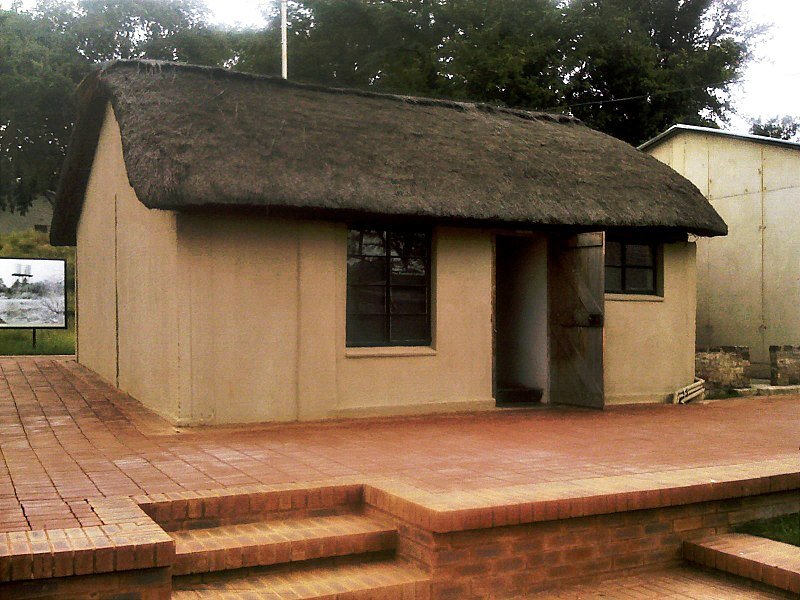
The thatched cottage at Arthur Goldreich’s Liliesleaf Farm.

Trial Proceedings and Legal Challenges
The Rivonia Trial commenced on October 6, 1963, with Percy Yutar as the chief prosecutor and Quartus de Wet presiding as judge. The prosecution initially indicted eleven individuals, but after legal challenges by the defense, a revised indictment reduced the number to ten accused.
The accused were charged with sabotage, attempting to violently overthrow the government, and conspiring with foreign nations. Specific charges included:
- Recruiting individuals for military training and sabotage.
- Conspiring to assist foreign military forces.
- Acting to advance the ideals of communism.
- Receiving funds from foreign entities for these purposes.
The state’s case was built on documents seized during the Liliesleaf Farm raid, including Operation Mayibuye, which outlined a plan for guerrilla warfare against the apartheid government. The prosecution argued that these documents proved the accused sought to overthrow the state violently.
The Defense Team
The defense, led by Bram Fischer, included Joel Joffe, George Bizos, Arthur Chaskalson, and Vernon Berrangé. These legal experts faced enormous pressure, as the trial was heavily politicized, and the state sought harsh punishments, including the death penalty.
The defense adopted multiple strategies, including challenging the legality of the state’s evidence and highlighting the lack of due process in detaining the accused for extended periods without trial. Despite their efforts, the weight of the evidence and the political context made acquittal unlikely.
Mandela’s Famous Speech
On April 20, 1964, Nelson Mandela delivered a three-hour-long speech from the dock, known as the “I Am Prepared to Die” speech. In this speech, he justified the ANC’s shift from non-violent resistance to sabotage, explaining that apartheid policies had left no alternative but to escalate the struggle.
He ended his speech with the now-famous words:
During my lifetime, I have dedicated myself to this struggle of the African people. I have fought against white domination, and I have fought against black domination. I have cherished the ideal of a democratic and free society in which all persons live together in harmony and with equal opportunities. It is an ideal which I hope to live for and to achieve. But if needs be, it is an ideal for which I am prepared to die.
These words resonated globally, galvanizing international support for the anti-apartheid movement and increasing pressure on the South African government.
Sentencing and Aftermath
On June 12, 1964, eight of the accused were sentenced to life imprisonment. Lionel Bernstein was acquitted, while James Kantor was discharged due to lack of evidence.
The sentenced individuals were:
- Nelson Mandela
- Walter Sisulu
- Govan Mbeki
- Ahmed Kathrada
- Denis Goldberg
- Raymond Mhlaba
- Elias Motsoaledi
- Andrew Mlangeni
Most of them were sent to Robben Island, except for Denis Goldberg, who, as a white prisoner, was held at Pretoria Central Prison. Their imprisonment marked a significant turning point in the anti-apartheid struggle, shifting global perceptions and increasing diplomatic pressure on the apartheid government.
International Reaction and Resistance
The Rivonia Trial received widespread international condemnation. The United Nations Security Council and several Western governments, including Britain and the United States, criticized the South African government’s actions. Many countries imposed sanctions against South Africa, while anti-apartheid movements intensified worldwide.
Release and Legacy
Over the next three decades, international and domestic pressure led to the gradual release of the Rivonia Trial prisoners:
- Denis Goldberg (released in 1985)
- Govan Mbeki (released in 1987)
- Walter Sisulu, Ahmed Kathrada, Raymond Mhlaba, Elias Motsoaledi, Andrew Mlangeni (released in 1989)
- Nelson Mandela (released in 1990)
Mandela’s release on February 11, 1990, marked the beginning of the end for apartheid. In 1994, South Africa held its first democratic elections, leading to Mandela becoming the nation’s first Black president.
Preservation of the Rivonia Trial Records
The trial’s audio recordings were preserved on Dictabelts, an obsolete recording format. In 2012, the French Institute of South Africa partnered with Henri Chamoux, an expert in archival restoration, to digitize these recordings. The restored Rivonia Trial sound archive is now an essential resource in documenting South Africa’s liberation history.
Depictions in Film and Literature
The Rivonia Trial has been portrayed in multiple films and documentaries:
- “Bram Fischer” (2017): A dramatization of the lead defense lawyer’s role.
- “Life is Wonderful” (2017): A documentary featuring interviews with surviving trial members.
- “The State Against Mandela and the Others” (2018): A French documentary using archival audio and animation.
Timeline of the Rivonia Trial
- 11 July 1963 – South African Police raid Liliesleaf Farm, arresting key anti-apartheid activists.
- 9 October 1963 – Rivonia Trial begins in Pretoria at the Palace of Justice.
- October 1963 – First indictment with 11 accused is dismissed due to legal insufficiency.
- December 1963 – Second indictment lists 10 accused; the trial resumes.
- 20 April 1964 – Nelson Mandela delivers his famous “I Am Prepared to Die” speech.
- 12 June 1964 – Eight defendants, including Mandela, are sentenced to life imprisonment; Lionel Bernstein is acquitted.
- 1985–1989 – Several Rivonia Trial convicts, including Denis Goldberg and Walter Sisulu, are released.
- 11 February 1990 – Nelson Mandela is released after 27 years in prison.
Frequently Asked Questions about the Rivonia Trial
Why was it called the Rivonia Trial?
It was named after Rivonia, a suburb of Johannesburg, where the police raided Liliesleaf Farm, the secret headquarters of uMkhonto we Sizwe (MK), the ANC’s armed wing.
Who were the key figures convicted in the trial?
Notable convicted figures included Nelson Mandela, Walter Sisulu, Govan Mbeki, Ahmed Kathrada, Denis Goldberg, Raymond Mhlaba, Elias Motsoaledi, and Andrew Mlangeni.
What were the main charges against the accused?
They were charged with sabotage, attempting to overthrow the government, recruiting for military training, and soliciting funds from foreign nations to support their activities.
What role did Nelson Mandela play in the trial?
Mandela was the lead defendant and delivered his famous “I Am Prepared to Die” speech, justifying the ANC’s resistance and emphasizing his commitment to democracy and equality.
Who was the lead prosecutor, and what was his argument?
Percy Yutar led the prosecution, arguing that the accused planned violent revolution and had enough explosives to “blow up a city the size of Johannesburg.”
Who were the defense lawyers in the trial?
The defense team included Bram Fischer, Vernon Berrangé, George Bizos, and Arthur Chaskalson, who fought to mitigate the sentences and prevent the death penalty.
What was the outcome of the trial?
Eight of the accused, including Mandela, were sentenced to life imprisonment, while Lionel Bernstein was acquitted, and James Kantor was discharged.
Why did the trial gain international attention?
The trial was condemned worldwide, with the UN and various nations opposing it. Some countries imposed sanctions against South Africa in response.
Where were the convicted prisoners held?
Most were imprisoned on Robben Island, except Denis Goldberg, who, as a white prisoner, was sent to Pretoria Central Prison.
When were the Rivonia Trial prisoners released?
Releases occurred between 1985 and 1990, with Mandela being the last to be freed on 11 February 1990 after 27 years in prison.
The Rivonia Trial has been documented in films, books, and restored audio recordings, with Mandela’s speech considered a defining moment in South Africa’s fight for democracy.
10 significant events that shaped African history during the 20th century





