Walter Sisulu: Life, Anti-Apartheid Contribution, & Legacy
Walter Sisulu was ANC Secretary-General (1949–1954) and later ANC Deputy President (1991–1994), playing a key role in the formation of the ANC Youth League and the armed wing, Umkhonto we Sizwe.
READ MORE: Brief history of South Africa and why it has three capital cities
Early Life and Family Background
Walter Max Ulyate Sisulu was born on May 18, 1912, in Ngcobo, a small town in the Union of South Africa, now part of the Eastern Cape province. His mother, Alice Mase Sisulu, was a Xhosa domestic worker, and his father, Albert Victor Dickinson, was a white civil servant and magistrate. However, Dickinson played no role in his upbringing, and Sisulu only met him once in his lifetime. Raised by his maternal family, he strongly identified with his Xhosa heritage and was deeply influenced by his uncle, Dyantyi Hlakula, who nurtured his appreciation for Xhosa culture.
Growing up in a racially segregated society, Sisulu faced many challenges. He attended an Anglican mission school but had to leave in his mid-teens to find work and support his family. Moving to Johannesburg, he worked various jobs, including as a miner, domestic worker, and baker.
His experience in the workforce exposed him to the realities of racial oppression, sparking his interest in activism. In 1939, he founded Sitha Investments, the only black-owned real estate agency in South Africa, which aimed to help black and Indian families purchase homes, reflecting his commitment to economic empowerment and racial justice.

A 1991 photo of Walter Sisulu
Entry into Politics and the ANC Youth League
Sisulu joined the African National Congress (ANC) in 1940, marking the beginning of his lifelong political journey. In 1941, he met Nelson Mandela and immediately recognized his leadership potential, encouraging him to join the ANC. He also introduced Mandela to his first wife, Evelyn Mase, who was a relative of Sisulu. Together with Oliver Tambo, the three men would form a formidable alliance in the anti-apartheid struggle.
In 1943, Sisulu became a founding member of the ANC Youth League, an organization established to push for more radical resistance against apartheid. Under the leadership of Anton Lembede, the Youth League promoted African nationalism and mass mobilization.
When the National Party came to power in 1948, introducing official apartheid policies, the Youth League called for direct action. At the ANC’s 1949 National Conference, Sisulu played a key role in adopting the Programme of Action, which emphasized boycotts, strikes, and passive resistance. He was subsequently elected as the ANC’s Secretary-General, helping to transform the movement into a more militant force.
Nelson Mandela’s role in the fight against apartheid in South Africa
The Defiance Campaign and Growing Political Influence
Sisulu was instrumental in organizing the 1952 Defiance Campaign, the first large-scale, coordinated act of resistance against apartheid laws. The campaign encouraged civil disobedience, urging black South Africans to break unjust laws. As a key planner, Sisulu was arrested along with other leaders and charged under the Suppression of Communism Act. He was found guilty and given a suspended sentence, but the campaign significantly increased the ANC’s influence and membership.
Throughout the 1950s, Sisulu remained at the forefront of resistance, despite government efforts to suppress political activism. In 1953, he traveled internationally, visiting socialist countries like China and Poland, where he studied their revolutionary movements. Back home, he continued to work with both the ANC and the South African Communist Party (SACP). Although officially banned from political activity, he played a behind-the-scenes role in drafting the Freedom Charter in 1955, which outlined a vision for a non-racial, democratic South Africa.
Armed Struggle and the Formation of Umkhonto we Sizwe
By the early 1960s, the apartheid government had intensified its repression, banning the ANC and other liberation movements. Realizing that peaceful protest was insufficient, Sisulu and Mandela spearheaded the formation of Umkhonto we Sizwe (MK), the ANC’s armed wing, in 1961. As a member of MK’s High Command, Sisulu helped plan sabotage operations against government infrastructure.
Sisulu’s ability to mentor and unite people made him an indispensable figure in the struggle against apartheid.
However, the government’s crackdown escalated, and Sisulu was repeatedly arrested. He went underground in 1963, but his wife, Albertina Sisulu, was detained in his place under the notorious 90-Day Detention Act. Later that year, the police raided Liliesleaf Farm in Rivonia, Johannesburg, where Sisulu and other activists were hiding. The arrests led to the infamous Rivonia Trial.
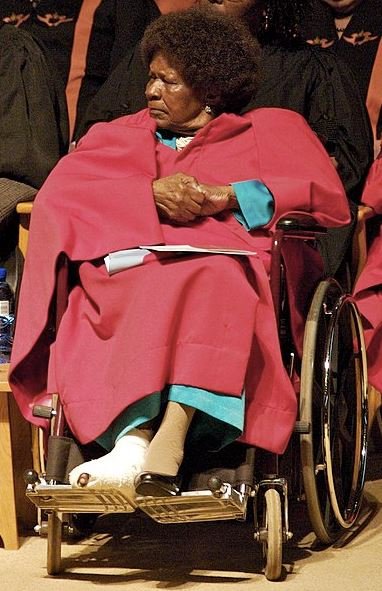
A 2007 picture of Albertina Sisulu seated on a wheelchair.
The Rivonia Trial and Imprisonment
During the Rivonia Trial (1963–1964), Sisulu and his co-accused, including Mandela and Govan Mbeki, were charged with sabotage and attempting to overthrow the state. In his testimony, Sisulu remained steadfast in his commitment to freedom, stating:
As long as I enjoy the confidence of my people, and as long as there is a spark of life and energy in me, I shall fight with courage and determination for the abolition of discriminatory laws and for the freedom of all South Africans.
On June 12, 1964, he was sentenced to life imprisonment and sent to Robben Island, where he remained for over 25 years. Despite the harsh conditions, he emerged as a mentor to younger prisoners, including future leaders like Jacob Zuma. His ability to remain calm and patient under extreme adversity earned him deep respect among fellow inmates.
Release and the End of Apartheid
Sisulu was released from prison on October 15, 1989, as the apartheid regime began negotiating a transition to democracy. His release, along with other Rivonia Trial prisoners, signaled the beginning of formal talks between the ANC and the government. At 77 years old, he resumed his political work with remarkable vigor, helping to shape South Africa’s transition to democracy.
Walter Sisulu’s life was a testament to selflessness, resilience, and unwavering commitment to justice.
In 1991, he was elected as the ANC’s Deputy President, playing a crucial role in unifying the party’s factions. His wisdom and diplomatic approach helped prevent internal conflicts between younger leaders, such as Thabo Mbeki and Cyril Ramaphosa. While he chose not to run for public office after apartheid ended, he remained an elder statesman in the ANC and an advocate for national reconciliation.
Personal Life and Legacy
Sisulu’s marriage to Albertina Sisulu in 1944 was a defining partnership in both his personal and political life. Albertina became a respected activist in her own right, leading movements like the United Democratic Front. Together, they raised five biological children and adopted three more. Their home in Soweto remained a center of political activity even during Walter’s imprisonment.
Sisulu’s humility and unwavering dedication to justice earned him admiration from his peers. Nelson Mandela described him as “my friend, my brother, my keeper, my comrade,” underscoring their deep bond. He was a man who led through quiet strength, often described as more loved than even Mandela himself.
Death and Honors
Walter Sisulu passed away on May 5, 2003, at his home in Johannesburg, just shy of his 91st birthday. His death was mourned across South Africa, and he was granted a “special official funeral” on May 17, 2003. Mandela’s eulogy captured the essence of Sisulu’s legacy, emphasizing their shared sacrifices and lifelong commitment to freedom.
His contributions to the struggle were recognized through numerous awards. In 1992, he received the ANC’s highest honor, the Isitwalandwe Medal, and in 1998, he was awarded India’s Padma Vibhushan. Several institutions, including Walter Sisulu University and Walter Sisulu National Botanical Garden, bear his name, ensuring that his legacy endures.
Timeline of Walter Sisulu’s Life
- 1912: Born on May 18 in Ngcobo, Eastern Cape, South Africa. Raised by his mother’s family.
- 1920s: Leaves school in his mid-teens to find work in Johannesburg.
- 1939: Establishes Sitha Investments, the only black-owned real estate agency in South Africa.
- 1940: Joins the African National Congress (ANC).
- 1943: Co-founds the ANC Youth League with Nelson Mandela and Oliver Tambo.
- 1944: Marries Albertina Sisulu; Nelson Mandela serves as best man.
- 1949: Elected ANC Secretary-General; helps drive a militant approach against apartheid.
- 1952: Plays a key role in the Defiance Campaign and is arrested under the Suppression of Communism Act.
- 1955: Observes the adoption of the Freedom Charter while under a banning order.
- 1961: Helps establish Umkhonto we Sizwe, the ANC’s armed wing.
- 1963: Arrested at Liliesleaf Farm, leading to the Rivonia Trial.
- 1964: Sentenced to life imprisonment on Robben Island.
- 1989: Released from prison on October 15.
- 1991: Elected ANC Deputy President.
- 1994: Retires from politics after South Africa’s first democratic elections.
- 2003: Passes away on May 5 in Johannesburg at age 90.
Frequently asked questions about Walter Sisulu
Why was Walter Sisulu imprisoned?
He was arrested in 1963 during the Rivonia Trial for his anti-apartheid activities and sentenced to life imprisonment for sabotage, serving over 25 years, mostly on Robben Island.

Robben Island Prison, the place where Sisulu was imprisoned.
How did Sisulu contribute to the Defiance Campaign?
As part of the ANC leadership, he helped organize the 1952 Defiance Campaign, the first large-scale, nonviolent resistance movement against apartheid laws.
What was Sisulu’s relationship with Nelson Mandela?
He mentored Mandela, encouraged him to join the ANC, introduced him to his first wife, and remained a close ally in the anti-apartheid struggle.

A 1994 photo of Mandela casting his vote.
What was the significance of Sisulu’s international travels in the 1950s?
He was part of ANC delegations that met with communist leaders in China and Eastern Europe, helping shape the ANC’s strategic direction.
How did Sisulu’s imprisonment affect his family?
His wife, Albertina Sisulu, became a prominent activist, frequently detained and banned, while their children were also involved in the struggle.
What was Sisulu’s role in the negotiations to end apartheid?
After his release in 1989, he joined the ANC team in talks with the apartheid government, leading to democratic reforms.
Why was Sisulu widely respected within the ANC?
He was known for his humility, patience, and ability to unify factions within the movement, earning admiration from both comrades and rivals.
What was Walter Sisulu’s legacy in post-apartheid South Africa?
Institutions like Walter Sisulu University and various awards honor his contributions to the liberation struggle.
How did Sisulu and Mandela view their friendship?
Mandela described Sisulu as his “friend, brother, and keeper,” acknowledging his guiding role in their shared struggle.
10 significant events that shaped African history during the 20th century





