Seljuk Minarets in Persia
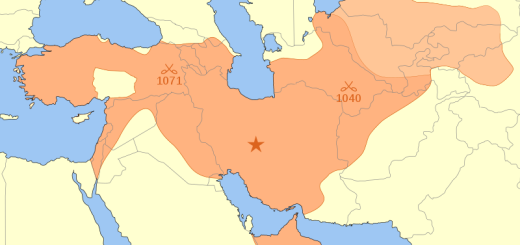
The Seljuk dynasty (11th–13th centuries) ruled a vast empire that covered parts of Persia, where Islamic art and architecture flourished. Persian minarets became more than just functional structures; they were also deeply symbolic, showcasing regional artistry and the spread of Islamic architectural principles.
Seljuk minarets in Persia are especially notable for their unique cylindrical shapes, intricate brickwork, and elaborate ornamentation. These features reflect the combination of Persian and Islamic styles that evolved under Seljuk rule, as well as the adaptability of local artisans to regional materials and aesthetic preferences.
Common Features of Seljuk Minarets
The design of Seljuk minarets generally features a circular or polygonal shaft with rich decorative motifs, typically crafted in brick with geometric patterns or Kufic inscriptions. Their proportions and style reflect the transition from simple towers to monumental structures that signify Islamic authority and serve as visual markers of religious presence. Many minarets have a base, shaft, and crown structure, with careful attention given to symmetry, proportion, and placement relative to the adjoining mosque.

Jameh Mosque in Saveh.
Key Structural and Decorative Elements
The use of brick was widespread in Persia due to the region’s clay-rich soil, and Seljuk artisans mastered brickwork techniques to create intricate geometric designs and calligraphy. Minarets often display patterns such as interlaced stars, hexagons, and intricate arabesques, which became hallmarks of Seljuk aesthetics.
Kufic inscriptions, usually composed of Quranic verses or the names of patrons, are often incorporated into the minaret’s structure. This feature not only has aesthetic significance but also reflects the Seljuk’s devotion to Islam.
Seljuk minarets typically feature slim, towering forms, symbolizing a connection between earth and heaven. The shaft’s tapering structure, combined with its cylindrical or polygonal design, accentuates verticality, adding to the grandeur and visibility of the minaret.
Most Seljuk minarets are topped with a decorative crown or balcony, often with a muqarnas (stalactite) design that breaks the sharpness of the top with an intricately faceted ornamentation, providing a rhythmic contrast to the otherwise linear form.
The Seljuk dynasty ruled over an expansive region, resulting in minaret designs that adapted to local climates, available materials, and aesthetic preferences. This diversity is evident in the varying shapes, materials, and decorative styles found across different parts of Persia.
Regional Variations in Seljuk Minaret Design
The following sections explore the regional differences in Seljuk minarets in Persia, focusing on how geography, material availability, and local traditions influenced architectural styles.
Northern Persia
In the northern regions, such as Rayy (near modern-day Tehran), minarets were typically constructed with locally available materials like fired brick and stone. Due to colder climates, these minarets often had thicker walls to withstand harsh weather, and they sometimes featured hexagonal or octagonal bases that provided extra stability against the elements. Notable examples include the Saveh Minaret, which exhibits detailed Kufic inscriptions and intricate brickwork patterns that speak to the technical proficiency of northern artisans.
Distinct Features:
- Use of darker-colored brick and limited stone embellishments.
- Focus on durability and structural integrity.
- Simpler, more geometric designs due to practical climate considerations.
Western Persia
In Western Persia, around Isfahan, minarets were heavily influenced by both local Persian styles and nearby Mesopotamian architecture. Minarets in this region typically feature a harmonious blend of intricate brickwork, mosaics, and sometimes glazed tiles. The Jameh Mosque of Isfahan’s minarets, for example, display elaborate turquoise tile work combined with Seljuk-style brick patterns. This combination highlights a synthesis of Persian artistic flair with the functional simplicity favored by the Seljuks.

Jameh Mosque of Isfahan.
Distinct Features:
- Integration of glazed tile work, especially in shades of turquoise and blue.
- Elegant, slender minarets with highly decorative elements.
- Strong focus on symmetrical patterns and harmonious proportions.
Eastern Persia
The eastern regions, particularly Khorasan, were known for pioneering advanced brickwork techniques. Minarets here often showcased a complex interplay of light and shadow, achieved through deeply carved brick patterns and relief work. Examples like the minaret of Damghan illustrate the use of alternating bricks and recessed panels, which create a dynamic visual effect as light shifts throughout the day.

Jameh Mosque of Damghan
Distinct Features:
- Use of deeply carved brick relief for a play of light and shadow.
- More varied shapes and forms, with some minarets appearing almost segmented.
- Emphasis on textured patterns that catch light, enhancing the aesthetic experience.
Southern Persia
In the southern parts of Persia, such as Fars, minarets reflect the architectural traditions of ancient Persia, showing influence from pre-Islamic Achaemenid and Sassanian structures. This region’s minarets are typically shorter, with wider bases, and often feature robust, thick structures built to withstand the warmer climate. The use of stucco and adobe was also more prevalent, reflecting the local material availability.
Distinct Features:
- Shorter, sturdier minarets with wider bases.
- Simple decoration, often with minimal use of brick patterns or relief.
- Greater use of stucco, likely due to regional material constraints.
Central Persia
Central Persia, particularly around Yazd, has some of the most iconic Seljuk minarets that serve as monumental structures against the desert landscape. The arid climate and scarcity of water influenced the use of adobe and mudbrick in construction, while unique ventilation techniques, such as windcatchers (badgirs), were sometimes incorporated into the design to manage the desert heat.
Distinct Features:
- Use of adobe and mudbrick, reflecting desert environment adaptations.
- Minimalist approach to decoration with a focus on function.
- Integration with other desert-adapted structures, such as windcatchers.
Analysis of Regional Influences and Material Adaptations
The regional differences in Seljuk minarets are a testament to the adaptability and ingenuity of Persian architects. Each area adapted Seljuk architectural principles to local resources, environmental needs, and aesthetic traditions, resulting in a diverse range of styles unified by core Seljuk features. The versatility of brick as a medium allowed for creative patterns and designs that would not have been feasible with other materials, and the adaptation of calligraphy and geometric designs provided a unifying Islamic aesthetic across regions.
Local materials significantly shaped minaret design. In areas with abundant clay, brickwork flourished, allowing for detailed designs, while stone and stucco were more common in areas where clay was less available. The climate also influenced the durability and form of minarets, with colder regions requiring thicker walls and warmer, arid regions favoring shorter, sturdier structures.
Persian culture had a rich architectural history predating Islam, and Seljuk architects in Persia often drew on pre-Islamic elements such as symmetry and proportional harmony. These cultural elements blended with Islamic motifs, resulting in an architecture that was distinctively Persian yet distinctly Islamic.
While minarets primarily served to broadcast the call to prayer, they also symbolized the Seljuk dynasty’s authority and the Islamic faith’s reach. This dual purpose influenced their monumental scale, placing a strong emphasis on visibility and presence. The integration of calligraphy and geometric patterns emphasized the religious and cultural message of Islam, transforming each minaret into a declaration of faith.
Frequently asked questions
How did the Seljuk period contribute to the cultural and economic development of Persia?
Under Seljuk rule, Persia experienced significant cultural and economic prosperity. The Seljuks made lasting contributions to Persian Islamic architecture by blending Persian, Islamic, and Central Asian elements into a distinctive style, which influenced Islamic art and architecture for centuries.
What was one of the most striking architectural features of the Seljuk period?
One of the most remarkable features of Seljuk architecture was its masonry work, with intricate brick patterns and geometric designs. These elements became iconic within Islamic architectural heritage, demonstrating both artistic and technical sophistication.
What building materials were primarily used during the Seljuk period?
The primary materials used were stone and brick. Stone was often used for larger structures, while brick was commonly used for smaller constructions like mosques, tomb towers, and minarets. Bricks were also used decoratively in some large stone structures, particularly in their upper sections.
How did decorative brickwork evolve during the Seljuk era?
Decorative brickwork in the Seljuk era developed through two major techniques. The first involved building geometric patterns directly into the structure using bricks. The second method used precast brick sections arranged in unique layouts. Both techniques relied heavily on geometry to create modular or intricate designs.
What are Seljuk minarets, and what purpose did they serve?
Seljuk minarets, also known as manars, were tall cylindrical brick towers, typically attached to mosques, serving as markers of religious sites and places for the call to prayer. Before the Seljuks, mosques in Persia generally lacked tall structures, but the Seljuks introduced these towers to enhance religious architecture.
How did the Seljuk architectural style influence minaret design beyond Persia?
The Seljuks introduced the cylindrical minaret with an octagonal base to regions beyond Persia, including Afghanistan, India, and Syria. This design spread as part of Seljuk influence, establishing it as a recognizable feature in Islamic architecture across the region.
What additional function did some Seljuk minarets serve besides the call to prayer?
Some Seljuk minarets served as navigational aids for travelers, especially along desert routes. Minarets like those at Khusraugird and Ziyar doubled as lighthouses, with lamps at the top to guide travelers at night.
What are some notable examples of Seljuk minarets in Isfahan?
Notable Seljuk minarets in Isfahan include the Barsian Minaret (1097-98 CE), known for its simple cylindrical shape and minimal decoration, and the Chihil Dukhtaran Minaret (1107 CE), which features intricate Kufic inscriptions and octagonal and circular segments. The Sarban Minaret (1130-55 CE) is also prominent, with alternating brick patterns and blue tile inlays.

Sarban minaret in Isfahan, Iran.
How did Isfahan’s minarets typically differ in their design elements?
Isfahan’s minarets typically featured geometric brick layouts, with broad bands of decoration and inscriptions on their shafts. They often tapered upwards, a design that increased stability and gave the structures a refined appearance. The decoration was generally simpler and more geometric compared to other regions.
How did minarets in other Iranian regions differ from those in Isfahan?
Minarets in other regions, like Khurasan, Mazandaran, and Bukhara, were more elaborate in decoration, often using additional materials like wood and tile for ornamentation. For example, the Vabkent Minaret in Bukhara includes Kufic inscriptions with an exaggerated height in the stem of letters and decorative stalactites, showcasing a more ornate approach than the simpler minarets in Isfahan.
What is a notable feature of the Golpayegan Minaret in Shahrestan?
The Golpayegan Minaret in Shahrestan features a tall cylindrical shaft with an octagonal base decorated with blue tiles and carved niches. Its detailed ornamentation contrasts with the minimalist design typical of Isfahan’s minarets.
In what way do Seljuk minarets demonstrate the influence of the Seljuk dynasty on Persian architecture?
Seljuk minarets demonstrate the dynasty’s influence by incorporating both functional and decorative elements that became central to Persian Islamic architecture. The emphasis on tall, cylindrical structures, geometric brick patterns, and architectural techniques provided a lasting template for Persian Islamic architecture that persists today.
What materials and techniques in Seljuk minarets contributed to their durability?
The use of baked brick in modular geometric designs contributed to the durability of Seljuk minarets. The architectural techniques of the Seljuks, particularly in masonry and stability-focused tapering designs, allowed these minarets to withstand centuries of wear and natural elements.
FACT CHECK: At World History Edu, we strive for utmost accuracy and objectivity. But if you come across something that doesn’t look right, don’t hesitate to leave a comment below.