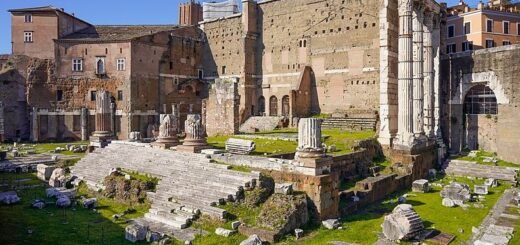
Significance of the mos maiorum in Roman culture
The mos maiorum (literally meaning “the way of the ancestors” in Latin) was the unwritten code of traditional values, customs, and social practices that formed the ethical foundation of ancient Roman society. It was central to Roman identity and shaped their political, religious, familial, and military institutions. The mos maiorum embodied a set of moral principles and behavioral guidelines passed down through generations, guiding Romans in their daily lives and shaping their interactions within society.

The mos maiorum, meaning “ancestral custom” in Latin, was an unwritten code guiding Roman social norms and traditions. This concept was central to Roman traditionalism, complementing formal written laws. Image: The Roman family transmitted mos maiorum across generations.
Origins and Meaning of Mos Maiorum
The term mos maiorum is derived from mos (meaning “custom” or “manner”) and maiorum (meaning “of the ancestors”), implying that it was a set of inherited customs. Unlike codified laws, which were formally written and legislated, the mos maiorum was rooted in tradition, passed down orally and upheld by collective societal consensus. The Roman people, particularly the ruling elite, believed that these ancestral customs had a divine origin and were key to the stability and prosperity of Rome.
The mos maiorum was conservative by nature, emphasizing the preservation of the traditional values and practices established by previous generations. In Roman society, continuity with the past was highly esteemed, and maintaining this connection to ancestral customs was seen as essential for the welfare of the state. Adherence to the mos maiorum gave Romans a strong sense of identity and belonging, reinforcing social cohesion.
The Role of Mos Maiorum in Roman Society
The mos maiorum served as the foundation for Rome’s social hierarchy and moral code, influencing both public and private life. It was a guide for behavior, helping individuals navigate their roles within the family, the state, and religious institutions. While the mos maiorum provided an ethical framework, it was also flexible enough to allow for adaptation and interpretation as circumstances changed over time.
The values upheld by the mos maiorum emphasized duty, respect for authority, discipline, and a strong sense of civic responsibility. Romans were expected to put the interests of the community and the state above their own personal desires. Upholding these values was seen as a moral obligation, and those who adhered to them were respected and honored.
Key Roman Values in the Mos Maiorum
Several key values formed the core of the mos maiorum:
- Fides – Fides referred to trust, reliability, and good faith. It was the foundation of relationships, whether in business, politics, or personal life. Fides was essential in forming alliances, making contracts, and ensuring mutual respect between patrons and clients. It was also tied to Roman legal practices, where oral agreements were often made based on mutual trust.
- Pietas – Pietas encompassed duty, loyalty, and respect toward the gods, family, and the state. It represented the obligation to maintain proper relationships and fulfill one’s responsibilities. In religious terms, pietas referred to devotion and reverence for the gods, while in the family, it signified respect for parents and ancestors. Pietas was considered one of the most important Roman virtues, exemplified by the hero Aeneas in Virgil’s Aeneid, who balanced his personal desires with his duty to his family and country.
- Gravitas and Constantia – Gravitas was the quality of serious, dignified self-control, while constantia referred to perseverance and steadfastness, especially in the face of adversity. Together, these values promoted discipline, emotional restraint, and unwavering commitment to duty. Romans believed that maintaining an unshaken, calm demeanor, even in challenging situations, was crucial to demonstrating one’s moral strength and reliability.
- Virtus – Virtus was closely tied to the ideal of Roman manhood. Derived from the Latin word vir (man), it represented courage, strength, and moral integrity. A Roman man was expected to display bravery in battle, wisdom in decision-making, and honor in his personal conduct. Virtus was also connected to the broader idea of conquering enemies and upholding Roman dominance, both militarily and socially.
- Disciplina – Disciplina referred to discipline, education, and training, particularly in the context of military service. It was important for Romans to maintain self-control and act in accordance with established rules and traditions. Discipline in both public and private life was crucial for maintaining the structure and order of society, especially as Rome expanded its influence through military conquests.
- Religio and Cultus – These terms referred to the religious practices that helped maintain the bond between the gods and humans. Religio was the sense of obligation toward performing religious rituals correctly, ensuring the favor of the gods. Cultus was the active participation in these rituals, including sacrifices and ceremonies designed to preserve the pax deorum (the peace of the gods). Fulfilling one’s religious duties was seen as essential for the continued success and prosperity of the Roman state.
- Dignitas and Auctoritas – Dignitas was the reputation for honor, worth, and esteem that an individual earned by demonstrating virtuous behavior and serving the state. A person’s dignitas was accumulated through public service, military achievements, and the demonstration of moral integrity. Auctoritas referred to the prestige and influence that came from possessing dignitas. Together, these values formed the foundation of a person’s social standing, allowing them to command respect and authority within society.
The Role of the Pater Familias and Patronage System
At the heart of Roman social structure was the pater familias, the male head of the household. The pater familias held absolute authority over all members of the family, including children, slaves, and extended relatives. He was responsible for ensuring the well-being of his household and making decisions on behalf of the family. This authority was granted by the mos maiorum, but the pater familias was expected to exercise it with wisdom and moderation.
The pater familias also had significant religious responsibilities, presiding over household rituals and ensuring that the family maintained proper relations with the gods. These religious duties were tied to the broader concept of pietas, as the head of the family was charged with preserving the moral and spiritual integrity of the household.
In addition to the family structure, the Roman patron-client system was another crucial aspect of social organization. A patron (patronus) provided protection, financial support, and legal assistance to his clients (clientes), while the clients, in return, offered loyalty and services. This relationship was hierarchical but mutually beneficial, creating a network of support that reinforced social bonds across different levels of Roman society. Clients were expected to honor their patron’s fides and support their patron in political, legal, and social matters.
The patron-client system extended beyond individuals and families to larger communities, particularly in Rome’s provincial territories. Roman generals or governors could become patrons to entire cities or regions, creating ties of loyalty that helped consolidate Roman rule.
Evolution and Flexibility of the Mos Maiorum
Although the mos maiorum was rooted in tradition, it was not static. Roman society evolved over time, especially as it expanded from a small city-state into a vast empire. The flexibility of the mos maiorum allowed Romans to adapt to new circumstances while maintaining continuity with their ancestral customs.
For instance, during the Republic, the mos maiorum supported the exclusion of plebeians (the common people) from holding political office. However, over time, the plebeians fought for and gained greater political rights through the Conflict of the Orders. These reforms, while significant, were framed within the context of Roman tradition, and eventually, plebeians and patricians shared power in the form of a ruling elite known as the nobiles.
During the late Republic, political leaders known as populares (popular politicians) sought to use the support of the people to challenge the power of the aristocracy. This often led to tensions with the conservative elites, who viewed such challenges as threats to the mos maiorum. Figures like Cicero, the famous orator and statesman, defended the mos maiorum in his speeches, arguing that preserving the traditional order was essential for Rome’s survival.
The Decline of the Mos Maiorum
As Rome transitioned from Republic to Empire, the role of the mos maiorum gradually diminished. The rise of powerful emperors, starting with Augustus, shifted the focus from collective adherence to ancestral customs to the authority of a single ruler. Augustus cleverly framed his reforms as a return to traditional values, even as he centralized power in his own hands.
The influence of the mos maiorum persisted, but as the Roman Empire became more cosmopolitan and diverse, these traditions became less central to Roman identity. The spread of Christianity in the later empire also contributed to the decline of the mos maiorum. Early Christian writers criticized the adherence to Roman traditions, viewing them as outdated and incompatible with Christian beliefs. Prudentius, a Christian poet, famously dismissed the mos maiorum as the “superstitions of old grandpas,” signaling a shift in the cultural and moral framework of Rome.
Conclusion
The mos maiorum played a central role in shaping Roman society, guiding personal behavior, public service, and religious practice. Its emphasis on traditional values, such as fides, pietas, virtus, and dignitas, created a moral framework that reinforced the stability of the Roman state. Although rooted in conservatism, the mos maiorum was flexible enough to adapt to changing social and political circumstances, allowing Rome to evolve while maintaining its connection to the past.
However, as the empire expanded and new influences emerged, the mos maiorum gradually lost its dominance, especially with the rise of autocratic emperors and the spread of Christianity. Despite its decline, the legacy of the mos maiorum remained embedded in the cultural memory of Rome, influencing the development of Western civilization.
Frequently Asked Questions

What was the structure of the Roman family (familia), and how was it organized?
The Roman family, or familia, was hierarchical, much like Roman society. The pater familias, or head of the household, held absolute authority over the family. The family unit was both autonomous and a model for the broader social order, and the pater familias was expected to exercise his power responsibly and with moderation.
What was the role of the pater familias in Roman society?
The pater familias had absolute authority over the household, making decisions about property, family members, and religious obligations. However, he was expected to exercise his power with responsibility, ensuring the well-being of the household, while following the customs of the mos maiorum.
What was the significance of the mos maiorum in Roman culture?
The mos maiorum was the unwritten code of traditional customs, values, and social practices passed down from the ancestors. It shaped Roman society by preserving a sense of continuity and identity. It was essential for maintaining social order and played a central role in political, private, and military life.
What was the relationship between patrons and clients in Roman society?
The patron-client (patronus and cliens) relationship was hierarchical but reciprocal. The patron provided legal and social support, while the client owed loyalty and services in return. These relationships formed networks (clientela) that connected different families and individuals, reinforcing social cohesion across Roman society.
How did the mos maiorum influence Roman conservatism?
Roman conservatism was rooted in the mos maiorum, the customs and traditions of the ancestors. Romans believed that any deviation from these customs was inherently wrong. This conservative mindset helped preserve Rome’s identity and values as the empire expanded, adapting traditions while remaining true to its core principles.
What Roman values were tied to the mos maiorum, and how did they shape society?
Key Roman values tied to the mos maiorum included:
- Fides: Trust and faithfulness in relationships and agreements.
- Pietas: Duty and respect toward the gods, family, and state.
- Religio and Cultus: The bond with the gods and the observance of religious rituals.
- Disciplina: Discipline and self-control, particularly in military and educational settings.
- Gravitas and Constantia: Dignified self-control and perseverance in adversity.
- Virtus: The ideal of Roman masculinity, emphasizing courage and moral strength.
- Dignitas and Auctoritas: Personal honor and the prestige that came from virtuous service to the state.
These values guided personal conduct and public service, ensuring a well-ordered and morally upright society.
How did the mos maiorum contribute to the stability and expansion of Rome?
The mos maiorum provided a set of guiding principles that ensured social cohesion, political stability, and a sense of continuity. By balancing tradition with adaptation to new circumstances, the mos maiorum helped Rome transition from a small city-state to a world power, while maintaining its core identity.
How did the plebeians’ struggle for political rights challenge the mos maiorum?
The plebeians, or commoners, sought political inclusion during the Conflict of the Orders, challenging the patricians’ dominance and the established traditions of the mos maiorum. Over time, plebeians gained access to magistracies and priesthoods, which reshaped the Roman elite, blending plebeian and patrician interests.
How did early Christianity affect the mos maiorum?
During the transition to the Christian Empire, traditional Roman values embedded in the mos maiorum were challenged by Christian values. Figures like Quintus Aurelius Symmachus argued for the preservation of Roman traditions, while Christian poets like Prudentius dismissed the old customs as outdated superstitions, signaling a cultural shift in Roman society.
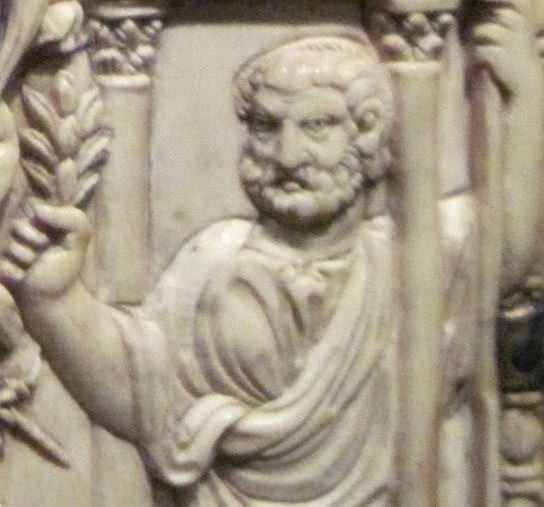
Image: Quintus Aurelius Symmachus
What were dignitas and auctoritas, and how did they relate to Roman virtues?
Dignitas referred to a Roman’s reputation for honor and worth, earned through virtuous behavior and public service. Auctoritas was the respect and prestige that came from having dignitas. Romans gained both by displaying virtues like fides, pietas, and virtus, and serving in priesthoods, military roles, or magistracies.