Sima Qian: Greatest Historian of China

Sima Qian (c. 145–87 BC) was a Chinese historian, astronomer, and calendar expert, renowned for writing the Shiji (“Historical Records”), the foremost history of China up to the 2nd century. Image: A sketch of Qian.
Sima Qian was born around 145 BC in Longmen, Xiayang (now Hancheng, Shaanxi province), during the early Han dynasty. His father, Sima Tan, held the prestigious position of grand historian at the Han court from 140 to 110 BC. This role, sometimes translated as “astronomer royal,” was multifaceted, combining astronomical duties and calendar regulation with the responsibility of keeping a daily record of state events and court ceremonies. The office of grand historian was crucial in maintaining the cultural and political continuity of the Han dynasty through meticulous record-keeping and astronomical observations.
Sima Qian’s upbringing was steeped in scholarly pursuits, influenced heavily by his father’s intellectual endeavors. Sima Tan envisioned writing a comprehensive history of China, but his untimely death in 110 BC left this ambitious project unfinished. This unfulfilled ambition profoundly impacted Sima Qian, instilling in him a sense of duty to complete his father’s work.
Youth and Court Service
In his youth, Sima Qian traveled extensively across China, absorbing the diverse cultural and historical landscapes of the regions he visited. These travels enriched his understanding of the vast Chinese empire and its complex history. His journeys also provided him with firsthand knowledge and sources that would later be invaluable in his historiographical work.
Sima Qian entered court service, quickly distinguishing himself through his intellectual acumen and dedication. In 111 BC, he accompanied a military expedition into the southwest of China, gaining practical experience and further insights into the empire’s military and political dynamics. The following year, he joined Emperor Wudi’s entourage during the emperor’s visit to Mount Tai, where sacrifices symbolizing the dynasty’s authority were conducted. This experience solidified Sima Qian’s position within the court and deepened his understanding of the Han dynasty’s ceremonial and political traditions.

Grand Historian and Calendar Reform
After his father’s death, Sima Qian mourned the loss deeply. Following the mandatory period of mourning, he was appointed in 108 BC to succeed his father as the grand historian. In this role, he was responsible for maintaining state records, conducting astronomical observations, and regulating the calendar. Sima Qian’s appointment marked the continuation of his father’s legacy and the beginning of his own monumental contributions to Chinese historiography.
In 105 BC, Sima Qian played a key role in the complete reform of the Chinese calendar, an initiative prompted by Emperor Wudi’s inauguration of what was intended to be a “new beginning” for the Han dynasty. This calendar reform was significant, reflecting the importance of astronomy and timekeeping in Chinese administration and culture. The reform aimed to synchronize the calendar more accurately with celestial phenomena, thereby ensuring the alignment of agricultural activities, religious observances, and governmental functions with the natural cycles.
The Li Ling Affair and Personal Sacrifice
While diligently working on his father’s ambitious project, Sima Qian’s career faced a dramatic turning point in 99 BC due to the Li Ling affair. General Li Ling was accused of failure in a military campaign against the Xiongnu, a powerful nomadic confederation. Sima Qian publicly defended Li Ling, arguing that the general’s actions were justified given the circumstances. This act of defiance angered Emperor Wudi, leading to Sima Qian’s conviction for defaming the emperor, a capital crime.
Presented with the grim choices of execution or castration, Sima Qian chose the latter, driven by his unwavering commitment to completing his historical work. Although the punishment was severe and brought great personal humiliation, Sima Qian’s decision underscored his dedication to preserving and documenting Chinese history for future generations. His personal sacrifice became a testament to his commitment to scholarship and historical truth.

Completion of the Records of the Grand Historian
Despite the personal cost and humiliation, Sima Qian remained steadfast in his mission. He continued his work with renewed determination, fully aware of the importance of his contributions to posterity. The Records of the Grand Historian (Shiji 史记), his magnum opus, was completed many years after his tenure as grand historian ended in disgrace. This monumental work is divided into five sections: Basic Annals, Chronological Tables, Treatises, Hereditary Houses, and Biographies. This structure not only provides a chronological account but also includes detailed biographies of notable figures and extensive tables that offer a unique insight into the sociopolitical landscape of ancient China.
- Basic Annals (本紀): These chapters provide a dated chronological outline centered on events at the court considered to have been the paramount power at the time. They serve as the backbone of the historical narrative, documenting the reigns of emperors and significant political events.
- Chronological Tables (年表): This section consists of chronological tables that attempt to clarify the confusion of the history of various independent feudal kingdoms. These tables enable readers to see at a glance what was happening in each of the states at any given time, offering a comprehensive view of concurrent events across the empire.
- Treatises (書): These monographs deal with various crucial aspects of government, such as rituals, music, law, and economics. They reflect Sima Qian’s interest in the practical reformist statesmen who were formulating new policies for the increasingly centralized state.
- Hereditary Houses (世家): This section provides detailed accounts of the hereditary houses, tracing the histories of noble families and their contributions to the state. It highlights the roles of influential families in shaping Chinese history.
- Biographies (列傳): The final section consists of biographies that deal with a variety of famous individuals, selected as exemplars of various types of conduct. These biographies include not only political figures but also businessmen, merchants, condottieri, bandits, actors, and court favorites, offering a diverse and comprehensive view of Chinese society.
Influence and Legacy
Sima Qian’s Records of the Grand Historian is considered the most important history of China down to the end of the 2nd century. It meticulously documents the rise and fall of various dynasties, the lives of emperors and key historical figures, and the evolution of Chinese society and governance. The scope and depth of Sima Qian’s work set a standard for historical writing, blending narrative history with biography and socio-political analysis.
Though his official career ended in disgrace, Sima Qian’s work earned him posthumous recognition and honor. Later generations revered him as “Lord Grand Historian” (Tàishǐ gōng 太史公), acknowledging the monumental nature of his contributions. The Records of the Grand Historian influenced not only subsequent dynastic histories in China but also historical writing in Korea, Japan, and Vietnam, forming a cornerstone of East Asian historiographical tradition.
In the postface of his Records, Sima Qian draws parallels between his own sufferings and those of other great historical and literary figures. He references Zuo Qiuming, author of the Guoyu, Qu Yuan, writer of Li Sao, and Sun Bin, strategist and author of the Art of War, all of whom endured personal misfortunes before achieving their monumental works. This comparison underscores the idea that significant scholarly and literary achievements often come at great personal cost.
Sima Qian’s life and work have been immortalized in various cultural depictions, including the Wu Shuang Pu by Jin Guliang, which portrays him among other exemplary historical figures. His story continues to inspire, illustrating the resilience and dedication required to pursue and preserve historical truth.
Literary Style and Criticism
Sima Qian’s prose is notable for its flexibility and narrative style, which influenced later writers of narrative prose and fiction. His acute critical comments, appended at the end of each chapter, demonstrate his scholarly rigor and critical engagement with sources. Sima Qian’s work is characterized by its eclectic use of philosophical ideas and its moral judgments on historical figures. He makes no attempt to compose “objective” history but rather belongs to the didactic Chinese tradition of history, where moral lessons are derived from historical events.
Despite facing criticism from later historians like Ban Gu for his haphazard use of ideas from various schools of philosophy and his devotion to Daoism, Sima Qian’s work stands out for its organization and critical approach. The ethical standards of Han Confucianism that Ban Gu and his contemporaries took for granted had not achieved the same authority during Sima Qian’s lifetime. Like most of his contemporaries, Sima Qian was an eclectic, working at a court where magic and the supernatural were still deemed potent forces, and where state religious cults and accepted moral and political standards were in a fluid state.

The Shiji as a Historical Masterpiece
The Records of the Grand Historian provided a model for later dynastic histories but differs from them in many ways. Its time span is far longer, encompassing the whole of human history as known to Sima Qian. The Shiji incorporates a wide range of source material, including the court annals of the Qin and Han dynasties, earlier histories, parts of court chronicles of various feudal states, and material from canonical books and philosophical writings, even historical romances.
Sima Qian’s subject matter is not exclusively court-centered and political; it includes a broad spectrum of society. By documenting the lives of various individuals, he offers a more comprehensive view of Chinese history that goes beyond the political elite. His work includes moral judgments and attempts to characterize individuals by their exemplary deeds and misdeeds. The lessons he derives from history are varied and often mutually incompatible, reflecting the complexity of human behavior and historical events.
Sima Qian’s acute critical comments and flexible prose style made the Shiji a compelling and influential work. Since his time, the Shiji has been acknowledged as the great historical masterpiece in Chinese literature, a standard against which all later histories would be measured. It served as a model for large-scale historical composition not only in China but in all East Asian countries influenced by the Chinese literary tradition.
Questions and Answers on Sima Qian
Sima Qian’s legacy as the “father of Chinese historiography” endures, highlighting the profound impact of his contributions on the understanding and recording of history.
Below are some frequently asked questions about Sima Qian:
Who was Sima Qian and why is he considered a pivotal figure in Chinese historiography?
Sima Qian was a Chinese historian who lived around 145 – 86 BC during the early Han dynasty. He is considered a pivotal figure in Chinese historiography due to his monumental work, the Records of the Grand Historian (Shiji 史记), which chronicles more than two millennia of Chinese history. His work set a precedent for historical writing in China and influenced historiography in the broader Sinosphere until the 20th century.
What period of history does the Records of the Grand Historian cover?
The Records of the Grand Historian covers over two thousand years of Chinese history, starting from the legendary Yellow Emperor and extending to the reign of Emperor Wu of Han.
How did Sima Qian’s father influence his career and aspirations?
Sima Qian’s father, Sima Tan, was a court historian who envisioned writing a comprehensive history of China. Sima Tan’s aspirations and incomplete sketches for this grand historical project greatly influenced Sima Qian. After his father’s death, Sima Qian inherited his position and vowed to fulfill his father’s vision.
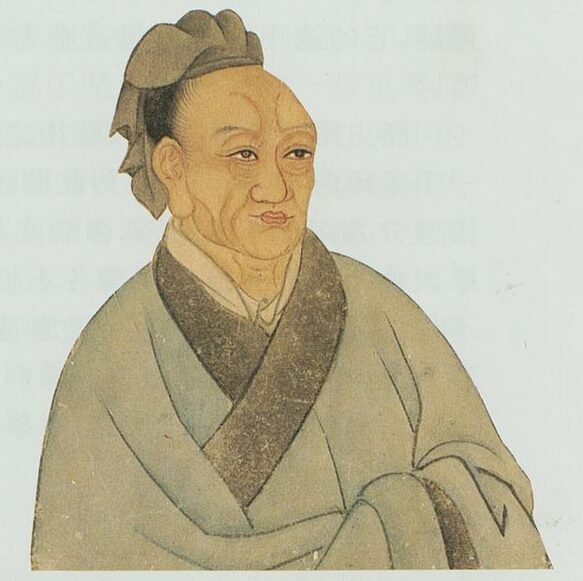
Sima Qian was the son of Sima Tan and served as the grand historian at the Han court from 140–110 BC. This role combined astronomical duties and calendar regulation with maintaining a record of state events. An artwork depicting Qian.
What roles did Sima Qian undertake as the Grand Historian (tàishǐ 太史)?
As the Grand Historian, Sima Qian undertook various roles including those of historian, scribe, astronomer, and astrologer.
What was the Li Ling affair and how did it impact Sima Qian’s life?
The Li Ling affair was a significant event in 99 BC where General Li Ling was accused of failure in a military campaign against the Xiongnu. Sima Qian publicly defended him, which angered Emperor Wu. This led to Sima Qian’s conviction, and he was given the choice of execution or castration. He chose castration in order to continue his work on the Records of the Grand Historian.

How is the Records of the Grand Historian structured?
The Records of the Grand Historian is divided into five sections: Basic Annals, Tables, Treatises, Hereditary Houses, and Biographies. This structure provides a chronological account, detailed biographies of notable figures, and extensive tables that offer insights into the sociopolitical landscape of ancient China.
What significance does the Records of the Grand Historian hold in the context of Chinese historiography?
The Records of the Grand Historian is significant as it documents the rise and fall of various dynasties, the lives of emperors and key historical figures, and the evolution of Chinese society and governance. It set a standard for historical writing by blending narrative history with biography and socio-political analysis.
Beyond historiography, what other contributions did Sima Qian make?
Beyond historiography, Sima Qian was involved in the creation of the Taichu calendar, which was officially promulgated in 104 BC. This calendar reform reflected the importance of astronomy and timekeeping in Chinese administration and culture.
How did Sima Qian view his work in comparison to the Chunqiu (Spring and Autumn Annals) by Confucius?
Sima Qian denied that his work was comparable to the Chunqiu by Confucius. He considered himself a transmitter of past events rather than a “maker” like Confucius.
How was Sima Qian viewed after his official career ended in disgrace?
Despite his disgrace, Sima Qian’s work earned him posthumous recognition and honor. Later generations revered him as “Lord Grand Historian” (Tàishǐ gōng 太史公), acknowledging the monumental nature of his contributions.
What influence did the Records of the Grand Historian have on subsequent historical writing?
The Records of the Grand Historian influenced subsequent dynastic histories in China as well as historical writing in Korea, Japan, and Vietnam, forming a cornerstone of East Asian historiographical tradition.
Which historical and literary figures does Sima Qian compare his own sufferings to in the postface of his Records?
In the postface of his Records, Sima Qian compares his sufferings to those of Zuo Qiuming, author of the Guoyu, Qu Yuan, writer of Li Sao, and Sun Bin, strategist and author of the Art of War. He highlights that these significant figures also endured personal misfortunes before achieving their monumental works.

How has Sima Qian’s prose style influenced later writers?
Sima Qian’s flexible and narrative prose style has influenced later writers of narrative prose and fiction, and his Shiji is considered the standard for Chinese historical composition.
How did Sima Qian die?
The exact details surrounding Sima Qian’s death are not well-documented, and historical records do not provide a definitive account of how he died. It is generally accepted that he died around 86 BC, but the circumstances of his death remain unclear.
Sima Qian lived a life marked by significant personal sacrifice and professional achievement. After choosing castration over execution to continue his work on the Records of the Grand Historian, he faced considerable disgrace and personal hardship. Despite these challenges, he continued his scholarly pursuits and completed his monumental work. It is likely that he died relatively quietly, continuing his intellectual endeavors until his death.
The lack of specific information about his death adds a layer of mystery to his life, but his legacy as the father of Chinese historiography remains undiminished. His contributions to historical writing and his dedication to preserving Chinese history for future generations have cemented his place as one of the most important figures in Chinese intellectual history.





