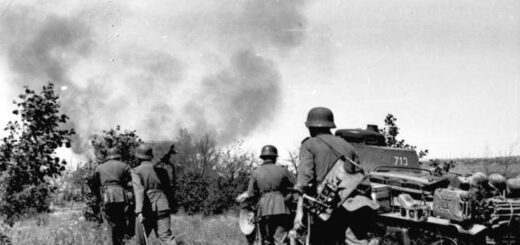
The Surrender on USS Missouri in Tokyo Bay

The surrender aboard the USS Missouri was a moment of both finality and hope. It brought an end to the bloodshed of World War II and set the stage for the rebuilding of a shattered world. Image: Japanese foreign affairs minister Mamoru Shigemitsu signs the Japanese Instrument of Surrender aboard the USS Missouri as American General Richard K. Sutherland watches, 2 September 1945.
The surrender ceremony aboard the USS Missouri on September 2, 1945, in Tokyo Bay, marked the official end of World War II. It brought together representatives of the Allied Powers and Japan to formally conclude the hostilities that had ravaged much of the globe for nearly six years. The event was a moment of both solemnity and significance, symbolizing not only the victory of the Allies but also the ushering in of a new era of international relations. Here’s an overview of the circumstances leading to the surrender, the ceremony itself, and its aftermath.
Lead-Up to the Surrender
By mid-1945, Japan was on the brink of collapse. The relentless Allied bombing campaign, which culminated in the atomic bombings of Hiroshima on August 6 and Nagasaki on August 9, had decimated Japanese infrastructure and morale. Furthermore, the Soviet Union declared war on Japan on August 8, swiftly invading Japanese-occupied territories in Manchuria. Facing these insurmountable pressures, Emperor Hirohito made the unprecedented decision to surrender, even though some factions within the Japanese military were staunchly opposed to it.
On August 15, 1945, Emperor Hirohito delivered a radio address, known as the “Jewel Voice Broadcast,” in which he announced Japan’s intention to accept the terms of the Potsdam Declaration. This declaration, issued by the Allies in July 1945, outlined the terms for Japan’s surrender, including the disarmament of its military and the establishment of a peaceful government. The emperor’s decision was monumental, as it was the first time the Japanese people had heard his voice, and it marked the beginning of the end of World War II.
The USS Missouri and Its Significance
The USS Missouri, a powerful battleship, was chosen as the site for the surrender ceremony for symbolic and practical reasons. Launched in 1944, the Missouri had seen significant action in the Pacific Theater, making it an appropriate venue for the historic event. Moreover, the ship bore the name of President Harry S. Truman’s home state, adding an additional layer of significance to its selection.
The ceremony was scheduled to take place in Tokyo Bay, a location chosen for its proximity to Japan’s capital and its accessibility for the assembled Allied representatives. The ship anchored amidst a large contingent of Allied naval forces, a visible reminder of the overwhelming power that had brought Japan to the negotiating table.
The Ceremony

Surrender ceremonies which officially ended World War II
On the morning of September 2, 1945, the weather was calm, with overcast skies casting a subdued light over Tokyo Bay. The USS Missouri’s deck had been meticulously prepared for the ceremony, with a long table draped in green felt set up for the signing of the surrender documents.
At 8:56 AM, Japanese representatives, led by Foreign Minister Mamoru Shigemitsu and General Yoshijiro Umezu, the Chief of the Army General Staff, arrived aboard the Missouri. They were greeted with silence by the assembled Allied officers and soldiers, a stark contrast to the typical fanfare associated with diplomatic occasions. The Japanese delegation, dressed in formal attire, including top hats and morning coats, presented a dignified appearance despite the gravity of their task.
General Douglas MacArthur, the Supreme Commander of the Allied Powers, presided over the ceremony. He delivered a brief speech, stating that the purpose of the ceremony was to conclude the “most tragic war in history” and to lay the foundation for a “better world out of the blood and carnage of the past.” MacArthur’s words were measured and hopeful, reflecting the desire for peace and the rebuilding of a war-torn world.
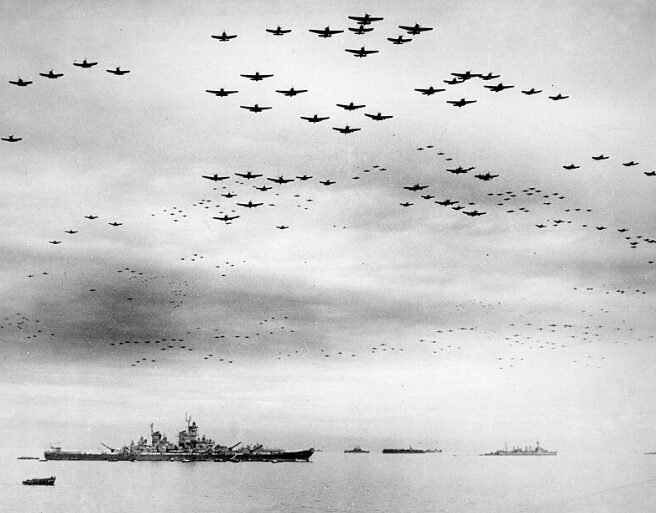
A vast formation of American planes flew over USS Missouri and Tokyo Bay, celebrating Japan’s surrender.
At 9:02 AM, Shigemitsu signed the Instrument of Surrender on behalf of the Japanese government, followed by General Umezu, who signed on behalf of the Japanese military. The signing took only a few minutes, but it represented the culmination of years of warfare and suffering.
Following the Japanese signatures, representatives of the Allied Powers, including the United States, the United Kingdom, the Soviet Union, China, and others, signed the document in a show of unity. General MacArthur signed first, followed by Fleet Admiral Chester W. Nimitz for the United States. Each representative signed two copies of the document—one for the Allies and one for Japan.
The ceremony concluded with a brief address by MacArthur, in which he expressed hope for lasting peace and a new world order based on freedom, tolerance, and justice. With that, the ceremony was over, and Japan’s formal surrender had been completed.

General Douglas MacArthur signs the Instrument of Surrender for the Allies, with former Japanese prisoners, Generals Wainwright and Percival, behind him.
The Aftermath of the Surrender

Japanese copy of the Instrument of Surrender
The signing of the Instrument of Surrender aboard the USS Missouri marked the official end of World War II, but the work of rebuilding and reshaping the post-war world was just beginning. In Japan, the surrender brought about significant political, social, and economic changes. The country was placed under Allied occupation, with General MacArthur overseeing the reconstruction efforts.
One of the most significant changes was the demilitarization of Japan. The Potsdam Declaration had called for the complete disarmament of Japan’s military forces, and this process was carried out swiftly under Allied supervision. The Japanese Imperial Army and Navy were disbanded, and Japan was prohibited from maintaining armed forces capable of waging war.
In addition to demilitarization, the Allied occupation authorities implemented a series of reforms aimed at democratizing Japan’s political system. The most notable of these reforms was the drafting of a new constitution, which came into effect in 1947. This constitution, often referred to as the “MacArthur Constitution,” enshrined democratic principles such as popular sovereignty, civil liberties, and the renunciation of war as a means of resolving international disputes.
Emperor Hirohito, who had been regarded as a divine figure in pre-war Japan, was allowed to remain on the throne but was required to renounce his divine status. This marked a significant shift in Japanese society, as the emperor’s role became largely symbolic, with political power being transferred to elected officials.
The economic transformation of Japan was another critical aspect of the post-war period. With much of the country’s industrial infrastructure destroyed, Japan had to rebuild its economy from the ground up. The United States played a significant role in this process, providing financial assistance through the Marshall Plan and other programs aimed at revitalizing the Japanese economy. By the 1960s, Japan had emerged as a major economic power, with a thriving industrial base and a robust export-driven economy.
Global Impact of the Surrender
The surrender of Japan not only ended World War II but also reshaped the geopolitical landscape of the post-war world. The Allied victory had established the United States and the Soviet Union as the two dominant superpowers, setting the stage for the Cold War. In Asia, the defeat of Japan led to the decolonization of many territories that had been under Japanese occupation, including Korea, Taiwan, and parts of Southeast Asia.
The end of the war also brought about the establishment of the United Nations, an international organization dedicated to maintaining peace and preventing future conflicts. The UN was envisioned as a successor to the League of Nations, which had failed to prevent the outbreak of World War II. The first meeting of the UN General Assembly was held in London in 1946, and its establishment marked the beginning of a new era in international diplomacy.
For Japan, the post-war period was one of profound change. The country’s transition from a militaristic empire to a peaceful, democratic nation was a remarkable transformation. Under the guidance of the United States and other Allied powers, Japan rebuilt its economy and society, becoming a model of post-war recovery.
Legacy
The surrender ceremony aboard the USS Missouri remains one of the most iconic moments of the 20th century. It symbolized the end of the deadliest conflict in human history and the beginning of a new chapter in global relations. The image of Japanese representatives signing the Instrument of Surrender on the deck of the Missouri is etched into the collective memory of the world, serving as a powerful reminder of the cost of war and the importance of peace.
Today, the USS Missouri is preserved as a museum ship at Pearl Harbor, Hawaii, where it serves as a memorial to those who fought and died during World War II. Visitors to the ship can walk the same deck where the historic surrender took place and reflect on the events that shaped the modern world.
The ceremony’s legacy extends beyond the end of World War II. It has come to symbolize the potential for reconciliation and the rebuilding of nations in the aftermath of conflict. Japan’s post-war recovery, marked by its rapid economic growth and peaceful foreign policy, is often cited as an example of how a defeated nation can rise from the ashes of war to become a global leader.
Facts about the USS Missouri
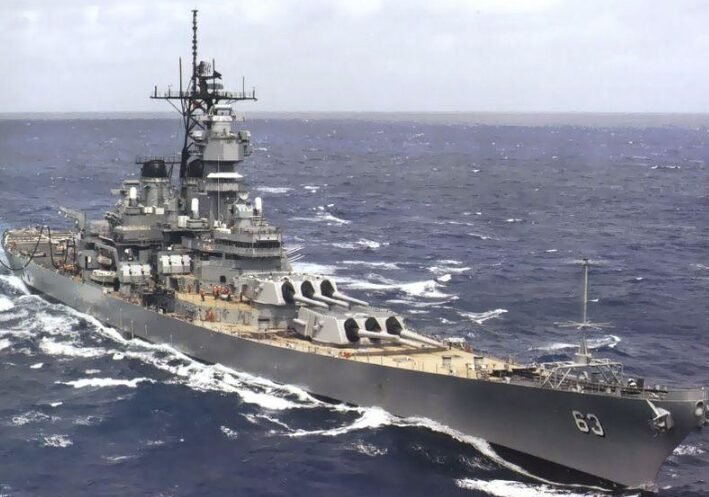
Decommissioned again in 1992, Missouri remained on the Naval Vessel Register until 1995. In 1998, she was donated to the USS Missouri Memorial Association and now serves as a museum ship at Pearl Harbor, Hawaii. Image: Missouri at sea in her 1980s configuration
- USS Missouri (BB-63) is an Iowa-class battleship built for the United States Navy during the 1940s, now serving as a museum ship. Commissioned in 1944, it was the last battleship the United States completed. Missouri played a key role in the Pacific Theater during World War II, participating in the Battles of Iwo Jima and Okinawa and bombarding the Japanese home islands. The ship’s quarterdeck was famously the site of Japan’s formal surrender, ending World War II.
- Following the war, Missouri took part in various diplomatic, show-of-force, and training missions. On January 17, 1950, she ran aground in Chesapeake Bay but was successfully re-floated after weeks of effort. During the Korean War, Missouri completed two tours from 1950 to 1953, becoming the first U.S. battleship to reach Korean waters and serving as flagship for multiple admirals. The ship participated in numerous shore bombardments and escorted aircraft carriers. After the war, she was decommissioned in 1955 and transferred to the reserve fleet, known as the “Mothball Fleet.”
- Reactivated and modernized in 1984 as part of the 600-ship Navy initiative, Missouri received new cruise and anti-ship missile systems and upgraded electronics. She served in the Persian Gulf, escorting oil tankers under threat from Iran and participated in Operation Desert Storm in 1991, providing fire support.
Questions and Answers

Japanese representatives on board USS Missouri (BB-63) during the surrender ceremonies, 2 September 1945. Standing in front are: Foreign Minister Mamoru Shigemitsu (wearing top hat) and General Yoshijiro Umezu, Chief of the Army General Staff. Behind them are three representatives each of the Foreign Ministry, the Army and the Navy. They include, in middle row, left to right: Major General Yatsuji Nagai, Army; Katsuo Okazaki, Foreign Ministry; Rear Admiral Tadatoshi Tomioka, Navy; Toshikazu Kase, Foreign Ministry, and Lieutenant General Suichi Miyakazi, Army. In the the back row, left to right (not all are visible): Rear Admiral Ichiro Yokoyama, Navy; Saburo Ota, Foreign Ministry; Captain Katsuo Shiba, Navy, and Colonel Kaziyi Sugita, Army. (Identities those in second and third rows are from an annotated photograph in Naval History and Heritage Command files.) Photograph from the Army Signal Corps Collection in the U.S. National Archives.
What was the Japanese Instrument of Surrender?
The Japanese Instrument of Surrender was the formal document that officially ended hostilities in World War II, marking Japan’s surrender to the Allied nations.
When and where was the Japanese Instrument of Surrender signed?
It was signed on September 2, 1945, aboard the USS Missouri in Tokyo Bay.
Which nations were represented at the signing ceremony of the Instrument of Surrender?
Representatives from Japan and the Allied nations, including the United States, the United Kingdom, the Republic of China, the Soviet Union, Australia, Canada, France, the Netherlands, and New Zealand, participated in the ceremony.
What significance did the USS Missouri have in the signing ceremony?
The USS Missouri was chosen for its symbolic significance, representing American strength and resolve in the Pacific Theater of World War II.

Aerial photo captures USS Missouri with USS Buchanan positioned alongside, taken from an airplane.
What is the difference between the signing of the Instrument of Surrender and Victory over Japan Day (V-J Day)?
The signing of the Instrument of Surrender occurred on September 2, 1945, marking the formal end of World War II. V-J Day is more commonly associated with August 15, 1945, when Emperor Hirohito announced Japan’s acceptance of the terms of surrender in a radio broadcast known as the Imperial Rescript of Surrender.
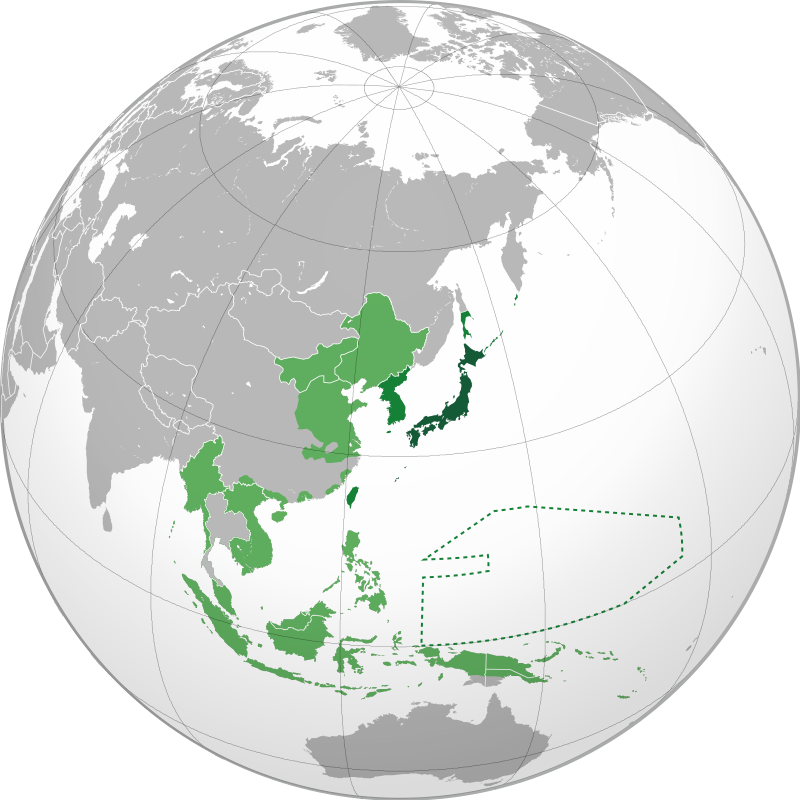
The Empire of Japan at its peak
What was the significance of Emperor Hirohito’s radio broadcast on August 15, 1945?
Emperor Hirohito’s broadcast, the Gyokuon-hōsō, was the first time the Japanese people heard the emperor’s voice. In it, he announced Japan’s acceptance of the Potsdam Declaration, which outlined the conditions for the country’s surrender and the end of the war.
What impact did the signing of the Instrument of Surrender have on the post-war world?
The signing marked the end of Japan’s wartime aggression and set the stage for the country’s disarmament, occupation, and eventual reconstruction. It also symbolized the beginning of a new era of international diplomacy and rebuilding.

Japan’s Instrument of Surrender in WW2
Why is the event on September 2, 1945, considered a defining moment in World War II history?
The event ended the global conflict in the Pacific and marked the beginning of the post-war era of peace and reconstruction, making it a pivotal moment in history.