Underworld Deities in Ancient Egyptian Religion and Mythology
In ancient Egyptian religion and mythology, the underworld, commonly referred to as the Duat or Amenti, was a complex realm of the dead. It was intricately described with regions of...
Geb is a pivotal figure in ancient Egyptian mythology and religion, representing the Earth.
His significance and attributes encompass several facets of Egyptian cosmology and daily life:
Geb was a member of the Ennead of Heliopolis, a group of nine central deities. This pantheon includes Atum (the primordial creator), Shu (air), Tefnut (moisture), Geb (earth), Nut (sky), and the four offspring of Geb and Nut: Osiris, Isis, Seth, and Nephthys.
Geb is often portrayed as a man with a goose atop his head since “Geb” can also mean goose in the Egyptian language. In many depictions, he’s shown reclining, with his body forming the landscapes of the earth. The sky goddess Nut is frequently portrayed arching over him, representing the sky.
Geb’s sister, Nut, was also his consort. Their deep relationship led to the birth of some of the most significant deities in Egyptian mythology, namely Osiris, Isis, Seth, and Nephthys.
As the god of the earth, Geb was central to many aspects of Egyptian life. The earth (and by extension, Geb) was considered the source of all life, particularly crops, which were essential for the sustenance of the Egyptian civilization.
One of the interesting myths surrounding Geb was that his laughter caused earthquakes. This myth is a classic example of how ancient civilizations personified natural phenomena through their deities.
In some myths, Geb also played a role in resolving disputes among the gods and goddesses. For instance, he intervened in the conflict between Horus and Seth, two prominent figures in Egyptian mythology.
While Geb was a significant deity in the myths, there is limited evidence of a widespread formal cult dedicated to him. However, his importance in the cosmic order and agricultural aspects of life ensured he was venerated in various rituals and texts.

In ancient Egyptian religion and mythology, the underworld, commonly referred to as the Duat or Amenti, was a complex realm of the dead. It was intricately described with regions of...
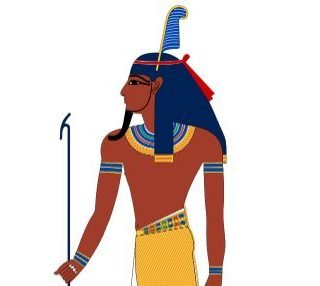
Shu was an ancient Egyptian god revered for his control of the air, wind and lions. Typically depicted in a human form holding the ankh symbol, Shu was one of...

Ancient Egypt, a land that was home to a vast pool of gods, had one peculiar god named Geb – the god of the earth. Geb was a very influential...





