The Law in Ancient Egypt
Ancient Egyptian society was built upon a foundation of stability, order, and harmony, which the Egyptians encapsulated in the concept of Maat. This principle governed not only the cosmic order but...
Ancient Egyptian history is rich, complex, and spans over several millennia, making it one of the longest enduring civilizations in the world. For clarity, Egyptologists often divide this vast timeline into various periods.
Prehistoric Egypt (before c. 3100 BC)
Early Dynastic Period (c. 3100-2686 BC)
Old Kingdom (c. 2686-2181 BC)
First Intermediate Period (c. 2181-2055 BC)
Middle Kingdom (c. 2055-1650 BC)
Second Intermediate Period (c. 1650-1550 BC)
New Kingdom (c. 1550-1070 BC)
Third Intermediate Period (c. 1070-653 BC)
Late Period (c. 653-332 BC)
Greco-Roman Period (c. 332 BC-AD 395)
Importance of the Nile
Throughout these periods, the Nile River remained the lifeblood of Egypt, providing for its people and influencing nearly every aspect of its society. Religion, too, was integral, with gods like Ra, Osiris, and Isis central to Egyptian cosmology, moral code, and daily life.

Ancient Egyptian society was built upon a foundation of stability, order, and harmony, which the Egyptians encapsulated in the concept of Maat. This principle governed not only the cosmic order but...

The ancient Egyptians placed a profound emphasis on maintaining social order, truth, and harmony through a concept known as ma’at. This philosophical and ethical principle, which governed the universe and society,...

Mehet-Weret, also known as Mehturt, was a prominent celestial goddess in ancient Egyptian mythology. Her name, meaning “Great Flood,” connects her with both cosmic and terrestrial waters. Appearing in some...

The Fourth Dynasty of ancient Egypt, spanning approximately from 2613 to 2494 BC, is widely considered a “golden age” within the Old Kingdom period. Marked by political stability, economic prosperity,...
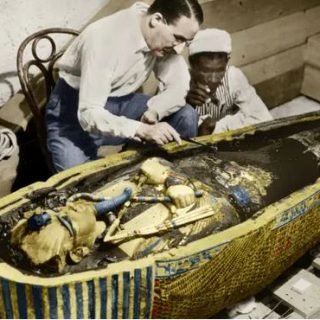
Tomb raiding in ancient Egypt was a widespread and persistent problem, spanning millennia. The Egyptian civilization placed immense importance on the afterlife, leading to elaborate burial practices that involved the...
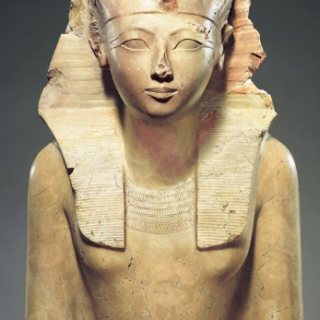
The statuary of Maatkare Hatshepsut, one of ancient Egypt’s most remarkable female pharaohs, represents a unique chapter in the evolution of Egyptian royal art and ideology. Hatshepsut, who ruled as...
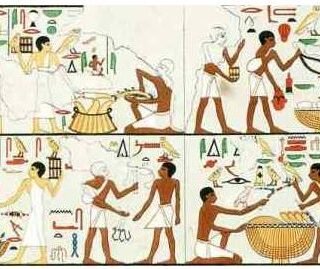
Trade played a crucial role in the economic and cultural development of ancient Egypt. As a civilization dependent on agriculture, Egypt needed to exchange goods with neighboring regions to obtain...

The Middle Kingdom (c. 2045–1782 BC) was a period of reunification and stability following the First Intermediate Period. It included the Eleventh and Twelfth Dynasties, and sometimes part of the...

Merneferre Ay, sometimes spelled Aya or Eje, was a pharaoh of the mid-13th Dynasty of ancient Egypt. He holds the distinction of being the longest-reigning king of this period, ruling...

Beni Hasan is an ancient Egyptian cemetery in Middle Egypt, primarily used during the Middle Kingdom (21st–17th centuries BCE). Summary Beni Hasan is located approximately 20 kilometers (12 miles) south...
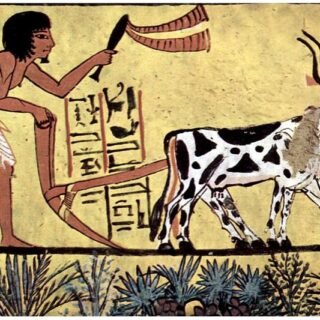
Ancient Egypt, one of the world’s most advanced early civilizations, thrived for over three millennia along the banks of the Nile River. The Egyptian economy and society were highly structured,...
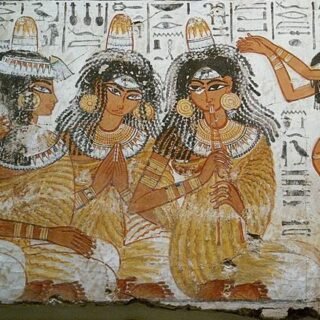
Music and dance played an integral role in the cultural, religious, and social life of ancient Egypt. From temple ceremonies and royal banquets to everyday entertainment and funerary rites, these...

Wahibre Psamtik I was the first pharaoh of Egypt’s Twenty-sixth Dynasty, ruling from circa 665 to 610 BC. Installed by the Neo-Assyrian Empire, he later unified Egypt, expanded its influence,...
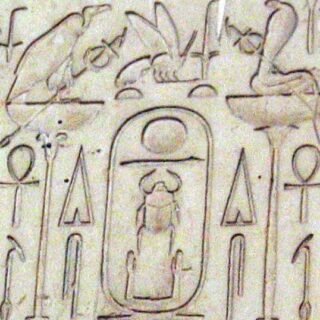
The Nebty name, also called the “Two-Ladies name,” was one of the five great names of Egyptian pharaohs and among the oldest royal titles. Etymology The Nebty name, also referred...
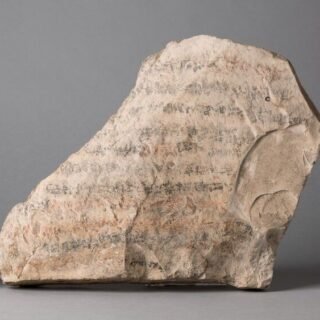
The Satire of the Trades is an ancient Egyptian text that provides a vivid portrayal of various professions, offering insights into Egyptian society, labor hierarchies, and cultural attitudes toward different forms of...





